

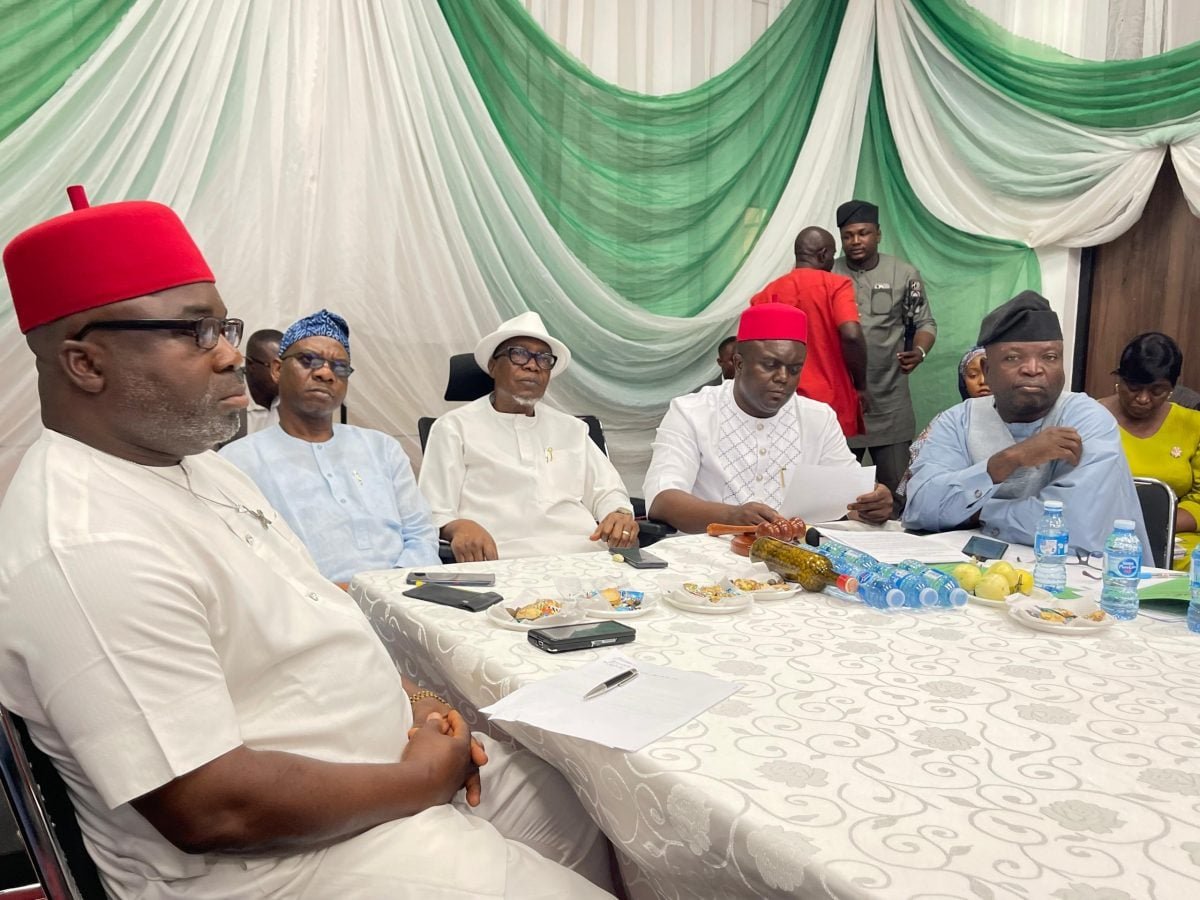
The Speaker of the House of Representatives, Hon. Abbas Tajudeen, on Monday declared that Nigeria’s ambition of building a $1 trillion economy by 2030 cannot be achieved without empowering Micro, Small and Medium Enterprises (MSMEs) to thrive, expand and generate employment opportunities.
The Speaker stated this while declaring open the House of Representatives Committee on Small and Medium Enterprises Stakeholders Strategic Roundtable, themed: “Unlocking the Potential of Nigerian MSMEs through Legislative Reform, Access to Finance, Market Linkages and Strategic Partnership.”
The meeting, attended by representatives of government agencies, financial institutions, development finance institutions and private-sector stakeholders, was organised to examine the challenges confronting small businesses and identify practical solutions to their growth and sustainability.
Hon. Tajudeen said large industries and major investments alone would not deliver the economic target without affordable financing, reliable infrastructure, access to markets and a business-friendly regulatory environment for small-scale enterprises across the country.
Hon. Tajudeen, who was represented by the House Majority Leader, Hon. Julius Ihonvbere, said MSMEs remained critical to Nigeria’s economic development, providing livelihoods for millions of citizens, supporting families and contributing significantly to national productivity.
He noted that with employment demand continuing to outstrip the opportunities available in government and the formal private sector, Nigeria could no longer depend solely on government and large corporations as the principal sources of jobs.
According to him, “We must also create the conditions in which Nigerians can establish businesses, develop their ideas, and build enterprises that can employ others. However, establishing and sustaining a small business in Nigeria today requires more than enterprise and hard work.”
The Speaker, however, expressed concern that despite the establishment of several government intervention agencies and the injection of substantial funds into the MSME sector, many businesses continued to struggle with limited access to affordable financing, cumbersome regulatory procedures and inadequate institutional support.
He lamented that many small businesses that had survived the difficult economic environment were doing so through personal determination and resilience rather than assistance from government institutions established to facilitate their growth.
“Those that are surviving are surviving not because of government and agencies, but in spite of government and agencies,” he said.
Speaker Tajudeen attributed the persistent challenges partly to the disconnect between policymakers and the realities confronting entrepreneurs, particularly the bureaucratic bottlenecks associated with accessing government intervention funds.
He criticised the excessive documentation and administrative procedures attached to such facilities, warning that the bureaucracy was defeating the objectives of the intervention programmes and discouraging genuine business owners from seeking financial assistance.
“I’m a systems man, but I know this system is not working. And it will not work when you bureaucratise a procedure. A lot of red tape,” he said.
The Speaker also cautioned entrepreneurs against relying on loans with double-digit interest rates, arguing that the high cost of borrowing could undermine small businesses before they attained the stability required to repay such facilities and expand their operations.
He insisted that access to finance must go beyond the availability of funds to include affordability, flexibility and lending conditions that reflect the peculiar circumstances of small businesses.
Hon. Tajudeen further challenged state governors to demonstrate greater commitment to MSME development by establishing dedicated intervention funds for entrepreneurs in their respective states, proposing that each state government should set aside at least N1 billion monthly to support small businesses.
“There is no Governor in this country that cannot put one billion a month in a special fund for MSMEs in his state. There is no state that cannot do it,” he declared.
He explained that such funds could be administered through transparent guidelines, effective monitoring mechanisms and clearly defined eligibility criteria to ensure that genuine entrepreneurs, particularly those operating at the grassroots, benefited from the intervention.
The Speaker also criticised state and local governments for failing to translate increased federal allocations into tangible economic opportunities, insisting that the responsibility for improving Nigerians’ living conditions could not rest solely on the Federal Government.
“All the complaints you are hearing in this country today are not because of Tinubu. Not because of the Federal Government. It’s because of state and local governments that are not performing,” Abbas said.
He urged Nigerians to demand greater accountability from elected officials at all levels, stressing that the performance of state and local governments had significant implications for job creation, business development and economic prosperity.
On the legislative front, Hon. Tajudeen disclosed that the National Assembly had supported measures aimed at reducing the financial and regulatory burdens on small businesses, including provisions under the new tax laws granting qualified small businesses a zero per cent Companies Income Tax rate.
He said, “Our laws and regulatory processes should make it easier, not harder, for legitimate businesses to operate. For a small enterprise working with limited capital, the cumulative burden of multiple levies, overlapping regulatory requirements, complicated procedures and inconsistent enforcement can be crippling.”
The Speaker also called for stronger credit guarantee arrangements, wider access to intervention funds and business development support, stressing that access to capital must be complemented by entrepreneurial skills, proper record-keeping and sound business management practices.
He advocated reforms in government procurement processes to enable capable Nigerian businesses to benefit from public expenditure, while urging entrepreneurs to improve product quality, packaging, branding, technology and distribution networks to compete favourably in domestic and international markets.
The Speaker particularly highlighted the opportunities offered by the African Continental Free Trade Area (AfCFTA), insisting that Nigerian businesses must be adequately prepared to penetrate larger African markets.
He urged participants to make the roundtable outcome-driven, with a clear identification of the major constraints facing MSMEs, an inventory of existing government programmes and institutional resources, and an agreement on three to five priority interventions requiring immediate attention.
Earlier, Chairman of the House Committee on MSMEs, Hon. Pascal Agbodike, called for stronger collaboration among government agencies, financial institutions and other stakeholders to address the persistent challenges confronting small businesses in Nigeria.
Hon. Agbodike, who described small and medium enterprises as major employers of labour across the world, said the committee convened the stakeholders’ engagement to identify the bottlenecks limiting the effectiveness of government interventions and financial support programmes.
He explained that the participation of institutions such as the Central Bank of Nigeria (CBN) and the Bank of Industry (BOI) would enable lawmakers to assess their interventions, identify implementation gaps and determine why many small businesses were yet to benefit meaningfully from available support.
“If we inject the money, sometimes we won’t see the practical solution. The BOI is here too. We also hear from them what they have done to support small-scale businesses in Nigeria. So let us know where we are not getting it right, hence this meeting,” he said.
Hon. Agbodike disclosed that the committee would assess the progress made within the next 100 days, saying the National Assembly was particularly interested in ensuring that appropriated funds translated into tangible benefits for ordinary Nigerians and small business operators.
“We are lawmakers. Ours is simple, to appropriate the necessary funds. But when we appropriate those funds, how is it being trickled down to the common man in the streets? The small-scale businesses, how are they being supported? That is our interest,” he stated.
The committee chairman, who said he had been a businessman before joining politics, expressed appreciation to the Speaker for approving the engagement and urged stakeholders to offer honest assessments of existing policies and programmes to enable lawmakers to develop practical legislative and institutional solutions.
He also commended President Bola Tinubu for what he described as the administration’s commitment to economic development and support for MSMEs, urging participants to identify areas requiring improvement to ensure that government policies and financial interventions deliver measurable results.
WATCH TOP VIDEOS FROM NIGERIAN TRIBUNE TV