

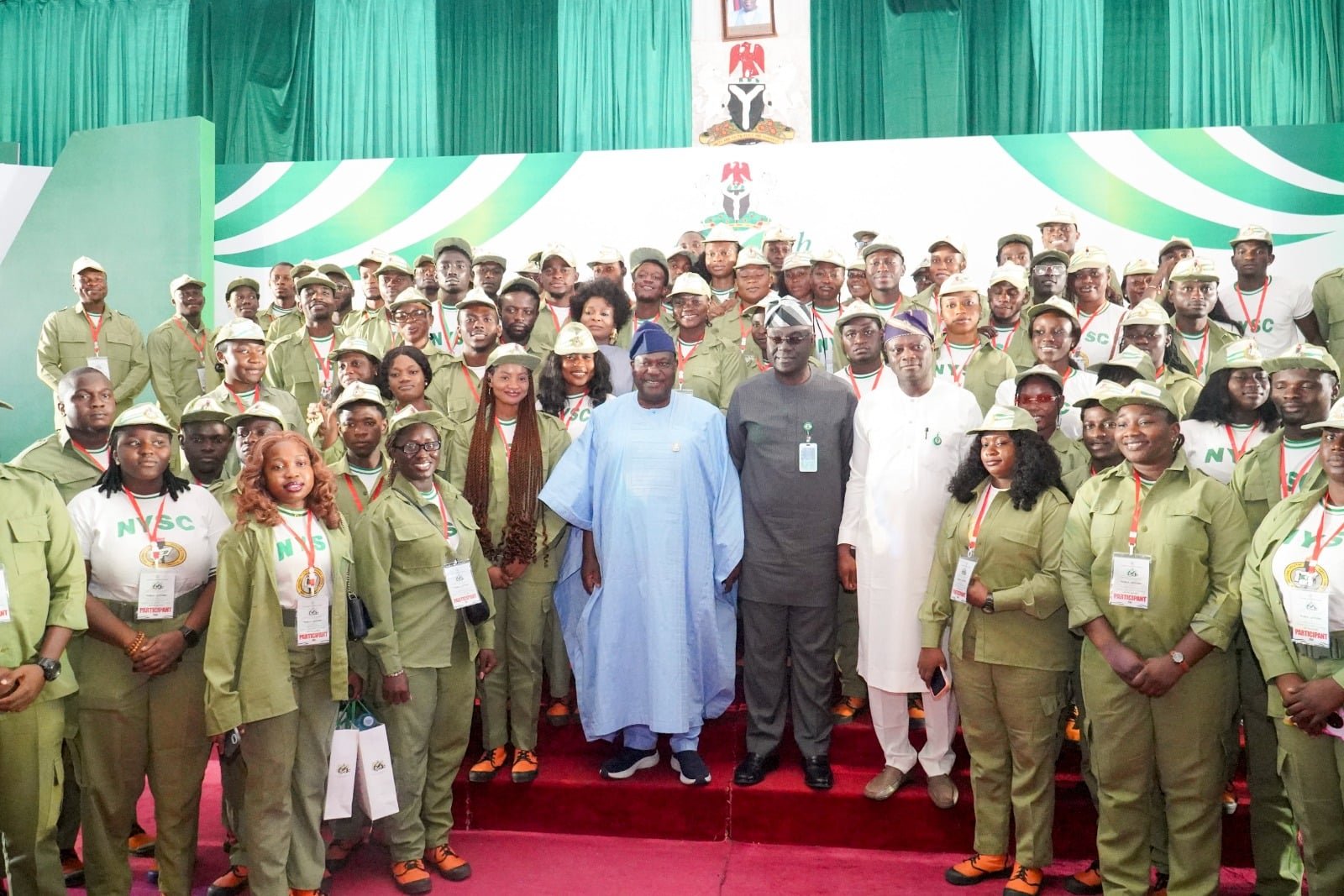
The Secretary to the Government of the Federation (SGF), Sen. George Akume, has said the far-reaching reforms introduced by President Bola Ahmed Tinubu’s administration since 2023 were necessary to save Nigeria from imminent economic collapse.
Akume, who stated that the reforms were beginning to yield positive results, spoke on Wednesday in Abuja at the 66th Independence Anniversary Lecture organised as part of activities marking Nigeria’s Independence Anniversary.
The lecture was held under the theme, “Unity and Faith, Peace and Progress”, according to a statement by the Special Adviser to the SGF on Media and Publicity, Mr Yomi Odunuga.
The SGF said Nigeria had survived the civil war, decades of military rule and several national challenges in its 66 years as an independent nation, noting that the faith and resilience of Nigerians had sustained the country.
According to him, the Tinubu administration took difficult decisions at the beginning of its tenure, including the removal of the petrol subsidy, unification of the foreign exchange market and fiscal reforms, to restore economic stability.
“This administration took office in 2023 and immediately took bold decisions needed to save the nation from imminent collapse.
“Such decisions include the removal of the petrol subsidy, unification of the foreign-exchange market, tax and other fiscal reforms. These were difficult decisions, but necessary to rebuild stability and we have started enjoying the results,” he said.
Akume cited World Bank data indicating that Nigeria’s real Gross Domestic Product grew by 4.2 per cent in the first half of 2026, compared with 3.9 per cent recorded a year earlier.
He, however, said the challenge before the government was to ensure that economic growth translated into jobs and improved incomes for Nigerians.
The SGF also listed infrastructure development as another area where the administration had recorded progress, citing investments in major road, rail and port projects.
He mentioned the Lagos-Calabar Coastal Highway, Abuja-Kano Highway, East-West Road, rail modernisation projects and port reforms as initiatives expected to improve connectivity, trade and economic activity.
On the power sector, Akume said the government was addressing challenges through the clearance of legacy debts, increased investment, improvements in transmission and billing, as well as greater utilisation of the country’s natural gas resources.
He said more than 120,000 vehicles had been converted to Compressed Natural Gas (CNG), with over 400 conversion centres and 90 fuelling stations established nationwide.
According to him, the CNG initiative was helping to reduce transportation costs, while CNG buses were providing cheaper transportation for millions of passengers.
“We will not return to the ruinous petroleum subsidy regime of the past,” he declared.
On agriculture and food security, Akume said the administration remained committed to increasing domestic food production through mechanisation, irrigation, improved seeds, fertiliser, storage facilities and local processing.
He disclosed that the World Bank had approved a $500 million credit for the Nigeria Sustainable Agricultural Value-Chains for Growth (AGROW) project, which he said would improve smallholder productivity, strengthen agricultural value chains and enhance food and nutrition security.
The SGF also highlighted youth empowerment as a key component of the administration’s development agenda, noting that more than 60 per cent of Nigerians were below the age of 25.
He said the government had expanded the Nigeria Education Loan Fund to enable more students to access university and vocational education, while efforts were also being made to strengthen technical and vocational institutions to provide skills required by industry.
“Our young people are not just leaders of tomorrow – they are partners in building Nigeria today,” he said.
Akume further urged Nigerians in the diaspora to invest in the country, stressing that their contribution went beyond remittances to include ideas, investments and national pride.
On healthcare and social protection, he said the government was equipping thousands of primary healthcare centres under the IMPACT initiative and expanding social protection programmes, including NG-CARES Additional Financing, SOLID and HOPE, with support from the World Bank and the Federal Government.
According to him, the programmes were designed to provide cash transfers and essential services to vulnerable households.
On security, the SGF commended the armed forces for their sacrifices and said the government was strengthening security through improved equipment, intelligence and inter-agency coordination.
He cited the development of a new National Threat Assessment and a five-year Strategic Defence Plan as part of efforts to improve national security.
“Security and welfare of the people is the responsibility of government. Nothing matters more than the safety of our people,” Akume said.
He added that development and security were interconnected, stressing that communities with greater economic opportunities and confidence in justice were less vulnerable to crime and violence.
The SGF said the Independence Anniversary Lecture should serve as a renewed call to duty for leaders and citizens, expressing the vision of a Nigeria where graduates could become employers of labour, farmers could feed their families and sell their surplus, entrepreneurs could grow their businesses, and every child could access quality education and healthcare.
“We know the path will not be easy but our goal is clear: shared prosperity for all Nigerians,” he added.
WATCH TOP VIDEOS FROM NIGERIAN TRIBUNE TV