

The World Health Organisation (WHO) has said Nigeria requires about N4 trillion to sustain the Clean Nigeria Campaign and achieve an open defecation-free (ODF) country by 2030.
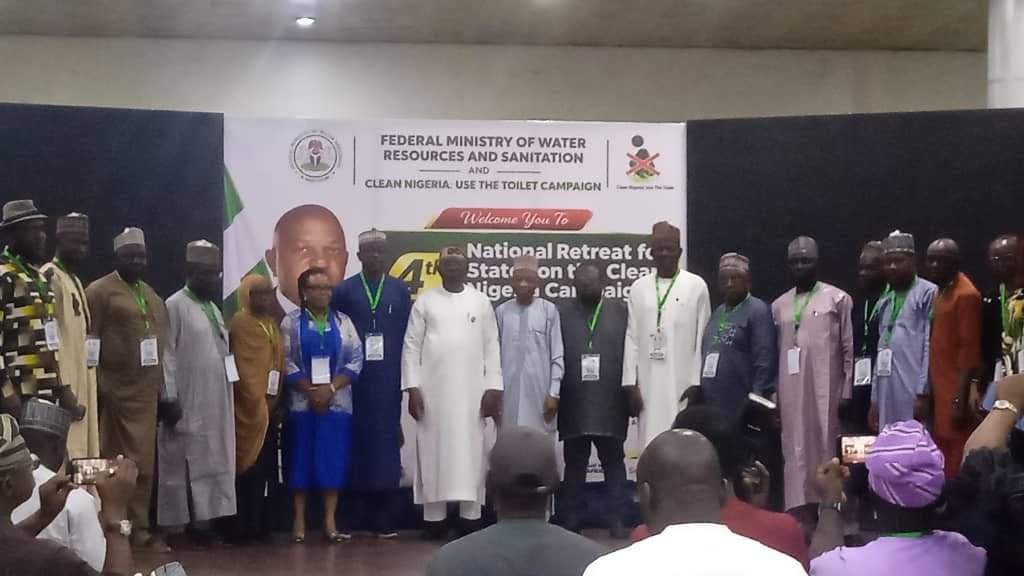
The WHO National Consultant, Edwin Isotu, disclosed this on Tuesday at the 2026 National Retreat on the Clean Nigeria: Use the Toilet Campaign, organised by the Federal Ministry of Water Resources and Sanitation in Abuja.
Isotu said about 48 million Nigerians, representing 23 per cent of the country’s population, still practised open defecation, warning that the situation continued to expose communities to cholera outbreaks and other preventable diseases.
He said the financial requirement underscored the need for stronger collaboration among federal and state governments, development partners and other stakeholders to sustain the campaign.
According to him, sanitation should not be treated solely as a water, sanitation and hygiene (WASH) issue, but also as a public health and economic development priority requiring coordinated investment across relevant sectors.
“We require about N4 trillion to sustain this campaign and achieve the target by 2030. That resource is what we need to get because what we cannot finance, we cannot measure. People can only sustain what we have financed,” he said.
Isotu urged the Nigeria Governors’ Forum, the Ministries of Environment and Health, and other relevant institutions to provide dedicated funding for sanitation interventions rather than leaving the responsibility to the Ministry of Water Resources and Sanitation.
He also called for a renewed culture of cleanliness and behavioural change, noting that increased public awareness had not translated into consistent sanitation practices.
“Cleanliness is not an activity; it must be a culture. We must be able to enshrine the culture of cleanliness in Nigeria. It should be in our homes, our institutions and our communities,” he said.
The WHO consultant further disclosed that although almost every Nigerian was aware of the importance of handwashing, only four per cent of the population consistently practised it daily.
He called for the integration of hand hygiene into the Clean Nigeria Campaign, stressing that toilet use must be accompanied by proper handwashing.
Declaring the retreat open, the Minister of Water Resources and Sanitation, Prof. Joseph Utsev, said 185 local government areas had attained open defecation-free status since the launch of the campaign in November 2019.
He, however, said the achievement fell short of the expected target, noting that the National Coordinator had indicated that about 300 local government areas should have attained the status by now.
Utsev said the retreat was organised to assess the progress made, identify implementation gaps and develop strategies to accelerate the country’s efforts towards ending open defecation.
He said the Federal Government remained committed to achieving the target under President Bola Tinubu’s Renewed Hope Agenda, adding that sanitation was critical to public health, human dignity, environmental protection and national development.
According to him, poor sanitation has direct implications for the health of citizens and the productivity of the economy.
The minister also highlighted the significance of the recently signed Executive Order on Open Defecation-Free Nigeria by 2030 and Other Related Matters, 2025, saying it would strengthen the policy and institutional framework for achieving the national target.
He said Vice-President Kashim Shettima would formally unveil the Executive Order on November 19 during the commemoration of the 2026 World Toilet Day and the seventh anniversary of the Clean Nigeria Campaign.
Utsev identified sustainable financing, reliable data systems and institutional strengthening as three critical priorities for accelerating progress.
He urged state governments, ministries, departments and agencies to make specific budgetary provisions for sanitation and ensure that allocated resources were effectively utilised.
“Sanitation must not depend solely on occasional interventions or development partner support. Every state and every institution should have budgetary provisions to cater for sanitation,” he said.
On sustaining existing achievements, the minister stressed that attaining open defecation-free status should not be measured only by the number of toilets constructed but also by their consistent use and maintenance.
“Not the number of toilets that we build; using the toilets and using them well is where we are today,” he said.
He added that sanitation should become a daily responsibility rather than an occasional exercise, urging Nigerians to embrace cleanliness as a way of life.
In his welcome address, the Permanent Secretary of the ministry, Engr. Ali Ibrahim Dallah, said achieving a fully open defecation-free Nigeria required predictable financing, credible data systems, strong institutional frameworks and sustained political commitment at all levels of government.
Dallah said the retreat provided an opportunity for stakeholders to review implementation progress, identify institutional gaps, share experiences and develop practical strategies for accelerating the national ODF agenda.
He stressed that state and local governments must take greater responsibility for the campaign by integrating sanitation into their policies, development plans and annual budgets.
He urged participants to ensure that the deliberations produced clear commitments, realistic state-level acceleration roadmaps and sustainable financing arrangements towards achieving the 2030 target.
Also speaking, UNICEF WASH Manager Jolly Ann Maulit said 184 of Nigeria’s 774 local government areas had attained open defecation-free status, while Jigawa and Katsina states had achieved the milestone.
She congratulated the Federal Government and participating states but warned that about 48 million Nigerians still practised open defecation.
Maulit said the progress recorded must be sustained through accurate data, continuous monitoring, adequate financing and the integration of sanitation into government systems.
“Declaring open defecation-free is just the first step, and it is a great achievement, but it is not the finish line. Toilets must be used, maintained and repaired, and communities must not slip back,” she said.
She assured that UNICEF would continue supporting the federal and state governments, particularly in strengthening sanitation interventions and mobilising resources for the campaign.
The UNICEF representative also called on states to use the retreat to develop specific commitments and practical roadmaps that could be implemented and monitored.
In her goodwill message, the Secretary for SHA, Joy Adenrele, commended the Federal Ministry of Water Resources and Sanitation and the Clean Nigeria Secretariat for sustaining the campaign through stakeholder engagement, advocacy and community mobilisation.
She, however, stressed the need to prevent communities that had attained open defecation-free status from reverting to the practice.
Adenrele said Safe Africa remained committed to working with the ministry at both national and state levels to strengthen sanitation interventions and promote institutional accountability.
She urged participants to share experiences and identify strategies for sustaining the achievements already recorded.
The two-day retreat, holding from November 17 to 18, is themed, “Sustaining Progress: Financing, Data Systems for a Fully ODF Nigeria.”
It is part of activities lined up for the 2026 World Toilet Day celebration, which will climax on November 19 with the unveiling of the Executive Order and commemoration of the seventh anniversary of the Clean Nigeria Campaign.
WATCH TOP VIDEOS FROM NIGERIAN TRIBUNE TV