

From the first day on site to the last day of a building’s life, the money, materials and information behind it are rarely managed as carefully as the building itself.
Drive through Lagos, Abuja or Port Harcourt and you will see cranes, half-finished estates and new office blocks. We are building at a fast pace. But ask a developer how much has been spent on a project so far, or ask a facility manager who installed the lift in a ten-year-old building, and the answer is often a pause.
We have become good at putting buildings up. We have not yet become good at managing the money, materials and records that go into them, from the first day on site to the years of use that follow.
The leak starts on site
On many construction projects, materials are ordered by phone, approved on WhatsApp and counted on paper. Cement, steel, blocks and diesel are bought in a market where prices can change from one month to the next. A delivery comes in short and nobody records it. Stock goes missing between the store and the floor being built. Invoices are paid without anyone checking what actually arrived.
None of this is dramatic on its own. Together, it is how projects drift over budget without anyone being able to say when or why. Developers often find out at the final account. The banks and investors who funded the project may find out later still.
Then the information is lost
The second problem begins at handover. The contractor leaves, and with them goes much of what the owner needs to know: which equipment was installed, by which supplier, under what warranty and at what cost. The facility team inherits a building with no memory.
From then on, maintenance runs the way construction did, on phone calls, voice notes and paper. Generators, pumps, lifts and air conditioners are repaired again and again, and the true cost of running the building is never properly understood. Over the life of a building, running it can cost far more than building it. Yet this is the part we track least.
One building, one record
The answer is to stop treating construction and facility management as separate worlds. They are two stages in the life of the same asset, usually paid for by the same owner.
In practice, that means a project should have a working budget, with every purchase order raised against it and approved by the right person. Goods should be checked on site before invoices are paid. Materials should be tracked as they come in and go out. And when the building is handed over, those records should carry on into the asset register, so maintenance starts with a history instead of a blank page.
This is not only good practice for developers. Lenders and investors need it to fund construction with confidence. Institutions with buildings in many states need it to manage them well. And any organisation needs it if it wants to stop paying twice for the same work.
What I have seen
I trained as a civil engineer at the University of Ilorin and have worked in procurement, maintenance and estates in Nigeria and the United Kingdom. Most recently, I led the estates operations team at Great Ormond Street Hospital in London, where a failed lift or a broken ventilation system is not just an inconvenience but a risk to patients.
The lesson I took from that work is simple. The best-run buildings are not always the ones with the newest equipment. They are the ones with the best records: every job logged, every contractor held to account, every naira traced to the work it paid for. That discipline is not something only rich countries can afford. It is a habit, and we can build it here.
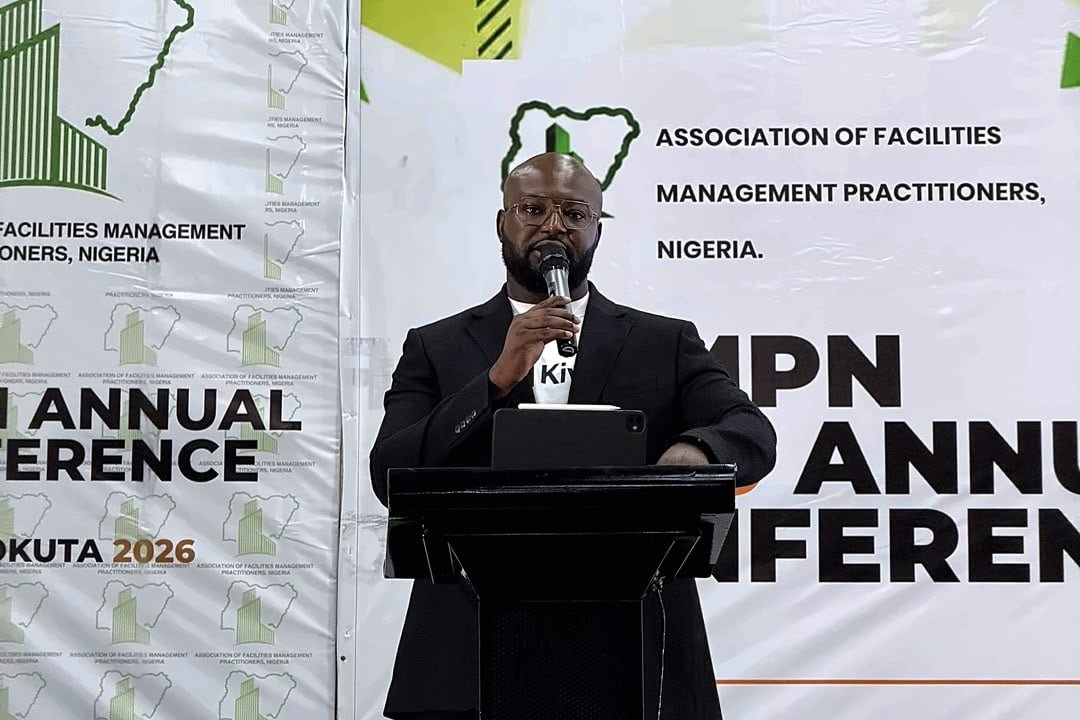
I made the same point at the AFMPN 2026 Conference in Abeokuta. Moving from reactive to predictive facility management is a change in how organisations work before it is a technology purchase.
Why we built Kivo
That thinking is why we built Kivo in Lagos: one platform that follows a building from construction to operation, keeping budgets, spending, materials, teams and assets in a single record. We are now in our final testing phase and inviting developers, contractors and facility teams to try it and help shape it. We are starting in Lagos, but we intend to take Kivo to other African markets, because the same problems exist across the continent.
But the bigger point stands, whatever tool anyone chooses. As costs rise and lenders become more careful, the organisations that know where their money goes, on site and long after, will build more, waste less and own better buildings. Nigeria has shown it can build. The next step is to manage what we build.
WATCH TOP VIDEOS FROM NIGERIAN TRIBUNE TV