

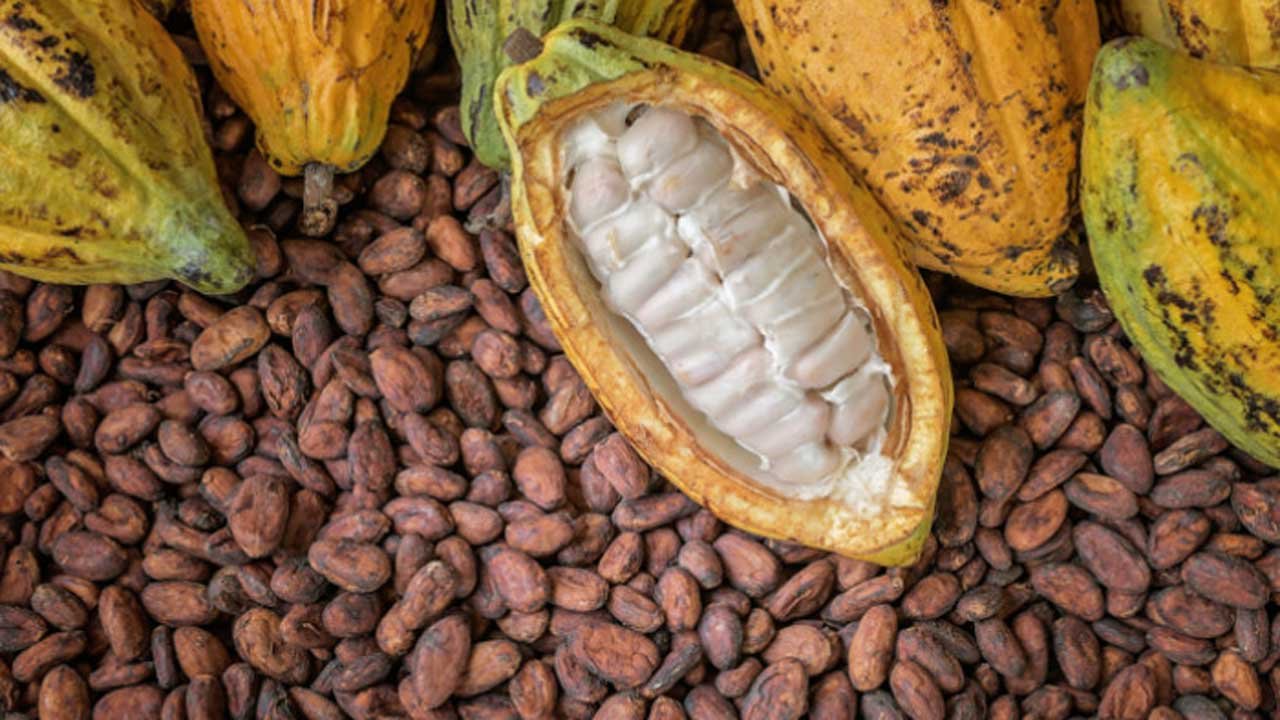
…targets bigger share of $165bn global market
Nigeria, Ghana and Côte d’Ivoire have agreed to deepen collaboration aimed at increasing Africa’s earnings from the global cocoa industry by promoting local processing and value addition instead of exporting raw cocoa beans.
- …targets bigger share of $165bn global market
The three countries reached the agreement at a high-level summit in Abuja, where they committed to a new strategy designed to boost local manufacturing, create jobs and increase revenue from the global cocoa market, now valued at more than $165 billion.
Representing President Bola Ahmed Tinubu, the Minister of Agriculture and Food Security, Senator Abubakar Kyari, said Africa could no longer continue producing the bulk of the world’s cocoa while receiving only a fraction of the industry’s value.
“The story of the cocoa bean is, in miniature, the story of our continent—blessed beyond measure at the root and shortchanged at the branch,” Kyari said.
He noted that although Africa produces about 70 per cent of the world’s cocoa, the continent retains only about six cents of every dollar generated by the global chocolate industry.
“The remaining 94 cents are earned in the factories, laboratories, brands and boardrooms of countries where not a single cocoa tree is grown,” he said.
Kyari said the gathering in Abuja was not to lament the situation but to change it.
“We gathered to end it. For too long, we have accepted a division of labour written by others. African plants, African harvests—and Africa waits. The grinding is done elsewhere. The pressing is done elsewhere. The tempering, moulding, wrapping, branding and pricing are all done elsewhere.
“We export the bean at one price and import it back as chocolate at 20 times that price. We ship out wealth and bring back poverty with someone else’s name on the label. That is not trade; that is tribute. The era of tribute is over.”
The minister said Nigeria currently has more than 300,000 cocoa farming families cultivating the crop across over 1.4 million hectares in the South-West, South-East, South-South and emerging northern production zones.
According to him, cocoa has become one of Nigeria’s most important non-oil exports.
“When global prices exceeded $10,000 per tonne, cocoa generated more than N3 trillion for Nigeria and accounted for nearly a quarter of our non-oil exports. Cocoa is no longer a footnote in our national accounts; it is now a headline.”
However, he noted that most of the country’s earnings still come from exporting raw cocoa beans.
“Those record earnings still came overwhelmingly from raw beans. The windfall was priced in markets we do not control, on exchanges in London and New York, for a harvest we do not process. That is not a strategy; it is a lottery ticket, and no serious nation builds its future on a lottery ticket.”
Kyari said the Federal Government had therefore placed value addition at the centre of its industrialisation agenda under the Renewed Hope programme.
“We did not come to preside over a raw commodity economy. We came to build a productive one. There is a difference between selling what you grow and selling what you make.”
He said Nigeria had already begun expanding its local processing capacity, citing the construction of a 70,000-tonne cocoa processing facility in Shagamu and an increase in the country’s grinding capacity to over 120,000 tonnes annually.
“For every tonne we process at home, there is a job created in our communities, greater value retained in our economy and a stronger future for our children.”
ALSO READ: African cocoa-producing countries urged to form alliance to shield farmers from commodity markets volatility
Kyari described the Abuja Declaration to be signed by Nigeria, Ghana, Côte d’Ivoire and Cameroon as a landmark commitment to reposition Africa within the global cocoa value chain.
“Separately, we are price takers. Together, we are the market.
“The Abuja Declaration is more than a document. It is a decision that nations that grow the bean will no longer remain strangers to the wealth of the chocolate bar.”
He said the agreement would enable participating countries to coordinate policies, expand investments in processing and manufacturing, and improve sustainability and traceability standards.
Also speaking, the Minister of State for Industry, Senator John Owan Onoh, said African cocoa-producing nations had for too long exported raw materials while other countries captured most of the value.
“We grow the miracle; others bottle it. We export anonymous sacks and import branded boxes, paying at both ends of the transaction.
“A tonne of beans leaves our ports and returns to us multiplied many times over in value, with the additional income creating jobs and wealth elsewhere.”
Onoh said the collaboration would strengthen industrialisation, improve access to better farming inputs, expand financing opportunities and enhance competitiveness across Africa’s cocoa sector.
The Chief Executive Officer of the Ghana Cocoa Board, Dr. Ransford Anertey Abbey, welcomed the initiative, describing it as a major step toward ensuring African cocoa-producing countries derive greater benefits from the global industry.
He expressed confidence that stronger regional cooperation would accelerate growth, improve farmers’ incomes and increase value retention across the continent’s cocoa value chain.
WATCH TOP VIDEOS FROM NIGERIAN TRIBUNE TV