

From Adesuwa Tsan, Abuja
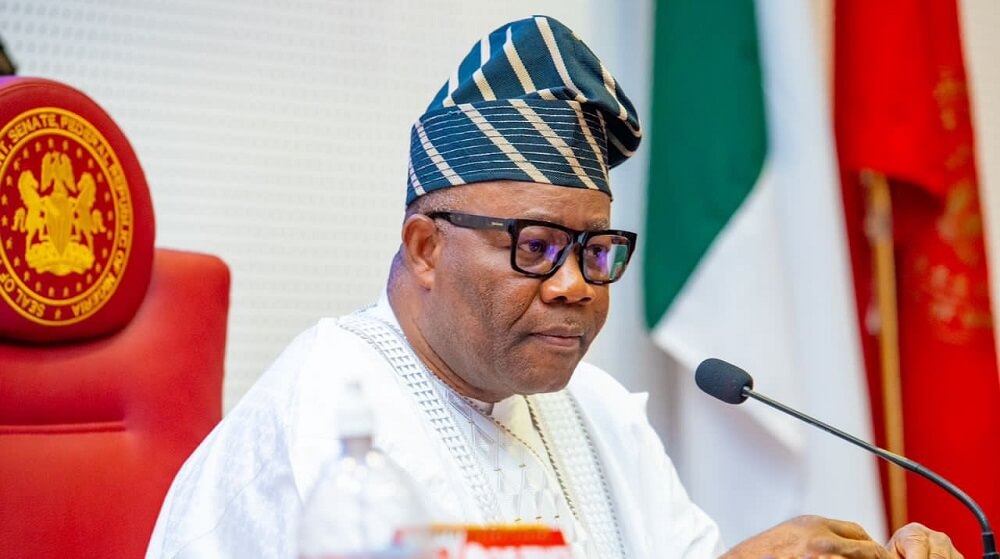
Senate President Godswill Akpabio has blasted Nigerians for demanding infrastructure such as good roads and trains when not up to 30 percent of them pay their taxes.
He, therefore, stressed the need for urgent reforms to modernise the country’s tax system to enhance revenue generation and collection for infrastructural development across the country.
Speaking at a public hearing on tax reform bills at the National Assembly on Monday, Akpabio stated, “I don’t think at the moment that up to 30% of Nigerians pay tax. And yet, 100 percent of Nigerians want good roads. They want culverts, they will like dualised thoroughfares, they will like trains. They will like skyscrapers, they want Nigeria to be modernised in a hurry but those things need money but I know Nigerians will not want to pay taxes.
“So I know that at the end of what we are doing, it will be easy for you to pay tax whether you like it or not. Then we will now oversight government to ensure that whatever revenue comes into the purse of government is well utilised through proper oversight functions.”
He continued, “Nigerians don’t pay tax. Many either evade taxes completely or struggle under multiple layers of taxation that discourage compliance.”
The tax reform bills under review include the Nigeria Tax Bill (NTB) 2024, Nigeria Tax Administration Bill (NTAB) 2024, Nigeria Revenue Service (Establishment) Bill (NRSEB) 2024, and Joint Revenue Board (Establishment) Bill (JRBEB) 2024.
The Senate President emphasised that taxation should not be a burden, hence the need for a structured system that benefits both the government and the people.
“The challenge before us goes beyond simply passing new laws. We must construct a tax system that inspires confidence, promotes development, and drives national growth,” he said.
Akpabio noted that some of Nigeria’s tax laws date back to colonial times and require urgent modernisation. “Some of our tax laws are outdated and no longer fit our current economic realities. We need a system that is fair, transparent, and efficient,” he added.
Another major concern, the he added, is the imbalance in tax revenue distribution. He cited instances where companies operate in one state but remit taxes in another, depriving host communities of needed resources.
“For example, if a brewery operates in Ogun State but its headquarters is in Lagos, the tax revenue is collected in Lagos while Ogun, the host state, gets little to nothing. This must be addressed to ensure fairness in revenue allocation,” he explained.
The tax reform bills under consideration, he said, aim to simplify compliance, reduce bureaucracy, and foster economic growth. Akpabio urged stakeholders to engage constructively and submit well-researched recommendations rather than relying on social media opinions.
“We all agree that reform is necessary, so bring your ideas to the table. Five years from now, we want to look back and say, ‘Yes, thanks to the National Assembly, we have built a better tax system,’” he stated.
The public hearing, attended by top government officials including the Minister of Finance and Coordinating Minister of the Economy, Mr Wale Edun; business leaders, and civil society groups, is part of ongoing legislative efforts to overhaul Nigeria’s tax framework.
Earlier in his speech, the Chairman of the Senate Committee on Finance, Sen. Mohammed Sani Musa, emphasised that the outcome of Nigeria’s tax reform bills will be shaped by contributions from stakeholders, thereby ensuring an inclusive and transparent legislative process.
Musa stressed the importance of diverse perspectives in crafting a fair and efficient tax system, saying, “The success of these reforms will depend on the input of all stakeholders—businesses, tax professionals, civil society organisations, and the general public. We must work together to create a tax system that is transparent, predictable, and supportive of economic growth.”
The lawmaker equally highlighted that many existing tax laws are outdated and require urgent modernisation. “These reforms are not just about taxation; they are about building a fairer, more efficient, and growth-oriented tax system that supports businesses, encourages investment, and ultimately improves the lives of Nigerians.”
He outlined the key objectives of the bills, which include updating tax laws, improving revenue collection, streamlining tax administration, and ensuring fairness in the system.
“A fair and efficient tax system is essential for economic growth. These bills aim to enhance revenue generation, make compliance easier for businesses and individuals, and prevent excessive taxation,” he stated.
He acknowledged concerns about marginalisation in revenue distribution and possible biases in tax administration but assured stakeholders that the process would be inclusive and transparent.
“Our goal is to develop a tax framework that promotes economic prosperity, encourages investment, and strengthens Nigeria’s fiscal sustainability. We will ensure that every voice is heard, and the final laws will serve the best interests of all Nigerians,” he assured.
The chairman urged participants at the hearing to engage constructively and provide well-researched recommendations.
“The outcome of this process should not only be acceptable to all but should also pave the way for a more robust, efficient, and fair tax system that contributes to a stronger and more prosperous Nigeria,” he concluded.
In his submission, the Minister of Finance and Coordinating Minister of the Economy, Wale Edun, has said that the proposed tax reforms will build on the progress made under President Bola Ahmed Tinubu’s economic agenda, ensuring sustainable growth and fiscal stability.
Edun described the reforms as a necessary step to modernising Nigeria’s tax system in line with the country’s economic trajectory.
“This reform is part of Mr. President’s economic agenda. It is a bold step, another bold step, because we are all privy to the reforms that have been made over the last 20 months or so,” he said.
He listed some key economic improvements under Tinubu’s administration, noting that “we can all see the progress that has been made—the economy is growing, reserves are increasing, inflation is stabilising, and the budget deficit is under control, particularly in relation to food prices.”
According to Edun, the tax reforms aim to enhance compliance, broaden the tax base, and foster an environment that attracts investment and job creation.
“As the economy grows, we must modernise our tax laws. These reforms will create equity, efficiency, and economic growth,” he stated.
He emphasised the importance of public engagement in shaping the tax laws, saying the hearing was crucial for gathering stakeholder feedback.
“Critically, today’s sitting is about ensuring that all views are heard and that all stakeholders are carried along. This is the essence of the reform process,” he added.
However, a council member of the Chartered Institute of Taxation of Nigeria (CITN), Prof. Aminu Makaila, speaking on behalf of the institute, opposed the empowerment of the Joint Tax Board to choose tax collection agents in the bill. He noted that this usurps its role as the body in charge of tax agents in the country.