

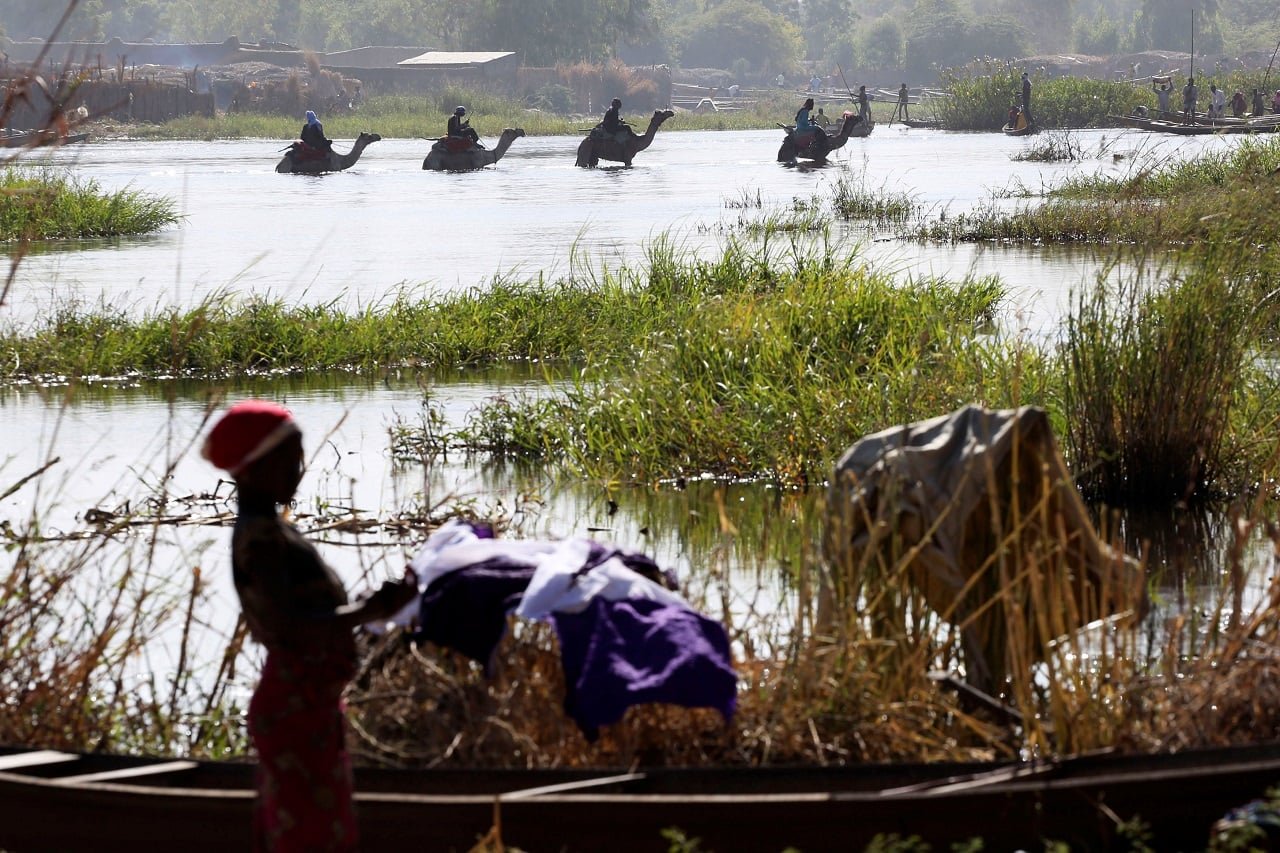
The Minister of Environment, Balarabe Abbas Lawal, on Wednesday warned that the continued drying up of Lake Chad poses a major environmental threat, calling for stronger international collaboration to restore the lake and mitigate its far-reaching consequences.
Lawal made the call in Maiduguri during the 2026 annual retreat of the Federal Ministry of Environment, where he said the ecological crisis confronting the Lake Chad Basin required coordinated action by governments, development partners and other stakeholders.
Describing the shrinking lake as “a major catastrophe”, the minister said its impact extended beyond environmental concerns to livelihoods, food security, displacement and sustainable development.
“We need stronger collaboration among the international community to restore Lake Chad because of its importance to humanity and the global ecosystem,” he said.
Lawal said the annual retreat was convened to review the ministry’s programmes, projects and policy direction with a view to improving service delivery and strengthening environmental governance.
He said deliberations at the retreat would also focus on stricter enforcement of environmental regulations, including sanctions against individuals and organisations that violate environmental laws.
The minister urged non-governmental organisations to complement government efforts in addressing environmental challenges, while calling for closer collaboration among state governments and agencies, including the National Agency for the Great Green Wall and the Agro-Climatic Resilience in Semi-Arid Landscapes (ACReSAL) project, to tackle desertification and climate change.
He disclosed that the headquarters of the National Agency for the Great Green Wall had been relocated to Kano to strengthen efforts to combat desert encroachment, adding that the agency’s Director-General had commenced operations from the state.
Lawal also urged Nigerians to adopt responsible environmental practices by keeping their surroundings clean and avoiding activities that degrade natural resources, warning that poor sanitation and environmental abuse contribute to flooding, climate change, cholera and other disease outbreaks.
He added that the Federal Government’s tree-planting campaign forms part of President Bola Ahmed Tinubu’s agenda to improve ecological sustainability and climate resilience.
Speaking, Borno State Governor, Prof. Babagana Zulum, said environmental degradation has continued to fuel poverty, displacement and conflict in the state, stressing that sustainable development cannot be achieved without a stable ecosystem.
According to him, Borno’s location within the Sahel belt has made the state particularly vulnerable to desertification and the adverse effects of climate change.
“We will continue to work with national and international partners to protect our environment through tree planting, ecological restoration and climate resilience initiatives,” Zulum said.
The governor commended the Federal Ministry of Environment for donating cash and other intervention materials to mitigate environmental challenges in the state, while also acknowledging the support of the ACReSAL project.
He urged participants at the retreat to use the opportunity to deepen their understanding of Borno’s environmental realities and develop practical solutions to the challenges confronting the region.
Zulum also called for stiffer penalties against illegal tree felling, alleging that neighbouring Cameroon and Niger benefit from trees illegally felled in Nigeria.
“There should be tougher sanctions against those involved in indiscriminate tree felling. We also need stronger regional collaboration to curb deforestation across the Lake Chad Basin,” the governor said.
WATCH TOP VIDEOS FROM NIGERIAN TRIBUNE TV