

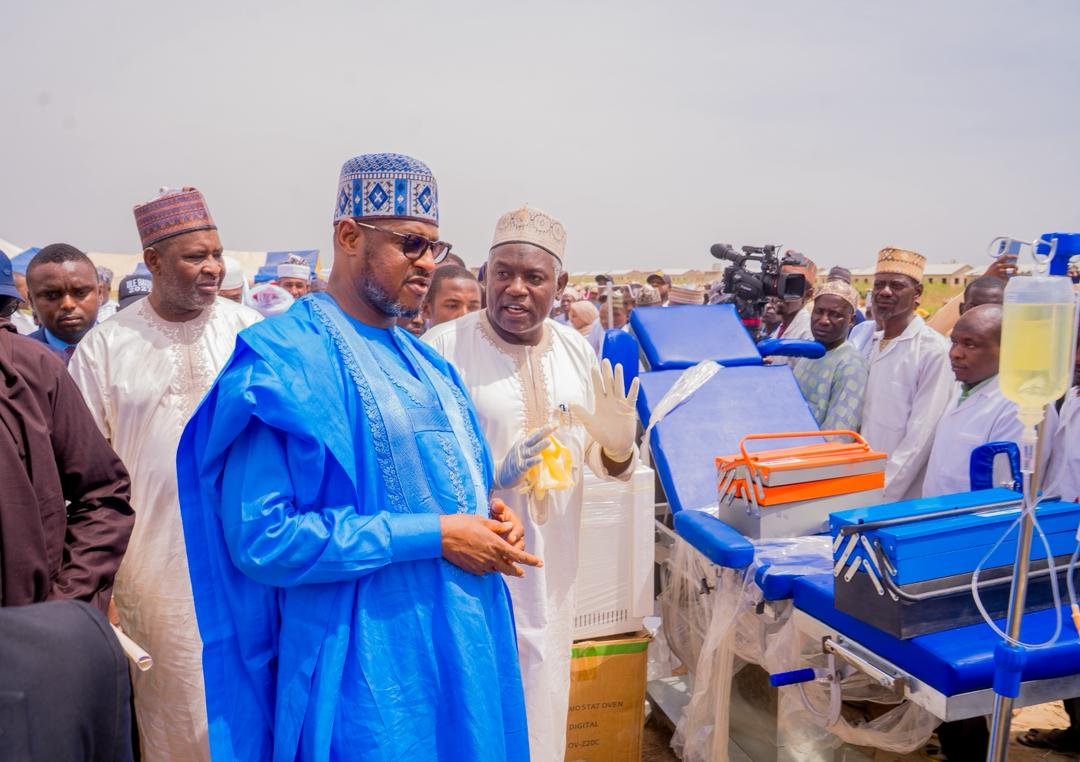
Katsina State Governor, Malam Dikko Umaru Radda, has flagged off the 2026 Annual Mass Livestock Vaccination Exercise, targeting major infectious diseases affecting cattle, sheep and goats across the state.
The flag-off ceremony was attended by the Chief of Staff to the Governor, Abdulkadir Mamman Nasir; members of the Katsina State Executive Council; the Grand Khadi; local government chairmen; and other representatives.
The statewide campaign, launched at Shifdawa Fulani Village in Batagarawa Local Government Area, is aimed at preventing and controlling Contagious Bovine Pleuropneumonia (CBPP), Foot and Mouth Disease (FMD) and Peste-des-Petits Ruminants (PPR).
Speaking at the ceremony, Governor Radda described the exercise as a strategic intervention to protect animal health, improve livestock productivity and strengthen food security, noting that livestock production remains a critical component of Katsina State’s economy.
“Vaccination is critical to preventing disease outbreaks and ensuring healthy, productive livestock,” the governor said.
He noted that the vaccination campaign would cover all 361 political wards across the state’s 34 local government areas over an 18-day period, comprising 12 days of house-to-house vaccination against PPR and six days of statewide vaccination against CBPP and FMD.
According to the governor, diseases such as CBPP, FMD and PPR continue to pose serious threats to livestock production, resulting in high animal mortality, reduced productivity and significant economic losses.
Radda also highlighted Katsina’s long history in livestock production and trade, recalling that the famous “Morocco leather”, once traded across North Africa and Europe, originated from the region.
He said the state’s strategic location along the border with the Niger Republic makes effective disease control essential due to the constant movement of livestock through transhumance and cross-border trade.
“As a border state, Katsina hosts significant livestock movement from neighbouring countries and states, making this exercise both timely and essential for disease control and public safety,” he said.
The governor reaffirmed his administration’s commitment to strengthening veterinary services, livestock development and agricultural systems, while commending development partners, including the International Organisation for Migration (IOM), the United Nations Development Programme (UNDP) and Co-group for supporting the initiative.
He urged livestock owners, herders, traditional rulers, security agencies and community leaders to cooperate fully with vaccination teams to ensure the success of the exercise.
Earlier, the Commissioner for Livestock Development, Professor Ahmed Bakori Mohammed, said the state government had continued to strengthen veterinary services through the renovation of five of the seven veterinary clinics across the state, while work was ongoing to complete the remaining Katsina Veterinary Clinic and relocate the Malumfashi Veterinary Clinic.
He added that the governor had approved the recruitment of veterinary doctors and other technical personnel, as well as the deployment of additional security personnel to improve service delivery.
Bakori said modern veterinary equipment, essential drugs and vaccines had also been supplied to the clinics to improve animal healthcare services.
He stressed that sustained vaccination remained the most effective means of controlling infectious animal diseases, improving livestock productivity, enhancing rural livelihoods and strengthening food security.
The commissioner called on livestock owners to participate actively in the exercise and encourage others within their communities to do the same.
Also speaking, the Chairman of Batagarawa Local Government Area, Yahaya Lawal, outlined efforts by the council to promote peaceful coexistence between farmers and herders.
He also appealed to the state government to expedite the completion of housing projects for internally displaced persons (IDPs) in the local government area.
WATCH TOP VIDEOS FROM NIGERIAN TRIBUNE TV