

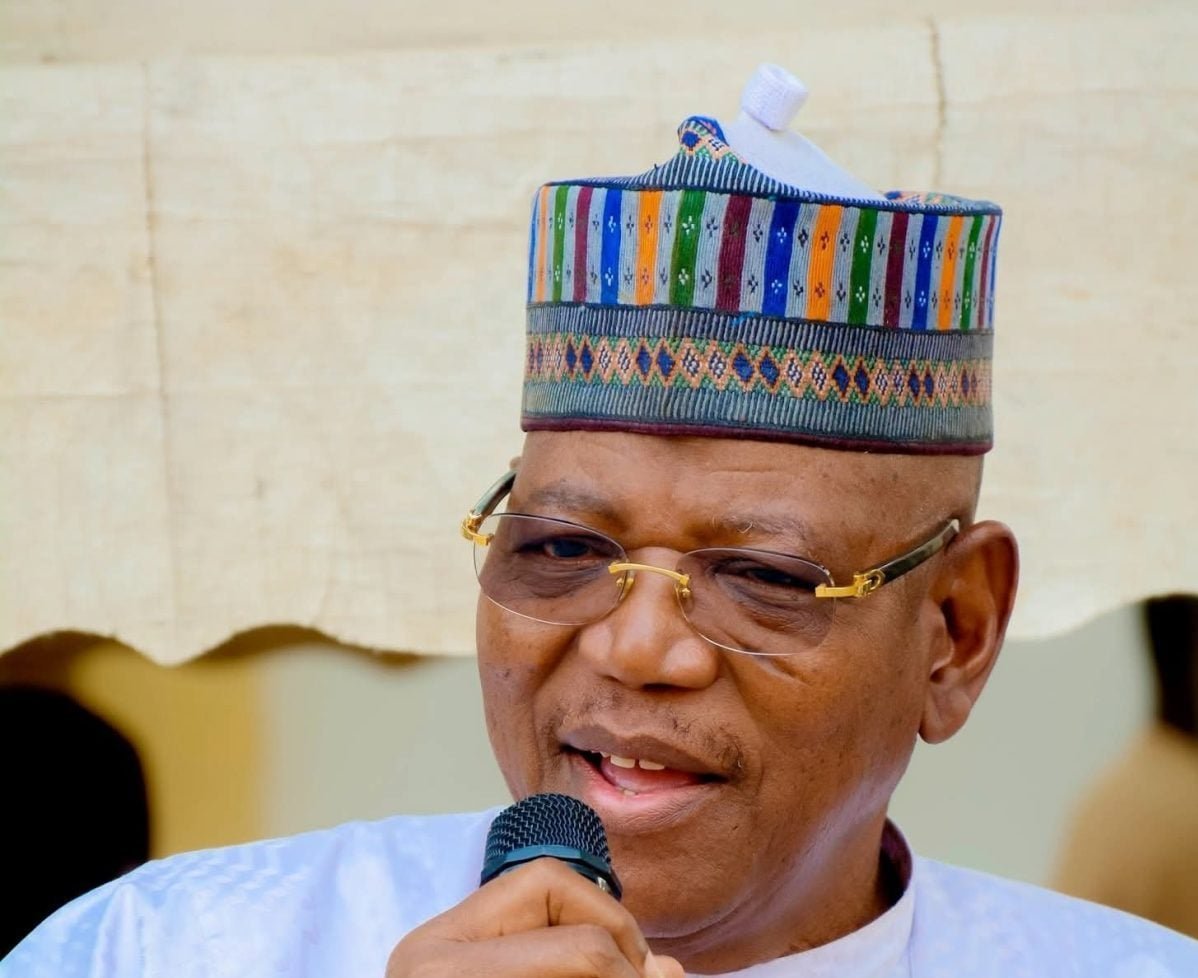
Former Jigawa State Governor, Alhaji Sule Lamido, has alleged that the corruption prosecution instituted against him during the administration of former President Goodluck Ebele Jonathan was politically motivated and aimed at forcing him to abandon his political convictions.
Lamido made the allegation while speaking with journalists shortly after a public lecture organised to mark his 78th birthday at M-Town Hotel, Dutse, the Jigawa State capital.
The former governor said he had endured years of harassment, intimidation, imprisonment and court proceedings because he refused to compromise his principles or abandon his political beliefs.
According to him, those behind the prosecution had hoped that sustained pressure through the courts and other forms of intimidation would force him to submit and abandon his political position.
He said, “If you believe in something very strongly, there are people who see you as an impediment to their interests, and they will do anything to unleash pain on you.
“The issue is, are you willing to abandon your own beliefs, things that form your character, your history and your tradition, simply because somebody has the power to harass you and make you submit to him? You will not.”
Lamido recalled that he had also been imprisoned during the military era, saying his experiences under former Head of State, General Ibrahim Babangida, and the late General Sani Abacha were part of the sacrifices he made for his political convictions.
He said his experiences in detention never made him regret standing by what he believed was right.
“That is why I have been to prison on a number of occasions, and, believe me, I have never felt sorry for believing what I believe up till now,” he said.
On his experience with the Economic and Financial Crimes Commission (EFCC), Lamido said the prolonged prosecution had taken a heavy toll on him and his family, alleging that it exposed him to years of public attacks and damaged his reputation.
“I have been listening for the last 10 years in court. I have been maligned. People have been hurting my children; they have been abusing my personality and my reputation,” he alleged.
Lamido has consistently denied wrongdoing, maintaining that the prosecution was linked to his political activities and disagreements within the Peoples Democratic Party (PDP) during the Jonathan administration.
Despite the prolonged legal battle, the former governor said he remained committed to his political convictions.
He also criticised politicians who, according to him, abandon their parties and principles whenever they come under pressure from those in power.
“I have been in PRP, and I have been in PDP since 1998. People have left for different purposes. Some are looking for security because of what they did; others are looking for their own ambition,” he said.
Lamido said such political movements had contributed to the abandonment of what he described as the “bigger picture called Nigeria”.
He expressed concern that younger Nigerians were being exposed to what he called political “opportunism” rather than principled participation.
“What is the lesson for the younger generation? What are they learning from us? Opportunism. That is my worry,” he said.
The former governor said he deliberately organised his 78th birthday celebration around issues affecting Nigeria rather than the political fanfare often associated with birthday celebrations of prominent politicians.
He expressed concern over insecurity, poverty, declining national unity and political intolerance, stressing that political leaders should create an environment where citizens and political opponents could freely express their views.
Lamido also criticised attempts by politicians and their supporters to prevent opponents from campaigning in certain constituencies.
“In a democracy, there is liberty, and there is right. But today in this country, people are saying Mr A cannot campaign here, he cannot campaign there. Does that make sense? Is that democracy?” he asked.
He urged political leaders to stop using young Nigerians as political foot soldiers and instead promote national unity, tolerance and democratic values.
Lamido said Nigeria’s political future should not be sacrificed for personal ambitions, stressing that the country needed leaders who would place the national interest above personal and partisan considerations.
WATCH TOP VIDEOS FROM NIGERIAN TRIBUNE TV