

Turkey and Pakistan have decided to swiftly dispatch troops to Saudi Arabia, which is under attack by Iran-aligned Houthi militants in Yemen, pushing the Middle East conflict toward further escalation. Amid the U.S. stance of not participating in direct military attacks to aid Saudi Arabia, there are observations that the “Islamic version of NATO (North Atlantic Treaty Organization) alliance” has entered the battlefield and is being put to the test.
Although they did not directly mention the Houthis, they noted attention to attacks on Saudi Arabia and those targeting the Islamic holy sites of Mecca and Medina, effectively indicating that the Houthis are the target. The Houthi rebels, who are Shia, have grown with financial and weapons support from Iran, also Shia, and have been engaged in fierce conflict with Sunni factions for decades.
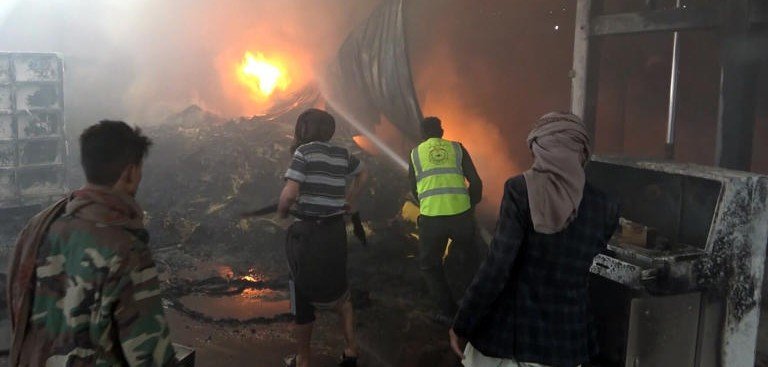
The Houthis also launched a counterattack, intensifying the war. According to AP and others, the Houthis advanced toward Taiz, Yemen’s third-largest city, capturing Turba, a key stronghold of the Yemeni government forces. In the process, more than 70 people died in one day. The Houthis also fired ballistic missiles and drones at Saudi Arabia’s Riyadh Airport and Aramco oil facilities, and conducted airstrikes on Rabigh, where Korean companies like Hyundai Motor are located. Local residents reported, “Fires and smoke are occurring nearby.”
Analysis suggests that this war will gauge the practical and military effectiveness of the “Mecca Alliance,” referred to as the “Islamic version of NATO.” This alliance has drawn particular attention as it brings together Pakistan, the only nuclear power in the Islamic world; Turkey, the second-largest military force in NATO; and Saudi Arabia, an oil-rich nation that hosts Mecca, Islam’s holiest site.
The exact number of troops each country has deployed remains unclear. Pakistan is reported to have dispatched 30,000 to 40,000 troops to Saudi Arabia for border defense and support operations to intercept drones and missiles. Pakistan’s Defense Minister Khawaja Asif told local media, “Pakistani and Turkish forces are already stationed in the local battlefield,” but added, “They have not yet participated in combat operations.” He also stated, “The Saudi military is engaged in combat, while Pakistan and Turkey are handling support missions such as reconnaissance.” Turkey is focusing on providing drone, missile, and electronic warfare technology. Al Jazeera reported, “Combined, the three countries’ military forces have 1.4 million active-duty personnel, 3,400 military aircraft, 6,000 tanks, and over 350 warships.” The U.S. currently has around 200 military and intelligence analysts deployed in Saudi Arabia, supporting the Yemeni and Saudi governments.
Experts point out that the success or failure of the “Islamic version of NATO” depends on establishing a unified command structure. A recent report by Morocco’s South-South Policy Center and the Middle East Security Research Institute noted, “The Mecca Alliance is moving from a political collective defense pledge to an institutional phase but has not yet established a system capable of conducting combat as a single military alliance.” NATO, for instance, has a Supreme Headquarters in Belgium and a command and communication system linking the militaries of member nations. The three Islamic countries appointed Pakistan’s retired Major General Nauman Mahmood as the first secretary-general on that day, beginning military organizational efforts. Abdulaziz Al-Ghassani, a researcher at the Gulf International Forum, stated, “The activation of the Mecca Treaty will have a significant impact on Middle East security,” adding, “The fact that the ‘structure’ of the alliance has begun to materialize is a crucial turning point.”
◇Allied forces launch full-scale offensive, Houthis counterattack
The foreign ministers of the three Sunni Islamic nations—Saudi Arabia, Turkey, and Pakistan—held an “emergency strategy, politics, and defense meeting of the Mecca Alliance” in Riyadh, the Saudi capital, on the 5th (local time). Afterward, they stated, “We will immediately and substantively implement the collective defense pledge, provide military strength and capabilities, and take necessary measures to swiftly deploy troops,” adding, “We have decided to strengthen our collective capacity and preparedness to respond to threats.” The three countries had previously signed a joint defense agreement in Mecca, Saudi Arabia, on August 7th, stating, “Any armed attack against any of the three countries will be considered an attack against all.”