

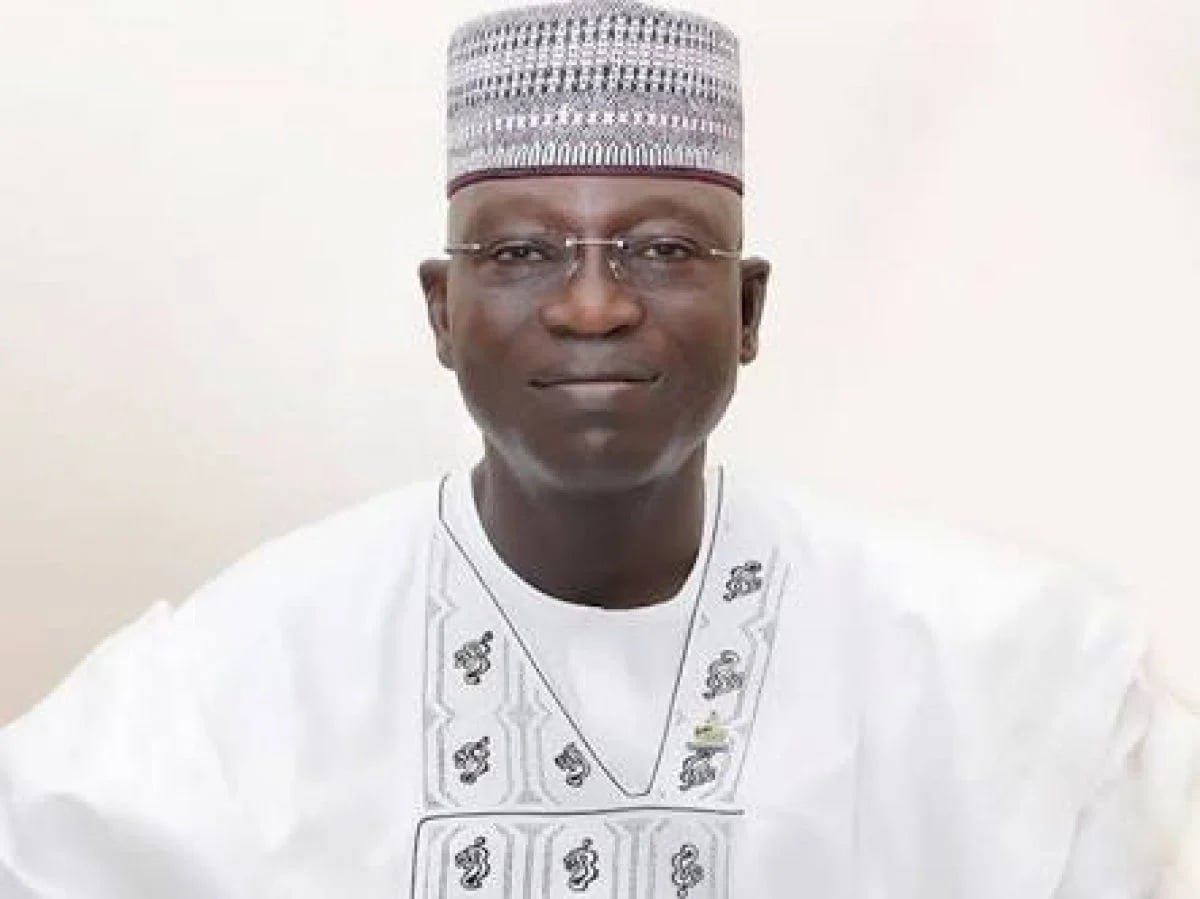
Former Inspector-General of Police and Peoples Democratic Party (PDP) candidate for Jigawa Central Senatorial District, Mr Suleman Abba, in this interview with ADAMU AMADU, speaks on his role in protecting the 2015 general election, his premature retirement, police intelligence gathering, state police, insecurity and why he wants to represent his constituents in the Senate. Excerpts:
YOU previously said you risked your career to protect Nigeria’s democracy in 2015. Considering that protecting lives and property is a constitutional responsibility of the police, what exactly did you mean by risking your career?
What I meant was that I knew that in this part of the world, particularly in developing countries, when a government loses an election, those in power often look for scapegoats. I knew I could become one of them.
It was not that I deliberately wanted to lose my job, but I knew the consequences of standing my ground. Unfortunately, that was what happened. I lost about four years of my career because I would have remained Inspector-General of Police until the next election after the 2015 general election.
Why did you retire before the end of your tenure?
The government asked me to go home, and I was retired prematurely. The reason given was that the police had become undisciplined, but that was a flimsy excuse.
I am a student of discipline. When I attended the National Institute for Policy and Strategic Studies (NIPSS) in 2009, my research focused on discipline in the Nigeria Police Force. I can confidently say that I have considerable knowledge of the subject.
In fact, I was the first Inspector-General of Police to introduce what I considered a practical, long-term solution to the problem of indiscipline. I introduced a pocket-sized card containing the attributes expected of a police officer. Every officer was expected to carry it and familiarise himself with those standards.
ALSO READ: Customs seizes drugs worth N6.1bn in South-West
The idea was to make officers internalise the principles of good conduct and improve their attitudes to work. Had that initiative been sustained, it would have contributed to changing the character and behaviour of police officers.
How could an Inspector-General who had served for less than a year be blamed for a problem that had existed in the police for a long time? I believe the allegation was simply an excuse to find a scapegoat.
There were allegations that you failed to provide adequate protocol for the then outgoing President to meet the President-elect. What is the true of the matter?
That allegation was untrue. I served as aide-de-camp to the first lady under late General Sani Abacha, so I understood protocol and had received the necessary training.
The issue was not about my knowledge of protocol. The real problem arose because I refused to allow anybody to compromise the integrity of the electoral process.
You have been credited with helping to prevent bloodshed during the 2015 election. Did you consider that election the best Nigeria had ever conducted?
Never described it as the best election. It was not my responsibility to rate the election. My responsibility was to protect its integrity before, during and after the polls.
When the results began coming in, some people who realised they were losing wanted to stop the process. I refused to allow that to happen because the law placed the responsibility for protecting the integrity of the election on the Nigeria Police Force, and I was its head.
I thank God that I did not make the wrong decision because the consequences could have been bloodshed.
At the end of the day, those who won knew they had won, and those who lost knew they had lost. The people who saw defeat coming and wanted to disrupt the process were the ones who had problems with me.
I stood my ground and fulfilled my responsibility. That was why people and international observers commended the police for their role.
Were some security agencies compromised in an attempt to disrupt the election?
There were attempts to disrupt the process, but we were able to prevent them from succeeding.
One of my deputies provided me with information about a meeting where plans to disrupt the election were discussed. Security officials, including some of us, had been invited to meetings. When those behind the plan realised I would not change my position on protecting the electoral process, they stopped inviting me and contacted my deputy.
Fortunately, he came to my house after the meeting and informed my wife, who woke me up. He explained the plan to me.
Because of my previous experience commanding mobile police operations in Nyanya, where I had been involved in providing security for the construction of the International Conference Centre, I was familiar with the access arrangements.
I immediately went to the office, mobilised standby police officers and ordered them to block the entrances. Only authorised persons were allowed in.
Those who were expected to enter and disrupt the process were prevented from doing so. Consequently, when the attempt was made, the people behind it could not achieve their objective.
The then Chairman of the Independent National Electoral Commission (INEC) also called me to ask whether I could see what was happening. I told him I was aware of the situation and had already taken measures to prevent the plan from succeeding.
Given Nigeria’s current security challenges, intelligence gathering is critical. Are you satisfied with the country’s intelligence architecture?
This is an issue that sometimes makes me angry because we know what the police used to be in terms of intelligence gathering.
There was a time when the police had one of the best intelligence departments in the country. What happened? It was carved out, and the National Security Organisation (NSO) was created. Since then, the police have never been the same in terms of intelligence gathering.
We need to correct these mistakes. I am a Nigerian, and I have reached a stage where I should be able to speak frankly about issues affecting the country.
You cannot divide a police force, remove its responsibilities and fail to fund it adequately, then expect it to perform optimally.
In any country where different police organisations perform overlapping functions without proper coordination, confusion is likely to arise. We must examine our security structure and make the necessary corrections.
The solution is to strengthen the police, provide adequate funding, improve their welfare, equip them properly and restore their operational capacity. If we do these things, the police will be better positioned to protect lives and property.
There are concerns about inadequate manpower in the police. Is the shortage real, and what is your proposed solution?
Of course, the shortage is real. Nigeria needs more police officers, but we must also examine how our security institutions are structured.
Take Egypt, for example. It has a population smaller than Nigeria’s but a substantial police workforce. We need to study how other countries organise their security institutions and determine what can work for us.
I have previously argued that agencies performing similar policing functions should be better coordinated and, where appropriate, brought under a more unified operational structure.
At one time, I said that if I were given an additional 120,000 personnel, I would be extremely happy because it would help address the manpower shortage.
We should also consider the roles of other security organisations and eliminate unnecessary duplication. We are serving one country, and our institutions should work towards a common objective.
Do you support the recruitment of 50,000 additional police officers?
Absolutely. I support any genuine effort to address the manpower shortage in the police. I am not politicising the issue. The important thing is to provide the police with enough personnel, equipment, training and funding to perform their duties effectively.
However, recruitment alone is not enough.
The government must also provide the resources needed to train, equip and maintain the officers.
What is your position on the proposed establishment of state police in Nigeria?
I support state police 100 per cent. My only concern is whether state governors will take them seriously and commit the necessary funds to their training, equipment and supervision.
Training must come first. Equipment is the second requirement, while effective supervision is equally important. If governors fulfil these responsibilities, state police can help us overcome many of our current security challenges.
Consider Jahun Local Government Area in Jigawa State. If it had 1,000 well-trained and properly equipped police officers, the response to criminal incidents would be much faster. Criminals would find it more difficult to escape because officers would be closer to the scene.
ALSO READ: NYSC disowns certificate linked to ex-Minister Nnanji, cites four defects
In the United States, there are thousands of police departments operating at different levels. If that system can work there, we should examine how to adapt a suitable model to our circumstances.
In my research at NIPSS in 2009, I recommended the establishment of local government police. So, the idea of decentralising policing is not new to me.
WATCH TOP VIDEOS FROM NIGERIAN TRIBUNE TV