

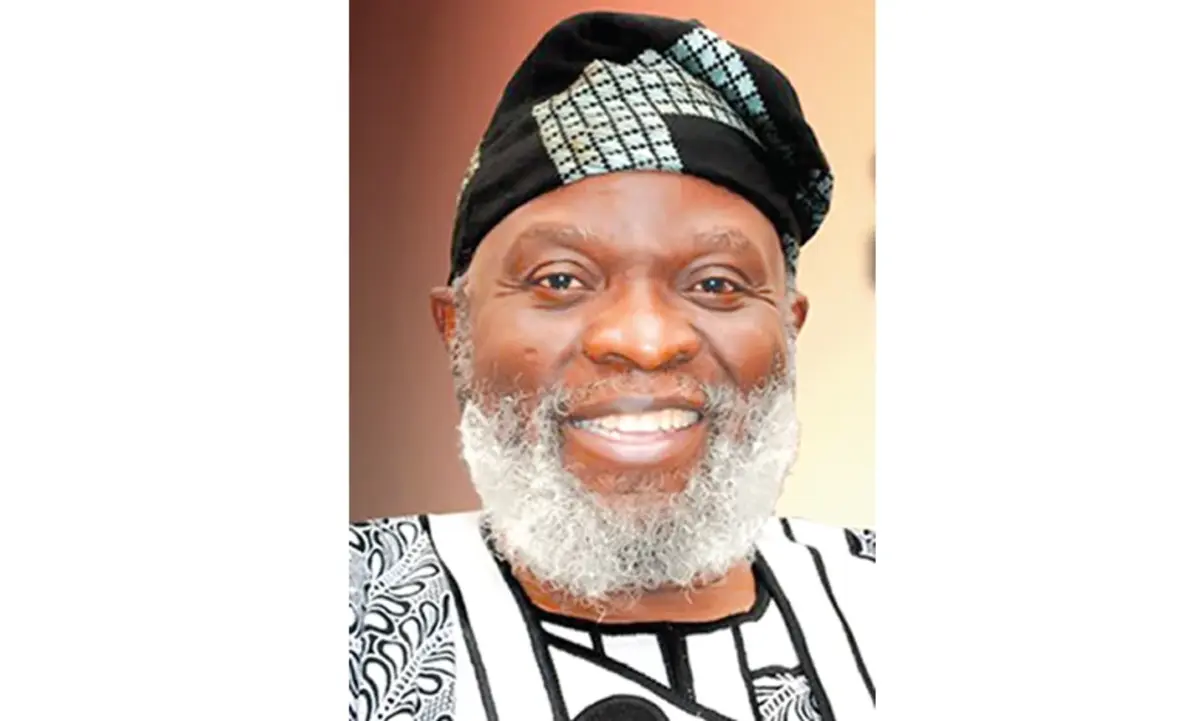
Former Senator Olusola Adeyeye has defended President Bola Tinubu’s prolonged stay outside Nigeria, describing it as a working vacation, but said he disagreed with the President and Vice-President Kashim Shettima being out of the country at the same time.
Adeyeye, a former senator representing Osun Central, spoke against the backdrop of growing questions over Tinubu’s absence from the country and criticism by opposition figures over the administration’s handling of the economy and the cost-of-living crisis.
The Presidency had announced on 30 August that Tinubu was leaving Nigeria for a three-week annual leave in Europe, with London as his first destination. It later announced that the President had extended his working vacation by a few days and was expected to return to Nigeria at the weekend.
Speaking on Channels TV’s Politics Today, the former senator said there was nothing unusual about a President taking a working vacation, arguing that such an arrangement was not expressly prohibited by Nigerian law.
“I wish that I’m actually glad that he didn’t go to New York. He campaigned that if he became President, he would not leave the shores of Nigeria for four years,” Adeyeye said.
He, however, drew a distinction between the President’s vacation and the decision to have both the President and his deputy outside the country simultaneously.
“The only thing I disagree with what happened this past week is that both he and the Vice-President were out at the same time,” he said.
“If I were he, I would have sent my Minister of Foreign Affairs, or maybe my ambassador. Guess what? We have a permanent representative in New York. How many world leaders boycotted that General Assembly and the world did not collapse?”
The Presidency had said that while Tinubu was away, he continued to direct the affairs of the country and delegated Shettima to represent him at some official functions. It also said that, after Shettima left Abuja for New York on 20 September to attend the UN General Assembly, Secretary to the Government of the Federation, George Akume, would continue representing the President at some events.
Adeyeye also dismissed suggestions that the President’s absence meant he was disconnected from government, pointing to activities undertaken by Tinubu during the trip.
Adeyeye rejected what he described as opposition attempts to discredit the administration’s economic policies, arguing that the increased allocation of resources to states had improved their ability to meet salary obligations and execute projects.
“Before Bola Tinubu became President, all the states of Nigeria were struggling to pay their salary,” he said.
“Since Bola Tinubu became President, the manner in which he has orchestrated the distribution of the allocation has guaranteed that even the laziest of governors can now pay salary to their workers.”
He cited Osun State, where he served under former Governor Rauf Aregbesola, saying workers could now see their salaries being paid regularly.
“The civil servant of Osun State, whether from Orile-Igbomina, from Ila-Orangun, from Iragbiji, from Egebu-Etasha, from Ibokun, etcetera, can now see that month after month they get their salary,” he said.
Adeyeye also argued that state governments were now in a better position to execute projects, attributing the development to what he described as the economic engineering of the Tinubu administration.
“Far from what was happening in the past, currently any serious governor can pay salary, any serious governor can implement projects. That is because of the economic engineering brought to pass by Tinubu,” he said.
He further defended the administration’s education interventions, recalling how financial difficulties once prevented members of his generation from pursuing higher education.
Adeyeye compared the current efforts to finance tertiary education with the indigent students’ scheme associated with the late Chief Obafemi Awolowo, saying such interventions could change the lives of young Nigerians.
“If you were good enough to get admission into university and you couldn’t find your tuition and you couldn’t feed yourself, you got a stipend that was called indigent scheme,” he recalled.
He said the current approach to education financing could similarly give young Nigerians from poor families opportunities to pursue university education.
The former senator also rejected calls for the restoration of fuel subsidy, particularly the position attributed to former Vice-President Atiku Abubakar and other opposition figures.
Asked whether Tinubu should heed calls for a return of the subsidy, Adeyeye replied: “The President must not.”
He argued that subsidy removal was not an entirely new policy direction introduced by Tinubu, noting that previous political leaders had also advocated or attempted reforms in the petroleum sector.
“Atiku told this country less than four years ago that if he became President, he will remove subsidy. Obi told this country less than four years ago that if he became President, he will remove subsidy,” he said.
“Before all of them, Jonathan attempted to remove subsidy.”
Adeyeye further recalled the role of the National Assembly under former Senate President David Mark in the passage of petroleum-sector legislation, arguing that the broad objective of reforming the sector predated the Tinubu administration.
“David Mark was President of the Senate when the Petroleum Industry Bill was passed. David Mark and every member of his party wanted the same thing that Bola Tinubu is now implementing,” he said.
Adeyeye said the opposition had a right to criticise the government but argued that political opponents should not condemn policies they had previously supported.
“Let’s not call a dog a bad name just to hang it.
The opposition is entitled to complain, so let them go ahead.”
WATCH TOP VIDEOS FROM NIGERIAN TRIBUNE TV