

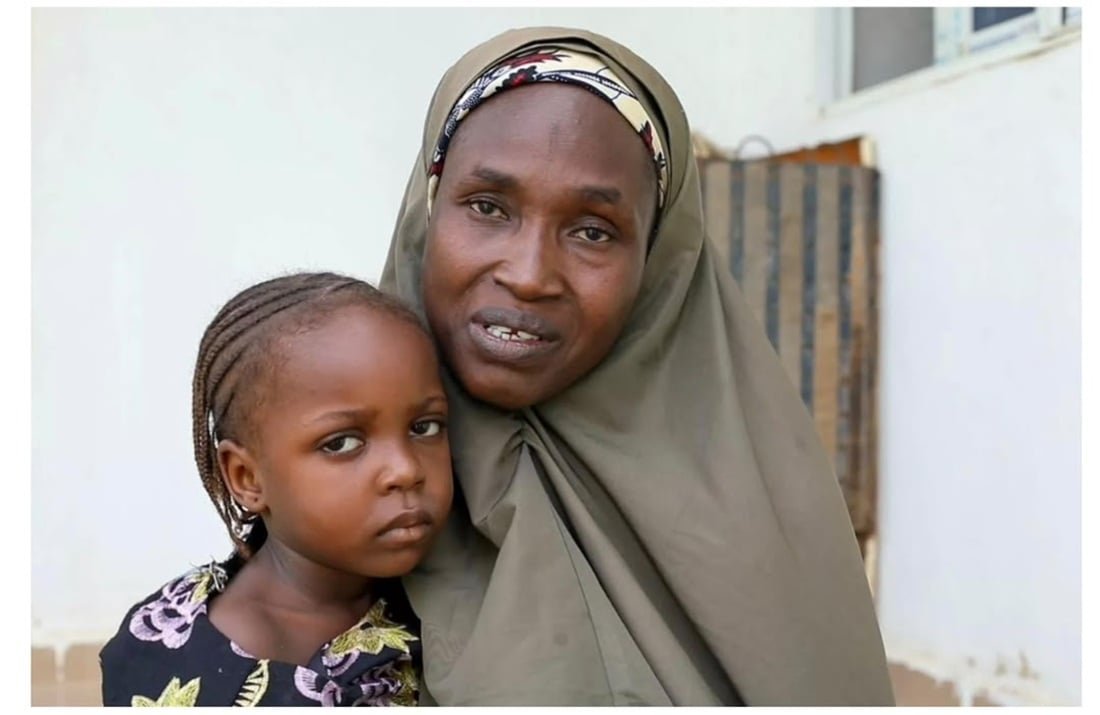
When Saratu Sharif Musa’s children developed fever, the nights in her Dutse Danmasara Gari community in Jigawa State were often long. The mother of two said recurring fever had become a source of worry in the household, especially when the children became restless at night.
“They were susceptible to fever constantly,” she said.
But Saratu added she began to notice a change after her children received azithromycin during a house-to-house distribution round under the Safety and Antimicrobial Resistance of Mass Administration of Azithromycin in Nigeria (SARMAAN) Project.
According to her, a community health worker visited her home, explained the purpose of the medicine, administered the dose to the children and responded to her questions.
“Since collecting the medicine, my children have stopped experiencing fever like they used to,” she said.
Saratu’s account reflects the confidence some caregivers say they have developed after participating in the programme. In Sokoto South Local Government Area of Sokoto State, Mrs Asmau Aliyu, a mother of five, gave a similar account.
Aliyu said she was initially indifferent when her husband mentioned the azithromycin campaign but after hearing about it on radio she became more comfortable. It also helped when health workers explained the intervention to families in her community and she observed other caregivers participate.
ALSO READ: SARMAAN: What millions of children reached brings to global public health conversation
“My husband convinced me to have our children receive the medicine,” she said. “By the time my children were set to receive it, I had zero doubts.”
She recalled that the health worker explained how the medicine would be administered, mixed it with water and gave it to her child in her presence. Aliyu said that in the weeks after the administration, she noticed that her children appeared stronger and more active.
For the two mothers, the programme has moved beyond messages heard randomly to reinforcements on radio and announcements in the community through peers. It has become part of their daily understanding of how to protect their children.
SARMAAN is a child-survival initiative that supports the supervised mass administration of azithromycin to eligible children aged one to 59 months in high-mortality communities. It is implemented through government health structures, trained health workers, community drug distributors and partners, with monitoring for safety and antimicrobial resistance.
The project has reached more than 16 million children across 11 northern states and works hand in hand with other tools in the child survival tool box and essential child health services.d-health services.
Nigeria continues to carry a high burden of deaths among children under five, with preventable conditions such as malaria, pneumonia and diarrhoea remaining major threats. The country’s 2023–24 Demographic and Health Survey estimated under-five mortality at 110 deaths per 1,000 live births, meaning approximately one in every nine children dies before reaching age five.
For programme managers, however, reaching a child is only one part of the work. The other is building the trust needed for parents and caregivers to make informed decisions.
This has made community engagement central to the campaign. Health workers, community women leaders, traditional leaders, religious leaders and male champions are expected to help families understand what the intervention is, why it is being offered and how safety is monitored.
The project’s approach emphasizes the need for clearer communication and how it works in peri-urban and rural communities as Nigeria fights to reduce its child mortality rate.
For Saratu and Asmau, the value of that communication was straightforward as they were able to ask questions, observe the process and make decisions they felt were right for their children.
As Nigeria seeks to reduce preventable child deaths, their stories show that public-health interventions may be designed in offices and coordinated through state systems, but their success is ultimately decided in homes through one caregiver, one question and one child at a time.
WATCH TOP VIDEOS FROM NIGERIAN TRIBUNE TV