

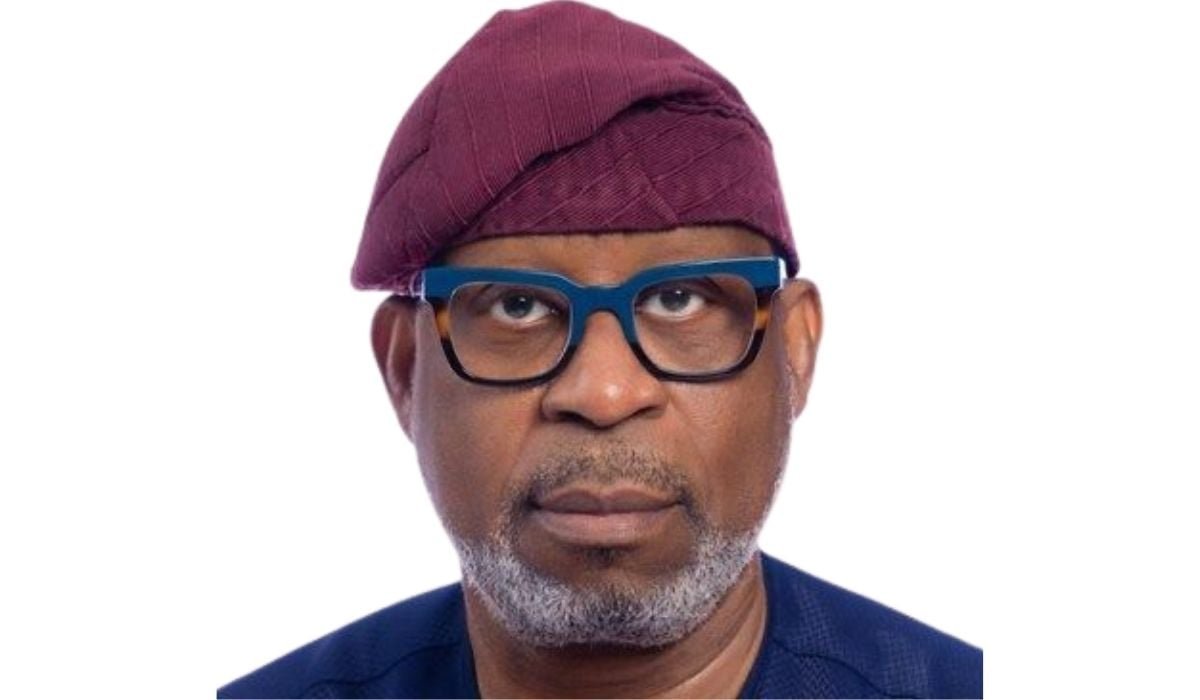
Minister of Solid Minerals, Dele Alake, has said President Tinubu deserved commendation, not vilification, for his economic policies, particularly scrapping the fuel subsidy regime.
At an interactive session with journalists on Wednesday in his office, Alake, who was recently announced as lead spokesperson for the All Progressives Congress Presidential Campaign Council, declared that it takes a politician with unusual courage to put his aspiration for a fresh mandate on the line to reverse a policy that has benefited very few but privileged, entrenched interests in the country.
Checks revealed that, aside from scrapping the fuel subsidy regime, President Tinubu, at his formal inauguration on May 29, 2023, also removed the multiple foreign exchange rates for a single rate.
ALSO READ: Sanwo-Olu declares ‘small state of emergency’ on Lagos waste crisis
Alake maintained that previous administrations before him evaded what needed to be done in order not to jeopardise their second-term mandate.
He said: “It does not need me to tell you or elaborate on the fact that we knew what the Nigerian economy was before 2023. And it does not need me to inform you that all the reforms and the policies that were and are necessary to correct these distortions and contradictions in the Nigerian society were there and identifiable by those previous governments. The only thing lacking was the courage to take those decisions.
“And there is no shortcut. They say, our elders say, when you are in a hole, what do you do? You stop digging. Because the more you dig, the deeper you sink.
“But because those previous governments lacked that courage to stop digging, for short-term political expedience, they were afraid of elections; they were afraid of bringing them back to office and all that. So they shifted those decisions- the hard decisions they ought to have taken.
“I recall, and most of you will be aware, many years ago there was this issue of removal of subsidies that dominated the space in Nigeria, and there were protests: subsidies should not be removed; they should be removed. The government at that time knew they were removing them; they should be removed. But the fact of the matter was, it went back on the process of removing them.
“When there were protests, it backtracked because there was an election coming. And so people swallowed the bitter pill. But somebody came and decided to swallow the bitter pill, to take the bullets on behalf of Nigerians.
“I think it shows in all senses of fairness and objectivity. If a man, who is a politician himself, who should be very sensitive to elections, his government back to office, decided to take the bullets, regardless of the consequences on his own political career, on behalf of the nation, because the nation had to be reset.
“I think it’s just very, very important for us to appreciate that. And that is the kind of person that Nigeria needs, for consistency. Now, yes, those hard decisions have been taken.”
Alake, who enumerated the gains of what he called “economic restructuring,” under the present administration, also alleged that a certain cartel that was a beneficiary of the discarded subsidy regime has vowed to push back the gains of the removal of the subsidy era.
“The beneficiaries of the fuel subsidy were the cartels, the oil cartels. And they took to smuggling. They would buy the fuel at a lower price, cross the border, and immediately make humongous profits.
“And they come back to Nigeria to oppress the rest of us. Those people who are benefiting from it, when the fuel subsidy was removed, did you think that they would fold their arms and be looking? No! They will fight back. They will push back.
“And they are fighting back, and they are pushing back. And the media, unwittingly, has been helping them to amplify their own selfish pushbacks against the long-term progress of the society. Now, at that time when there was a fuel subsidy, you recall how many states couldn’t pay salaries.
“In fact, the federal government itself was borrowing to pay salaries. And at some point, I recall, more than 18 states, if not more, I’m sure more, could not meet up with wages. Some who were trying were paying half of the salary, or the quota, or spreading the salaries, and stuff like that.“
WATCH TOP VIDEOS FROM NIGERIAN TRIBUNE TV