

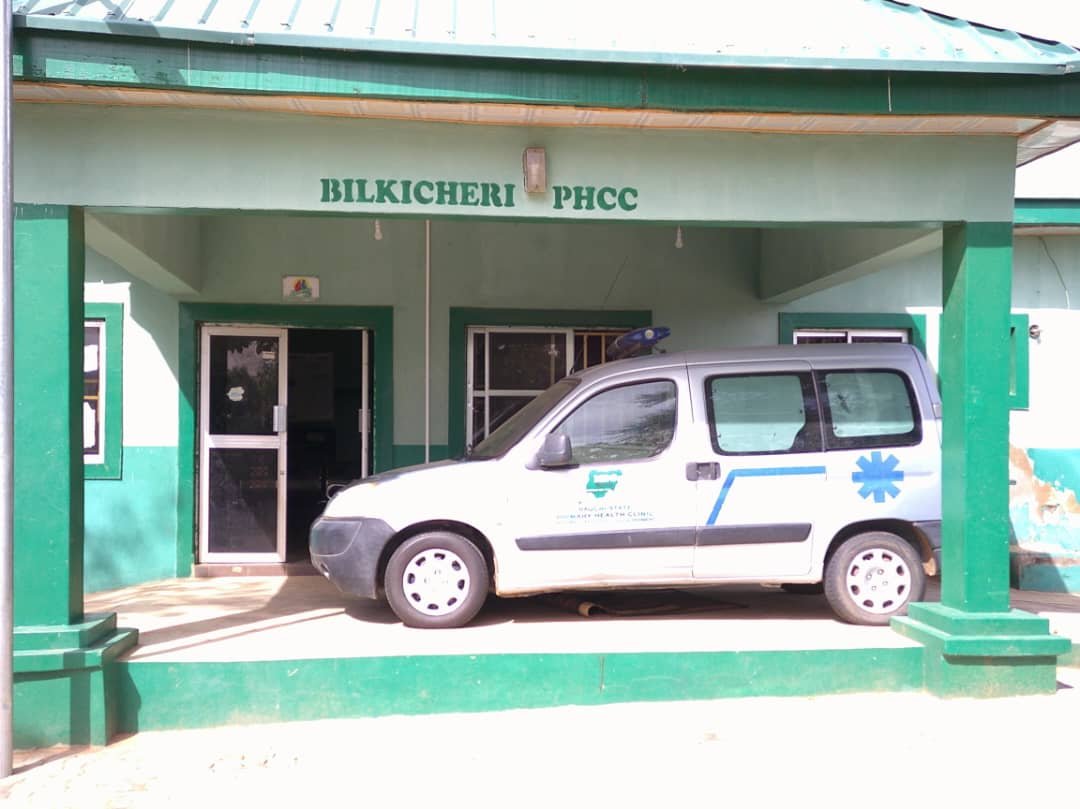
For years, women in Gamsha, a remote agrarian community in Bilkicheri Ward of Itas/Gadau Local Government Area of Bauchi State, delivered babies under the glow of flashlights.
During the rainy season, water leaked through the roof of the Primary Health Care Centre (PHC), soaking consultation rooms and creating difficult conditions for both patients and health workers.
Healthcare workers struggled with inadequate equipment, unreliable electricity, poor infrastructure and severe staffing shortages.
Today, the story is changing. Powered by the Federal Government’s Primary Healthcare revitalisation programme and funding support through the Basic Healthcare Provision Fund (BHCPF), Gamsha PHC in Itas/Gadau Local Government Area and Beli PHC in Shira Local Government Area have emerged as examples of how targeted investments in primary healthcare are improving access to quality services in some of Bauchi State’s hardest-to-reach communities.
The transformation is not only visible in new buildings and equipment. It is reflected in rising immunisation coverage, safer deliveries, improved staff productivity, stronger community confidence and growing demand for healthcare services.
Facility once held together by determination
At Gamsha PHC, Facility Manager, Fatima Umar Adam vividly recalls the conditions before the intervention.
According to her, “The facility was dilapidated. The roof was leaking, the ceilings were damaged, and there were cracks everywhere. During the rainy season, water entered the building and made it difficult to provide services.”
Despite the poor conditions, the facility remained a lifeline for residents of Bilkicheri and surrounding settlements, including neighbouring communities from Jigawa State who cross the border to access healthcare services.
According to Adam, Gamsha PHC serves an estimated population of more than 28,000 people spread across Bilkicheri and neighbouring settlements, making it one of the busiest facilities in the area.
Because there was no nearby alternative, health workers continued providing antenatal care, immunisation and delivery services under challenging conditions.
“We were just managing. You cannot compare before and now,” she said.
The challenges extended beyond infrastructure. Located deep within difficult terrain, reaching the facility requires crossing multiple rivers during the rainy season.
“Before you come to this facility from the local government headquarters, you have to cross about three rivers. During the rainy season, it becomes very difficult,” Adam explained.
Turning to solar energy for power
One of the most transformative changes has been the installation of solar power, which now provides uninterrupted electricity.
“Before, we did not have light. Now we have 24-hour electricity. We can conduct deliveries any time of the day or night without problems,” she said.
The impact of reliable power supply has been immediate. “In fact, we are more productive now. We send our reports without problems. Our laptops are charged, our phones are charged and even during the hot season we are not struggling with heat,” she said.
Suratu Muhammadu, a family planning client, said the availability of electricity has improved access to services, particularly for women who prefer privacy.
“Previously, when we wanted to come at night, there was no electricity. Since the improvements were made, we can now come at any time, receive care and return home safely,” she said.
Another resident, Zaitu Halliru, who delivered her baby at the facility, recalled how healthcare workers arranged transportation when labour began.
“When my labour started at home and I could not come by myself, they sent a motorcycle to pick me up. After delivery, they took me back home. Before, women often delivered with flashlights because there was no electricity. Now everything has changed,” she said.
Rising immunisation coverage
Perhaps one of the most striking indicators of progress is the sharp increase in childhood immunisation.
Before the interventions, Gamsha PHC recorded fewer than 20 children monthly for immunisation services. Today, the facility records over 100 children monthly.
According to Adam, a combination of community mobilisation, routine outreach activities and incentive programmes has contributed significantly to the increase.
“Before, we recorded less than 20 children. Now we record more than 100 every month,” she said.
The facility conducts fixed immunisation sessions weekly and outreach services twice weekly, taking healthcare directly to communities.
Community engagement has also helped address vaccine hesitancy, adding that the impact is becoming evident in disease prevention.
“We go to communities, meet traditional leaders and sensitise parents about immunisation. That has helped improve acceptance,” she explained.
Common childhood illnesses in the area include malaria, diarrhoea, urinary tract infections, typhoid fever and pneumonia. Through routine immunisation, health education and prompt treatment, health workers say many of these conditions are being better managed.
“We administer pneumococcal vaccines against pneumonia and provide malaria treatment using ACTs. We also educate women on hygiene and nutrition,” Adam said.
Beyond immunisation, health workers are tackling malnutrition through nutrition counselling and referrals.
According to Adam, many families possess nutritious food items but lack knowledge on preparing balanced meals for children.
“We teach mothers how to prepare simple nutritious meals using locally available foods such as soybeans, groundnuts and millet,” she said.
The result has been a reduction in severe malnutrition referrals. “Previously, we referred about 10 malnutrition cases. Recently, I referred only one severe case,” she noted.
Our reporter gathered that health workers monitor children’s nutritional status regularly and report noticeable improvements among families that participate in nutrition education programmes.
Safer deliveries and reduced maternal risks
The revitalisation programme has also contributed to safer childbirth. At Gamsha PHC, monthly deliveries have nearly doubled, increasing from about 18–19 deliveries to between 35 and 36 deliveries monthly.
“Women are delivering more in health facilities now than before,” Adam said.
The availability of electricity, improved equipment and better working conditions have encouraged more women to seek skilled birth attendance.
Adam said maternal and neonatal outcomes have also improved. “Last year, I recorded two maternal complications that worried me. Now we are able to manage many cases better because we have the facilities and light to work effectively,” she said.
However, challenges remain. The facility lacks doctors, advanced newborn care units and blood transfusion services.
“When we have severe postpartum haemorrhage or babies with danger signs, we must refer them because we cannot provide those services here,” she explained.
BHCPF keeping services running
A critical component sustaining services at both facilities is the Basic Healthcare Provision Fund.
At Gamsha PHC, BHCPF resources have helped maintain essential operations, including ambulance fuel, facility maintenance and service delivery.
Adam recalled that an ambulance had existed since 2009 but was largely unusable because there was no funding for fuel and maintenance.
“After BHCPF came, there was provision for ambulance operations. That made emergency referrals easier,” she said.
The facility also operates a Drug Revolving Fund system to ensure consistent availability of essential medicines.
“We do not have major drug shortages because we are using the Drug Revolving Fund. Medicines are always available,” she explained.
At Beli PHC, Facility Manager, Awalu Umar, said the facility receives approximately N600,000 quarterly through the BHCPF.
“We receive around N600,000 every quarter. The funds are spent based on our business plan, which outlines priority activities and needs of the facility,” he said.
The funds support facility operations, minor maintenance, service delivery activities and other approved expenditures.
“We are implementing activities according to the business plan developed for the facility,” Umar added.
Beli PHC: A growing referral hub
Several kilometres away in Shira Local Government Area, Beli PHC is experiencing a similar transformation. This reporter gathered that before revitalisation, the facility lacked electricity, dedicated offices and adequate storage space.
“We did not have a family planning office, immunisation office or proper storage facility,” Umar said.
The renovation changed that. The facility now has designated service areas, improved infrastructure and diagnostic equipment, including laboratory machines, infrared thermometers, wheelchairs and scanning equipment.
“We now have machines that provide results within seconds. Before, some tests took up to 30 minutes,” he explained.
The improvements have attracted patients from neighbouring communities.
“People are coming because the facility is cleaner, more organised and has equipment that nearby facilities do not have,” Umar said.
Mallam Shirama Mohammed, speaking on behalf of the District Head of Beli, Alhaji Muhammed Babangida Beli, described the revitalisation as a major milestone.
“The recent revitalisation is a welcome development. We thank God and we are excited to see improvements in our healthcare centre,” he said.
He noted that residents increasingly trust formal healthcare services.
“Whenever we fall sick, we go straight to the hospital. We do not rely on traditional treatment. We trust the services provided here.”
The district representative also praised immunisation programmes, saying, “Diseases such as polio, measles and chickenpox have become things of the past in our community because of immunisation.”
In Gamsha, community leaders say the transformation extends beyond healthcare. Madakin Bilkicheri, Alhaji Usman Saleh, said the improvements have restored confidence among residents.
“Patients receive medications on time and services have improved greatly,” he said.
“Before, the roof leaked whenever it rained. We had poor infrastructure and inadequate beds. Today those problems have been solved.”
According to him, the transformation from a small dispensary into a functional health centre has brought hope to residents.
“This hospital means a lot to our community. Because of it, we are also hopeful that road development will follow,” he said.
Women using the facility share similar sentiments. One of them is Hannatu Muazu, who attends antenatal care services there. According to her, healthcare workers provide quality care and conduct necessary tests during clinic visits.
“The hospital is clean and we are receiving very good services. We are happy with the improvements,” she said.
Traditional birth attendant, Ramatu Adamu Nadabo, said the improvements have strengthened collaboration between community birth attendants and health workers.
“When I see complications, I bring women to the hospital. There is electricity now, services are available even at night and healthcare is much better,” she said.
The workforce gap
Despite the progress, both facilities face severe shortages of healthcare workers. At Gamsha PHC, only four staff members currently manage service delivery for a population of over 28,000 people.
“We are only four staff members. Human resources remain our biggest challenge,” Adam said.
She believes deploying additional personnel, including doctors and laboratory scientists, would significantly improve service delivery.
“We need more staff, motorcycles for outreach, furniture and support equipment,” she added.
At Beli PHC, the Facility Manager, Auwalu Umar identified similar challenges. He said, “We do not have enough staff. We need more laboratory personnel, pharmacy staff, record officers and cleaners,” he said.
The facility currently relies on volunteers in some critical departments.
“We need at least four laboratory staff but we only have two volunteers. The pharmacy also requires additional personnel,” he explained.
Beli PHC additionally lacks a functional labour bed, forcing health workers to improvise during childbirth services. “That is one of our urgent needs,” Umar said.
Beyond buildings
For health workers on the frontlines, the revitalisation programme represents more than new structures. It is about dignity, confidence and the ability to provide care effectively.
Adam remembers a woman who could not ride on a motorcycle during labour because of weakness.
“They called me. I sent our driver to bring her. We conducted the delivery successfully and took her back home. That baby is now about six months old,” she recalled.
For Umar, the upgraded facility has renewed his commitment to service.“I feel happy because the facility has been renovated. We now have equipment and better working conditions. It motivates us to work harder and help our people,” he said.
The road ahead
While infrastructure upgrades have transformed healthcare delivery in Gamsha and Beli, facility managers insist that sustainability will depend on continued investment in staffing, equipment, referral systems and road infrastructure.
For communities once accustomed to leaking roofs, darkness and limited services, however, the changes are already life-changing.
In Gamsha, where women once delivered babies by flashlight, mothers now access skilled care under electric lights. Children are being immunised in record numbers. Ambulances respond to emergencies. Communities that once struggled to access healthcare are increasingly placing their trust in the local PHC.
The revitalisation of these facilities demonstrates how strategic investments in primary healthcare, backed by the BHCPF and community engagement, can strengthen rural health systems, improve health outcomes and bring quality healthcare closer to the people who need it most.
In Beli, PHC revitalisation programme is equally evident, though significant gaps remain.
Serving an estimated population of 21,443 people in Beli community and about 15 surrounding communities, the facility has become a critical healthcare hub for residents across the ward.
The centre now provides maternal and child healthcare, routine immunisation, antenatal services and treatment for common illnesses following improvements under the revitalisation programme.

Beli Facility Manager, Auwalu Umar, said the intervention brought visible changes to the facility, including renovation of existing structures, roofing repairs, painting, solar-powered electricity and the construction of a new immunisation shelter.
“Before the revitalisation, we had no electricity and patients were reluctant to come at night. Today, we have solar power, better working conditions and improved service delivery. The cold chain system is functioning well and vaccine availability is stable,” he said.
According to him, routine immunisation is conducted twice weekly, while outreach sessions are taken to settlements located more than two kilometres away from the facility.
He noted that vaccine acceptance has improved considerably in recent years, leading to a decline in childhood diseases such as measles, diphtheria and tetanus.
“Unlike a few years ago when diphtheria was common across the settlements, cases have reduced significantly. Measles is also no longer as prevalent as before because more parents are bringing their children for vaccination,” he said.
However, Umar identified inadequate manpower as the most pressing challenge confronting the facility.
He explained that despite the physical upgrades, the shortage of healthcare workers continues to limit service delivery, particularly in maternal and child healthcare.
“We need more staff. If policymakers, commissioners or lawmakers visit this facility today, our first request will be deployment of more healthcare workers,” he said.
The facility manager also lamented declining patronage by some women in the community who still prefer seeking healthcare services from the facility’s retired manager, Hajia Fatima Muhammed.
According to him, many women built trust in the retired midwife over several years and continue to patronise her for minor ailments and maternal care advice despite her retirement.
Muhammed, who retired from active service but still attends to minor ailments from her residence, defended her actions, saying community members often approach her because of longstanding relationships.
“I only manage minor cases like fever, diarrhoea and abdominal pain. Where laboratory investigations or specialised care are needed, I refer them to the health facility,” she explained.
The retired health worker acknowledged that some women still come to her because of familiarity and trust developed over decades of service but insisted she regularly encourages them to use the revitalised PHC.
She also commended the improvements recorded through the revitalisation programme.
“Before the renovation, the facility had leaking roofs, damaged structures and no fence. Today, there is privacy, better infrastructure and improved maternal and child healthcare services. The major challenge remaining is manpower,” she said.
The Beli facility manager further highlighted infrastructure deficiencies requiring urgent attention.
According to him, the facility’s water system became faulty about a year after the revitalisation exercise, forcing staff and patients to depend on a hand pump while modern toilets remain unusable.
“The water system stopped functioning and despite reporting the issue to the local government WASH office, there has been no solution. Patients and staff now use pit latrines because there is no water for the flush toilets,” he said.
He also appealed for the extension of the facility’s perimeter fence, noting that residents frequently climb over sections of the low fence instead of using the gate.
“The fence needs to be raised. People cross through the facility premises because some sections are too low. This compromises security,” he said.
Another concern, he said, is the presence of two residential houses located within the health facility compound.
According to him, occupants and their visitors frequently move in and out of the premises at odd hours, creating security and sanitation concerns.
“We appeal to government to relocate the households occupying the buildings within the facility compound. A healthcare facility should not share its premises with private residences,” he said.
Transportation remains another major challenge
The facility’s ambulance, donated years ago by a former federal lawmaker, has reportedly been non-functional for over a decade, while a motorcycle donated by UNICEF has also broken down.
As a result, emergency referrals depend largely on commercial motorcycles and private transport, with patients often paying between N10,000 and N15,000 to reach referral hospitals.
“Lack of transportation affects emergency referrals and outreach activities. Sometimes patients deteriorate while relatives are searching for transport,” Adamu said.
Despite the challenges, he expressed optimism that community engagement structures could help address some of the gaps.
“We still have hope because we want to continue serving our people. Through the Ward Development Committee, community leaders and advocacy to local government authorities, we believe solutions can be found,” he said.
He also appealed for the restoration of stipends previously paid to volunteer health workers and traditional birth attendants, noting that many stopped referring pregnant women to the facility after the incentives were discontinued.
“Those volunteers were helping us identify pregnant women and refer them to the facility. Since the allowances stopped, referrals have reduced significantly,” he added.
The District Head of Beli also praised the revitalisation programme, saying it had transformed healthcare delivery in the community.
According to him, residents now enjoy better access to maternal and child healthcare services, improved immunisation coverage and a more conducive environment for seeking treatment.
He noted that community leaders have continued to support health workers through sensitisation campaigns aimed at encouraging women to attend antenatal clinics and ensure their children receive routine immunisation.
Like Gamsha PHC, Beli PHC also relies on resources from the Basic Healthcare Provision Fund (BHCPF) to address operational needs.
The facility manager explained that BHCPF allocations are jointly planned and managed by facility staff, including officers responsible for monitoring and evaluation, routine immunisation, maternity services and pharmacy operations.
He said identified gaps are prioritised, documented and forwarded through appropriate government channels for approval and funding.
At Gamsha PHC, health workers similarly disclosed that BHCPF resources have been instrumental in maintaining essential services, supporting facility operations and addressing critical gaps identified through facility management committees.
For residents of both Gamsha and Beli communities, the revitalisation programme has improved access to healthcare and strengthened confidence in primary healthcare services.
Yet the experiences of the two facilities underscore a common reality across many rural communities: while infrastructure upgrades have brought visible progress, sustainable gains will depend on adequate staffing, functional referral systems, reliable water supply, transportation and continued investment in frontline healthcare workers.
WATCH TOP VIDEOS FROM NIGERIAN TRIBUNE TV