

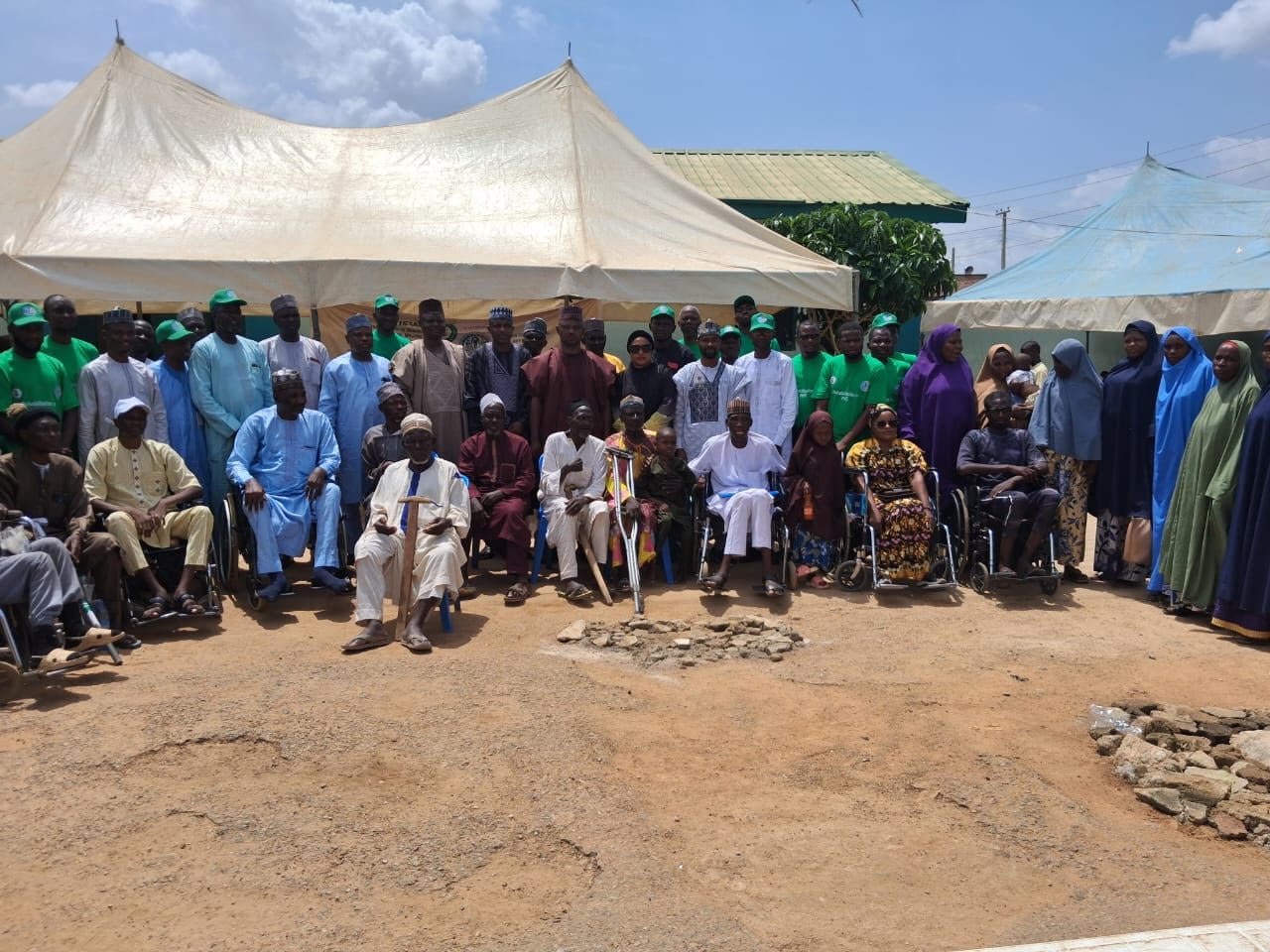
The Federal Government has launched the integration of rehabilitation services into Nigeria’s primary healthcare system, unveiling an ambitious plan to extend the programme to the country’s over 34,000 Primary Health Care (PHC) centres as part of efforts to expand access to essential rehabilitation services and achieve universal health coverage.
The initiative was formally launched at the Doya Primary Health Care Centre in Bauchi State by the Coordinating Minister of Health and Social Welfare, Muhammad Ali Pate, who was represented by his Special Adviser, Baba Abubakar Suleiman.
Speaking on behalf of the minister, Suleiman described the launch as a landmark in the Federal Government’s drive to build an inclusive, resilient and equitable health system by making rehabilitation services available at the community level.
He said the programme would ensure that persons living with disabilities, older persons, survivors of trauma, people living with non-communicable diseases and others requiring rehabilitation services can access quality care closer to their homes.
“Today marks another significant milestone in our collective efforts to build a health system that is inclusive, resilient, equitable and responsive to the needs of every Nigerian. It is also a defining moment in our determination to ensure that rehabilitation services become an integral component of Primary Health Care and are accessible to every citizen,” he said.
Suleiman noted that the initiative aligns with the Renewed Hope Agenda of President Bola Ahmed Tinubu and complements the Nigeria Health Sector Renewal Investment Initiative by strengthening primary healthcare, improving access to quality services and protecting vulnerable populations.
He explained that the programme also reflects Nigeria’s commitment to the World Health Organization Rehabilitation 2030 Initiative, which calls on countries to integrate rehabilitation into universal health coverage.
According to him, following a national stakeholders’ meeting in 2023, the Federal Government approved implementation of the WHO Rehabilitation 2030 Initiative in Nigeria and inaugurated the National Rehabilitation Technical Working Group in November 2024.
He said the working group had completed a National Rehabilitation Situation Assessment and was finalising the National Rehabilitation Policy, National Strategic Plan and Monitoring and Evaluation Framework to guide implementation nationwide.
The minister added that the Federal Government had also approved the National Minimum Benchmark Framework for integrating rehabilitation services and workforce requirements into primary healthcare to ensure quality, consistency and accountability across the country.
While acknowledging the progress made, Suleiman said the shortage of rehabilitation professionals remained a major obstacle to nationwide implementation.
“Nigeria currently has approximately 34,000 Primary Health Care Centres, yet we have only about 5,000 licensed physiotherapists, alongside significant shortages in other rehabilitation professions. This workforce is clearly insufficient to support the nationwide integration of rehabilitation services into Primary Health Care,” he said.
He said the government would work with the Medical Rehabilitation Therapists Board of Nigeria, educational institutions and other stakeholders to expand training opportunities, strengthen regulation and increase the number of qualified rehabilitation professionals.
The minister also disclosed that the Federal Ministry of Health and Social Welfare was mobilising additional funding to replicate the Doya model in PHCs across the country while pursuing the inclusion of rehabilitation services and assistive products under the national health insurance scheme to reduce patients’ out-of-pocket expenses.
He urged physiotherapists, occupational therapists, prosthetists and orthotists, speech and language therapists, audiologists and other rehabilitation professionals to work together to deliver multidisciplinary and patient-centred care.
Suleiman also called on state governments, local government authorities, primary healthcare agencies, development partners, academic institutions, civil society organisations and organisations of persons with disabilities to support the implementation of the initiative.
Registrar and Chief Executive Officer of the Medical Rehabilitation Therapists Board of Nigeria, Rufai Yusuf Ahmad, described the launch as a historic step towards bringing rehabilitation services closer to communities.
He reaffirmed the board’s commitment to regulating the profession and ensuring that Nigerians receive quality, safe and ethical rehabilitation services at all levels of healthcare.
Also speaking, Chairman of the Board of Trustees of the Foundation for Empowering Persons with Disabilities through Medical Rehabilitation, James Lalu, announced that the foundation had donated rehabilitation equipment and materials to the Doya Primary Health Care Centre.
Lalu said the foundation is also committed to funding the salary of a physiotherapist for one year to ensure the uninterrupted delivery of rehabilitation services at the facility.
He expressed optimism that the Doya PHC would serve as a model for integrating rehabilitation services into primary healthcare across Nigeria through stronger public-private partnerships.
The event attracted the Bauchi State Commissioner for Health and Social Welfare, the Permanent Secretary of the state Ministry of Health, the Executive Director of the Bauchi State Primary Health Care Development Agency, the Executive Secretary of the Bauchi State Commission for Persons with Disabilities, representatives of organisations of persons with disabilities, traditional rulers, community leaders, healthcare workers, professional associations and development partners.
With the launch, residents of Doya and neighbouring communities can now access physiotherapy, occupational therapy, speech therapy, audiology, and prosthetics and orthotics services at the primary healthcare level, reducing the need to travel to secondary or tertiary health facilities for rehabilitation care.
WATCH TOP VIDEOS FROM NIGERIAN TRIBUNE TV