

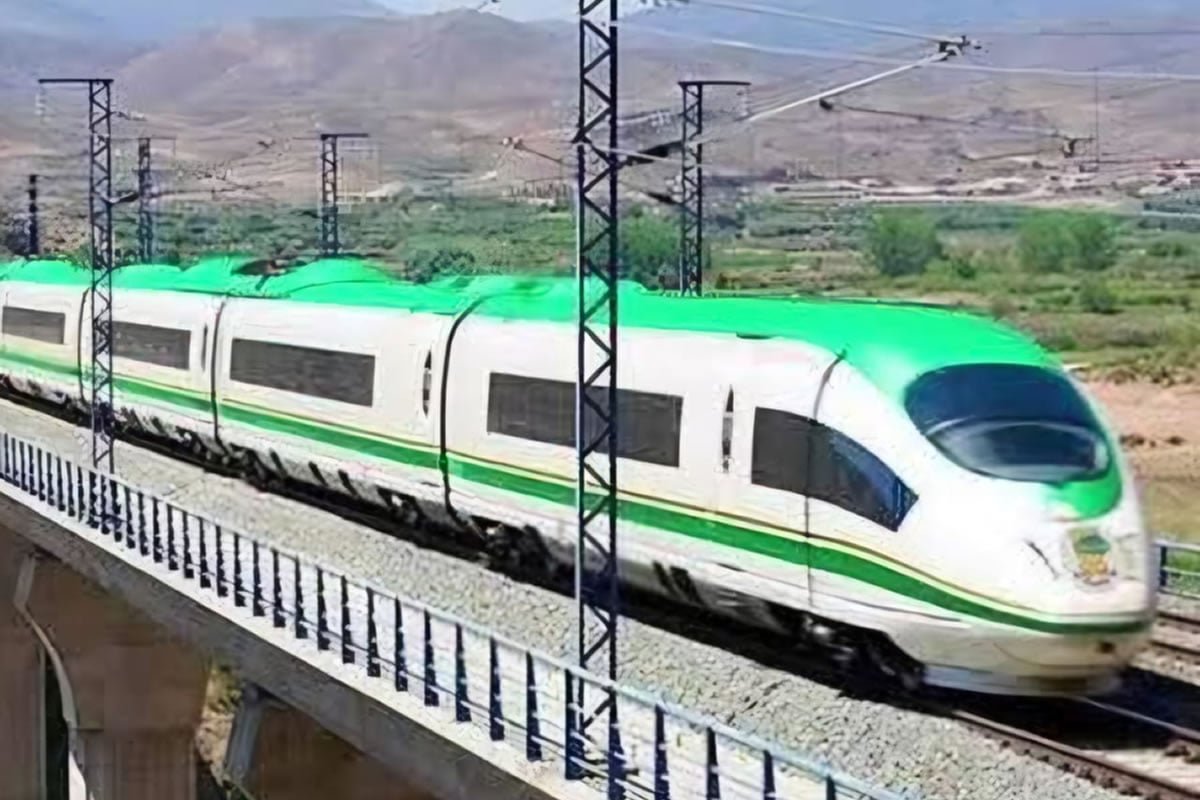
…say segmented train services unable to tackle rising transportation costs
Transportation experts have said the Federal Government needs at least $10 billion to develop an integrated railway network capable of connecting major parts of the country and supporting economic growth.
- …say segmented train services unable to tackle rising transportation costs
- ALSO READ: Adeleke jets out on vacation, orders probe into Koka kingship dispute
The experts said the current segmented train services operated by the Nigerian Railway Corporation (NRC) were not enough to provide Nigerians with the full benefits of rail transportation, particularly amid rising transportation costs.
At present, railway services operate on routes including Lagos-Ibadan, Itakpe-Warri and Abuja-Kaduna, while the Kano-Katsina rail service is also being considered.
An expert in the rail sector, Pamela Oluwatoyin, told Tribune Online that although constructing rail lines linking major commercial centres such as Ibadan-Abuja, Itakpe-Abuja and Maiduguri-Port Harcourt would require substantial investment, the projects could provide significant economic benefits.
“The cost of constructing these railway lines cannot be accurately determined without detailed engineering designs and specifications. However, based on the current budget allocation for the ongoing project, it is reasonable to estimate that a minimum investment of USD 10 billion would be required”.
She said the proposed rail lines had viable commercial potential, adding that “loans obtained for the construction of the railway lines can be repaid from operational revenues, provided that strong governance, financial discipline, and prudent management practices are maintained.”
Oluwatoyin, however, noted that part of the revenue generated would be needed for operations and maintenance.
She said, “A robust framework for revenue allocation, financial management, and accountability will be essential.”
According to her, the ability to repay construction loans from operational earnings would depend on the loan repayment period, revenue generated, and the cost of running and maintaining the railway system.
ALSO READ: Adeleke jets out on vacation, orders probe into Koka kingship dispute
She added that government should ensure that fares remain affordable while developing an appropriate repayment strategy.
Oluwatoyin also advocated private sector participation in some aspects of railway operations through concession arrangements.
“Such an approach could improve operational performance, promote accountability, and support the long-term sustainability of the railway network,” she said.
On funding, she said part of the resources currently committed to recurrent road construction and rehabilitation could be redirected towards railway expansion.
According to her, although railway infrastructure requires substantial initial capital, it generally has lower long-term maintenance costs and could reduce pressure on the road network by moving more passenger and freight traffic to rail.
“Furthermore, an efficient rail system can reduce pressure on road networks by shifting a significant share of passenger and freight traffic from roads to rail, thereby extending the lifespan of road infrastructure and generating broader economic benefits,” she stated.
Another expert, Eric Igulla, told the Nigerian Tribune that government should consider concessioning some railway operations to competent private sector operators.
He said such an arrangement could improve efficiency, service delivery and accountability while making rail transportation more attractive to Nigerians.
“Successive governments should prioritize continuous investment in the railway sector by allocating funds not only for operational and maintenance expenses but also for the construction of new rail lines.
“Over time, an expanded rail network would help decongest roads, reduce transportation costs for goods and passengers, and contribute positively to overall economic growth and development,” he said.
Igulla said the current train service arrangements had limited economic impact because of their short-distance coverage.
Similarly, Terhemen Ayua called on the Federal Government to declare a state of emergency on railway transportation.
Ayua said the rising cost of transportation, driven partly by increases in fuel prices, had made rail transportation particularly important for low-income Nigerians.
“The government needs to connect all the states to railway networks for easy transportation. Even though the Lagos to Ibadan railway is working and the Abuja to Kaduna railway is working, we need all railway routes to function throughout the country, not just in some selected places”.
Ude Robert, on his part, urged the government to strengthen security around railway infrastructure and operations across the country.
He said, “Security should remain a top priority within the railway sector. Although rail transport is generally affordable and convenient, persistent security challenges can discourage patronage, reduce public confidence, and negatively impact operational revenues. A safe and secure rail system is essential for sustained growth and utilization”.
Meanwhile, the Permanent Secretary, Federal Ministry of Transportation, Engr. Olufunso Adebiyi, said the government was working to connect transportation infrastructure with major economic gateways.
Speaking at the recently concluded National Council on Transportation, Adebiyi said, “Our efforts are focused on connecting transportation infrastructure to the nation’s economic gateways. The rail connection to Apapa Port has provided an important foundation for efficient cargo evacuation, while the Ministry is pursuing further connectivity to Tin Can Island and other strategic port and industrial locations.
“The emerging development around the Lekki axis and its proposed connections to the national railway network will further strengthen the relationship between ports, industrial centres and the wider transportation system,” he stated.
The experts said sustained investment in rail infrastructure would be critical to reducing transportation costs, easing pressure on the roads and creating a stronger foundation for economic growth.
WATCH TOP VIDEOS FROM NIGERIAN TRIBUNE TV