

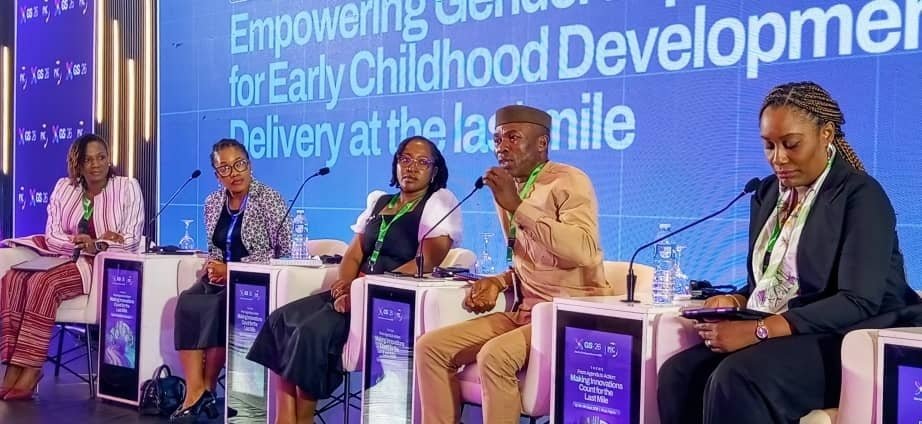
The Federal Government has restated its commitment to dismantling harmful gender norms and strengthening adolescent health systems, calling for policies and funding that translate into tangible results for young Nigerians.
Minister of State for Health and Social Welfare, Dr Iziaq Adekunle Salako, stated this at the 2026 Gender and Inclusion Summit and National Dialogue on Transforming Gender Norms for Adolescent Health and Wellbeing, which was held on Wednesday in Abuja.
Salako said cultural expectations that promote inequality continue to limit adolescents’ choices and expose them to violence, early pregnancy and poor health outcomes.
According to the minister, the Federal Ministry of Health and Social Welfare was already strengthening adolescent health through policy and partnerships which include the institutionalisation of adolescent and school health programmes and the establishment of a dedicated budget line for adolescent health in the national budget.
Salako added that the National Sexual and Reproductive Health Policy 2025-2030 will expand access to information and services such as family planning, STI/HIV prevention and counselling, as he also cited the national HPV vaccination campaign, which has reached over 14 million girls aged 9 to 14, and the Nigerian Survey on Gender Norms, Attitudes, Health and Wellbeing, aimed at generating data for policy and programming.
He urged stakeholders to adopt gender-transformative approaches, strengthen multi-sector partnerships, convert evidence into policies and budgets and build accountability structures that amplify youth voices.
“Transforming gender norms therefore matters because it breaks down rigid rules that limit access to healthcare, safety, education and the ability to earn a decent living. Let this dialogue be more than a conversation. Let it be a catalyst for change,” Salako said.
Also speaking, Deputy Director, Policy, Advocacy and Communications at the Gates Foundation Nigeria Country Office, Ekenem Isichei, said innovation must be measured by its impact at the last mile.
She said the last mile refers to individuals affected by gaps between policy, funding and service delivery, and called for increased investment in primary healthcare, grassroots ownership by communities and local governments and stronger referral systems.
Isichei added that strengthening level two facilities and moving innovations from pilot stage to government-funded programmes will help reduce maternal mortality and ensure adolescents get the services they need.
She also stated that the real measure of development should be its impact on people, especially women, young people, persons with disabilities and underserved communities, arguing that the last mile should no longer be seen only as a remote location but as the individual who cannot benefit from a policy despite its existence.
“A woman who arrives at a primary healthcare centre only to find an absent health worker, an essential commodity out of stock or a dysfunctional referral system does not experience an ‘implementation bottleneck.’ She experiences the absence of a service. The true test of innovation is not that it exists. It is that people can use it, trust it and benefit from it,” Isichei said.
WATCH TOP VIDEOS FROM NIGERIAN TRIBUNE TV