

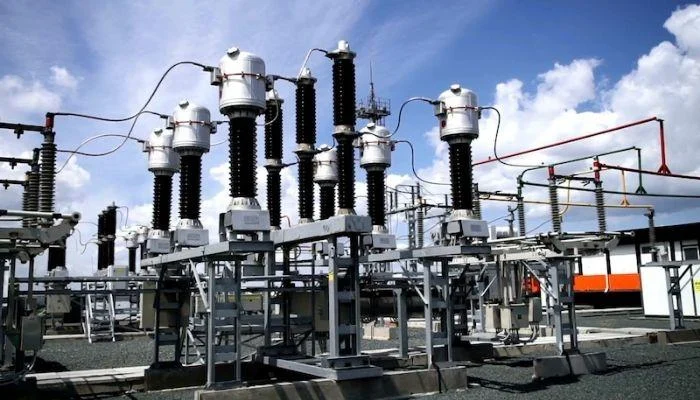
The Federal Government has said it is targeting 8,000 megawatts of electricity generation and transmission by the end of 2027 as part of efforts to improve power supply across the country.
The Minister of Power, Joseph Tegbe, disclosed this on Wednesday at the launch of the Renewable Energy Assets Management Company in Abuja by the Rural Electrification Agency.
Tegbe said the government was targeting 6,500MW by the end of 2026, noting, however, that the country currently struggled to wheel about 5,000MW.
“We are struggling to wheel 5,000MW today. My target is that by the end of this year, we’ll confidently be wheeling 6,500MW. By the end of next year, we will be wheeling conveniently 8,000MW,” he said.
The minister also expressed optimism that Nigerians would soon enjoy round-the-clock electricity, saying recent improvements in the sector were only the beginning of the administration’s efforts to transform power supply.
He expressed concerns that Nigeria had lived in an embarrassing paradox over the years, living without electricity despite its richness in power assets.
“Nigeria has lived too long with an embarrassing paradox. We’re very rich in power assets, energy resources, and installed infrastructure, yet we’re poor in the ability to depend on electricity.
“What we’ve tried to do in the last three months is nothing, but it’s being celebrated. We will get to the point very soon, by God’s grace, where Nigerians will have 24/7 power,” Tegbe said.
He said the newly launched RAMCO would introduce a new approach to the management and sustainability of renewable energy infrastructure, adding that its mandate would eventually extend beyond renewable energy to the entire electricity grid.
“For me, RAMCO offers a different model, a new paradigm. And like I said, I’m committed to not only limiting this to renewable energy; we will also shift it to the entire grid. And this new model will focus on professional stewardship, robust discipline, sustainability, and measured performance,” he said.
Tegbe noted that the government was also working to develop a more versatile electricity system combining grid supply, embedded generation, interconnected and distributed renewable energy, storage and other technologies.
“As a nation, the plan is to build a versatile electricity future that combines grid supply, embedded generation, interconnected and distributed renewables, distributed renewable energy resources, storage and other technologies that suit a particular community and economic cluster,” he said.
He said mini-grids would also be deployed to areas without transmission infrastructure, noting that renewable energy would play a growing role in Nigeria’s electricity supply.
“Wherever we don’t have transmission lines, we will fill it up with mini-grids going forward,” the minister said.
Tegbe maintained that the government’s broader objective was to ensure that electricity infrastructure translated into economic growth, particularly for manufacturing and emerging sectors such as artificial intelligence and data centres.
“Our ambition is much bigger than just ending darkness. Our ambition is to use electricity to build prosperity, to make Nigeria competitive for manufacturing and to power the next generation of digital infrastructure,” he stated.
Tegbe stressed, “What is going to drive the electricity power supply in the next generation is not only manufacturing; it’s AI. The energy demand of AI is high, and that is why you see we’re getting requests on a daily basis; people want to site data centres next to power plants because of the requirement.”
The minister added that the government would focus on improving the reliability and sustainability of electricity supply, rather than measuring progress solely by the volume of power generated.
“RAMCO will not only be measured by how many megawatts you deliver but also the reliability of your delivery and the sustainability of that delivery,” he said.
Tegbe also commended the Managing Director of the Rural Electrification Agency, Abba Aliyu, for his role in driving the initiative, saying the RAMCO model had to be translated into a practical and sustainable system.
He praised Aliyu for moving quickly to actualise the initiative, recalling that he was quick in subscribing to the idea of RAMCO when it was presented to him.
“When you told me about this model, I didn’t know what it was. You were trying to explain to me, and I finished it up for you. Because that’s what I was doing for a living in my previous life. And I said this thing must happen in the next month. Thank you for keeping it tight,” Tegbe said.
Earlier, Aliyu appreciated President Bola Tinubu for his support, saying this had made it possible to energise universities and teaching hospitals. RAMCO, he said, was set up to ensure the sustainability of these renewable energy assets.