

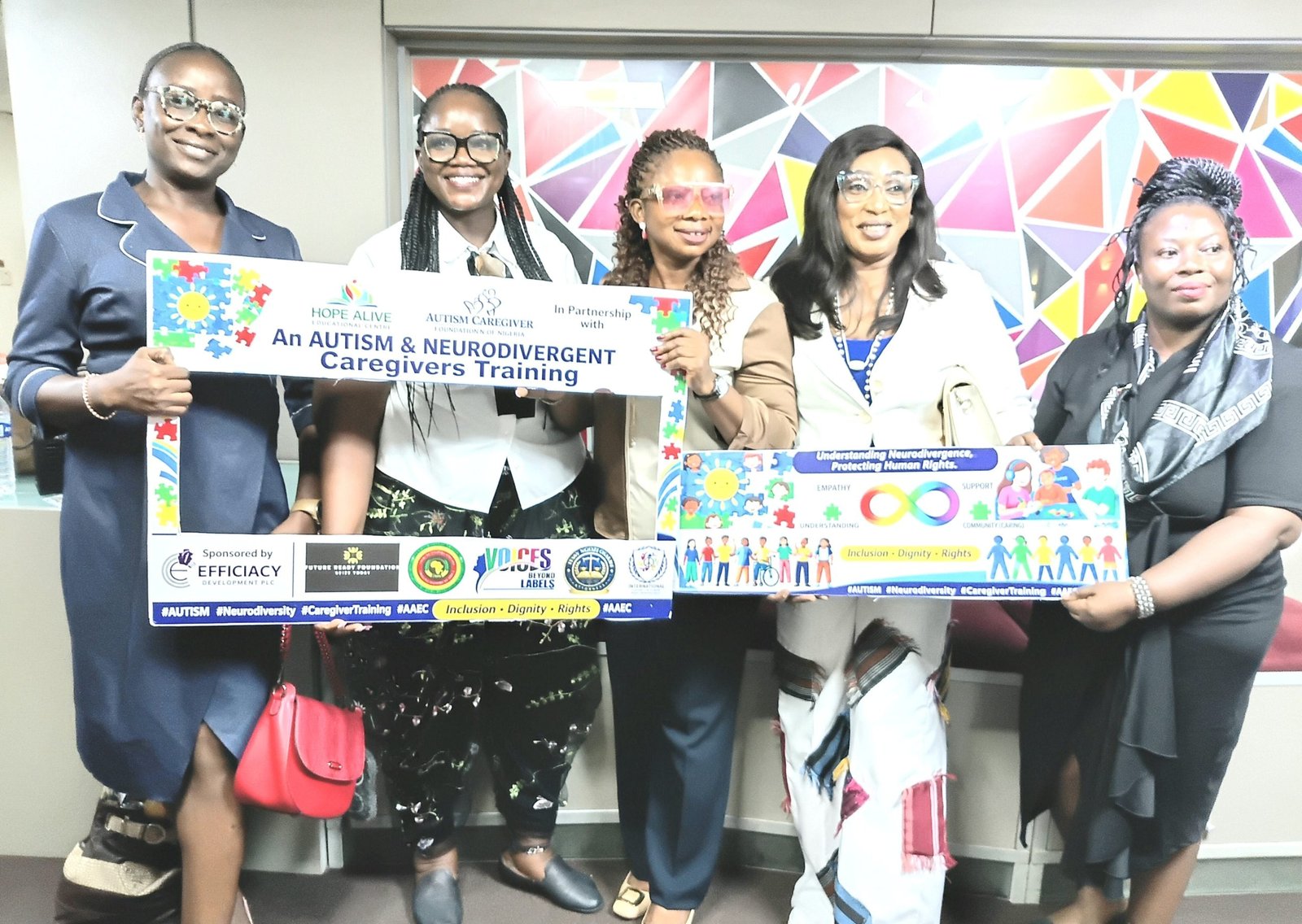
Experts have called on Nigerians to stop the stigmatisation, bullying and exclusion of autistic children.
Speaking at a hybrid training session in Lagos organised by the Hope Alive Educational Centre, a diverse panel of lawyers, autism specialists, professional caregivers and media practitioners urged society to build an inclusive environment that safeguards the rights and development of neurodivergent individuals.
Adeyinka Adeyefa, a human rights lawyer and the convener of the event, emphasised that widespread unfamiliarity with autism spectrum disorder leads to discrimination.
She noted that many mistake repetitive behaviours for abnormalities, failing to realise that some brains are simply wired differently.
“You need to put that peculiarity into perspective when dealing with these people so that you don’t infringe on their rights,” Adeyefa stated.
She lamented that autistic children are frequently denied admission into regular schools, while specialised centres remain financially out of reach for most families.
Adeyefa therefore called for deliberate government policies and programmes to promote inclusive education and lower the cost of diagnostic services, which would help parents overcome the fear of stigma.
Addressing practical care, professional caregiver Mayowa Adeeyo urged parents to monitor developmental milestones and seek immediate professional help if they notice speech delays or repetitive language in their children.
Adeeyo debunked common myths, clarifying that autism is neither a disease nor contagious, and is entirely unrelated to vaccines, parental background or spiritual factors.
She also dismissed assumptions about the autism spectrum, emphasising that only a medical diagnosis can reveal the condition and its variant.
However, she expressed concern over the country’s dwindling pool of professional special-needs caregivers, highlighting the urgent need to bridge this gap.
Adding to the care strategies, autism educators Basudha Modak and Barbara Lebo, both of whom spoke via Zoom, advised patience, noting that autistic children often require extra time to process instructions. Modak emphasised that “the child is not the problem to be fixed, but the barriers around the child,” while Lebo called for urgent, government-funded training for schoolteachers on inclusive education.
From a legal standpoint, Tessy Osakwe reminded the public that the 1999 Nigerian Constitution (Section 34) and the Discrimination Against Persons with Disabilities (Prohibition) Act legally guarantee the dignity of all individuals.
She warned that mocking, beating or humiliating neurodivergent children is a punishable violation of the law. Finally, speech therapist Goodness Udeokolo, on her part, encouraged families to embrace their children’s unique traits rather than forcing them to conform to standard expectations, advising proper professional diagnosis before beginning any behavioural therapy.
WATCH TOP VIDEOS FROM NIGERIAN TRIBUNE TV