

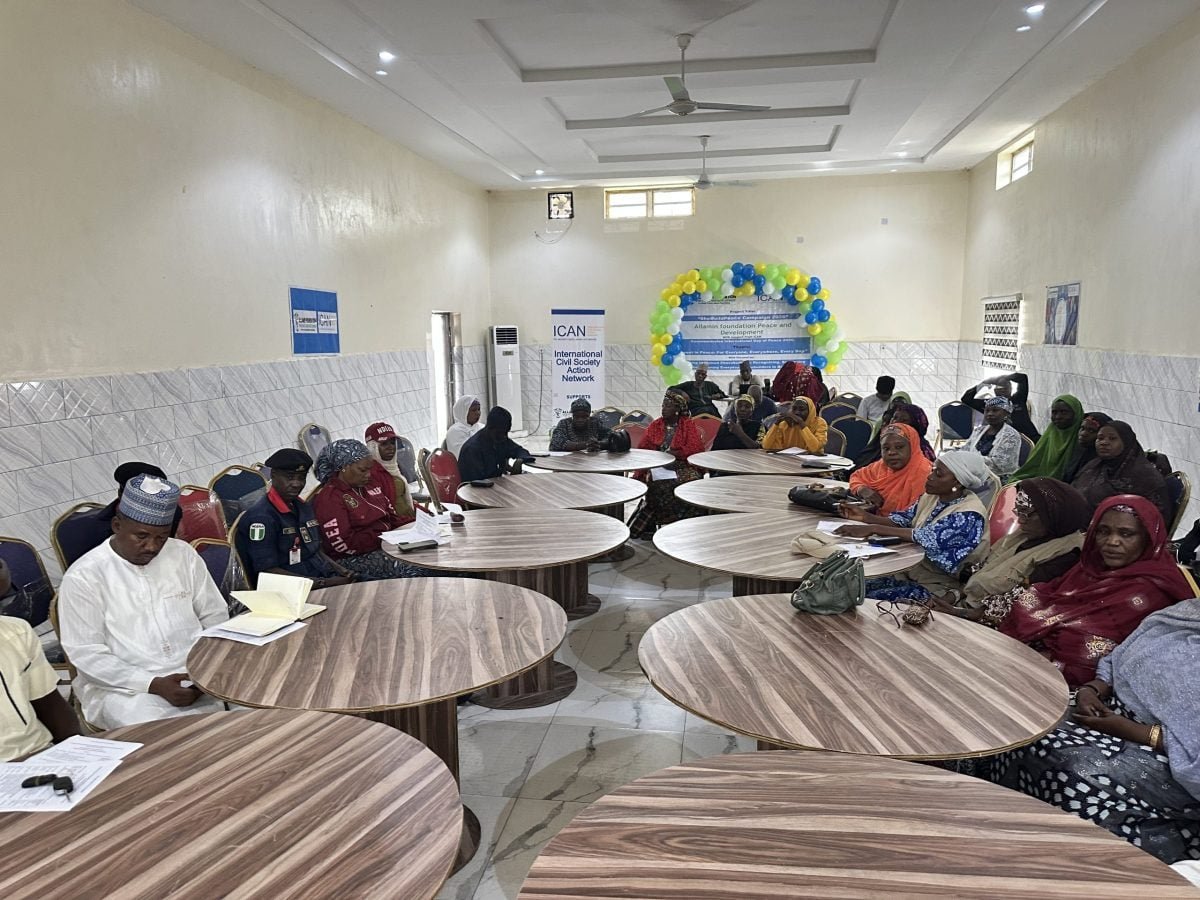
Women mediators in Borno State have raised concerns over the stigma faced by children returning from Boko Haram captivity, particularly those born during the conflict, urging communities to accept them as innocent victims and support their reintegration.
The women spoke in Maiduguri on Friday at the flag-off of the She Builds Peace Campaign 2026, organised by the Allamin Foundation for Peace and Development to mark the International Day of Peace.
A member of the Women Mediators in Borno, Agnes Bashir Gadzama, said some women were stigmatising children returning from the bush, stressing that children born during the conflict should not be blamed for the circumstances of their birth.
She urged women and mothers to teach their children to accept the returnees, saying their inclusion in the reintegration process would help promote peace in the state.
Gadzama also appealed to women to avoid hate speech that could escalate tensions and create misunderstandings between returnees and members of host communities.
Another member of the Women Mediators, Ya Kime Gado, called for greater community support for returnees, particularly women coming out of Sambisa Forest.
Gado appealed to landlords to reduce house rents by 50 per cent for returning women, saying such support could encourage those still in the bush to surrender and make their reintegration into communities easier.
She also urged Nigerians to forgive women and children who became victims of the conflict, saying ending stigma and discrimination against them would help promote peace in Borno communities.
But for Comrade Hajja Suleiman, leader of the Jire Dole Network of victims’ mothers and wives, successful reintegration must also address the question of justice.
Suleiman recalled how she was beaten by soldiers during a peaceful demonstration after her son was arrested in what she described as indiscriminate arrests during the height of the Boko Haram insurgency.
She said the experience made her consider joining Boko Haram because of what she regarded as injustice against her son.
She called on the government, military and justice system to investigate cases of people who have remained in detention since the period of indiscriminate arrests during the peak of Boko Haram attacks between 2011 and 2015.
“There are still innocent children who were accused of Boko Haram activities, and they are in detention in Kainji,” she said, calling for speedy investigation and justice for them.
Suleiman said mothers were often the first people to know about their children, adding that they had an important role to play in promoting peace and supporting the reintegration of returnees.
The Executive Director of the Foundation, Hajiya Hamsatu Allamin, said the organisation’s engagements with women’s networks had shown that peace agreements were more sustainable when women participated actively in their negotiation and implementation.
She said addressing the root causes of the Boko Haram insurgency required women’s inclusion in post-conflict recovery, particularly in areas such as legal protection, healthcare and economic rebuilding.
Allamin urged the Borno State Government, religious and traditional leaders to involve more women in peacebuilding, saying women had remained central to efforts to promote peace and encourage those yet to surrender to lay down their arms.
She said the Foundation had established groups involving women associated with armed groups and children associated with armed conflict to promote peace and social cohesion in the state.
A consultant to the Foundation, Dr Mohammed Abdullahi, said the She Builds Peace 2026 campaign was anchored on the question, “Why Invest in Peace?”
“Peace does not happen automatically. It requires time, people, relationships, institutions and resources. Peace is not only something we hope for. It is something we build and sustain,” he said.
Abdullahi urged the government and other stakeholders to prioritise dialogue, prevention, reconciliation, inclusion and community resilience, while supporting local peacebuilders rather than relying solely on formal structures.
He said peacebuilding also required the contributions of women, community mediators, religious and traditional leaders, survivors, civil society groups, families, journalists and other community actors.
WATCH TOP VIDEOS FROM NIGERIAN TRIBUNE TV