

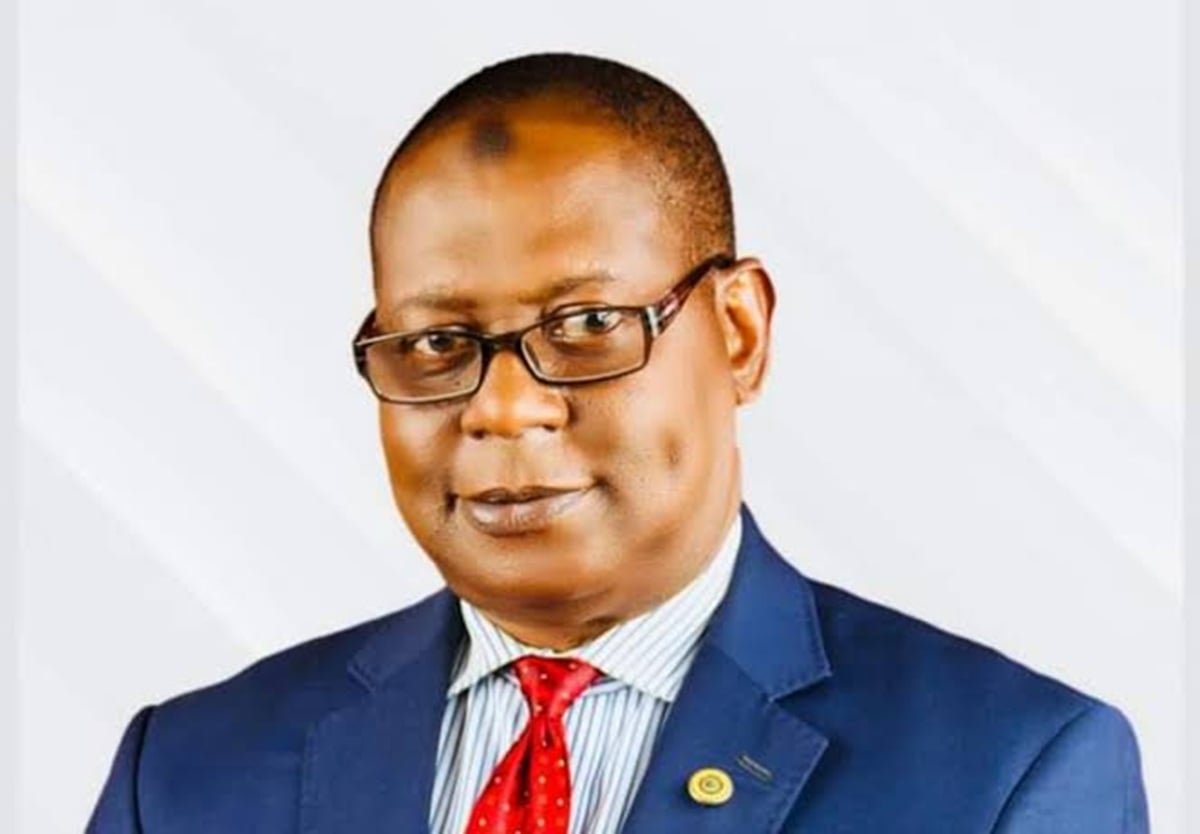
The President of the Pharmaceutical Society of Nigeria (PSN), Pharm. Ayuba Ibrahim Tanko, has urged President Bola Ahmed Tinubu to declare pharmaceutical insecurity a national security threat, warning that open drug markets and the diversion of medicines pose serious risks to public health and national security.
Tanko made the call on Tuesday at the opening of the PSN’s 99th Annual National Conference, tagged PSN-IJELE 2026, held at the International Convention Centre, Awka, Anambra State.
He called for the replacement of open drug markets with regulated Coordinated Wholesale Centres (CWCs), insisting that medicines must move through a transparent and properly supervised distribution system.
According to him, the diversion of controlled medicines, including tramadol and pentazocine, into illicit markets and criminal networks has become a major concern amid Nigeria’s security challenges.
He urged stronger collaboration among security agencies, regulators and community pharmacists, proposing that more than 10,000 community pharmacists be integrated into the national security architecture.
He also called for the expansion of the Pharmacy First initiative under the National Health Insurance Authority (NHIA).
Tanko expressed reservations about the proposed Medipool Group Purchasing Organisation (GPO), warning against any arrangement that could undermine public accountability or place control of the pharmaceutical supply chain in private hands.
While acknowledging that group purchasing could reduce medicine costs and improve procurement, he insisted that its structure must protect the public interest and comply with statutory regulations.
He questioned the regulatory due diligence surrounding Medipool, including its capacity to operate within the pharmaceutical distribution chain and its accountability for counterfeit or substandard medicines supplied through third parties.
The PSN president stressed that the society was not opposed to GPOs but would resist any model that compromised public ownership, regulation and accountability.
He recommended that the proposed Federal Drug Revolving Fund and Drug Management Agency serve as the central purchasing platform for public health facilities, with Medipool operating only as a non-exclusive price negotiator or competitively selected framework supplier.
Tanko further called for the establishment of a Presidential Committee on the Pharmaceutical Sector, chaired by a registered pharmacist recommended by the PSN, with representation from the Pharmacy Council of Nigeria (PCN), the National Agency for Food and Drug Administration and Control (NAFDAC), the National Institute for Pharmaceutical Research and Development (NIPRD) and the society.
He urged the National Assembly to fast-track the Drug Revolving Fund and Drug Management Agency Bill, which he said passed its first reading in the House of Representatives in 2025, noting that the Drug Revolving Fund, introduced around 1989, lacked adequate statutory backing.
Citing state-level examples, he said Kano’s system had reportedly increased medicine availability in primary healthcare centres from 6.5 per cent to more than 90 per cent in 2026, while Lagos recorded an increase in tracer medicine availability from 10 per cent to more than 80 per cent.
He also proposed that one per cent of assets seized from drug trafficking be dedicated to strengthening PCN enforcement and rehabilitation programmes, while insisting that public authorities retain custody of medicines, particularly controlled drugs.
On health workers’ welfare, Tanko commended the Nigeria Labour Congress, Trade Union Congress and Joint Health Sector Unions for securing the Federal Government’s commitment to pay 19 months of outstanding allowances arising from the Consolidated Health Salary Structure (CONHESS) adjustment.
He said the agreement reached during meetings on October 22 and 27, 2026, provided for payment in three instalments beginning in December 2026.
The National Salaries, Incomes and Wages Commission was also expected to update the cost implications within three weeks.
Tanko recalled that a 2022 technical committee had put the projected cost at ₦49.6 billion and urged the government to issue the necessary implementation circular and tables before the end of 2026.
WATCH TOP VIDEOS FROM NIGERIAN TRIBUNE TV