

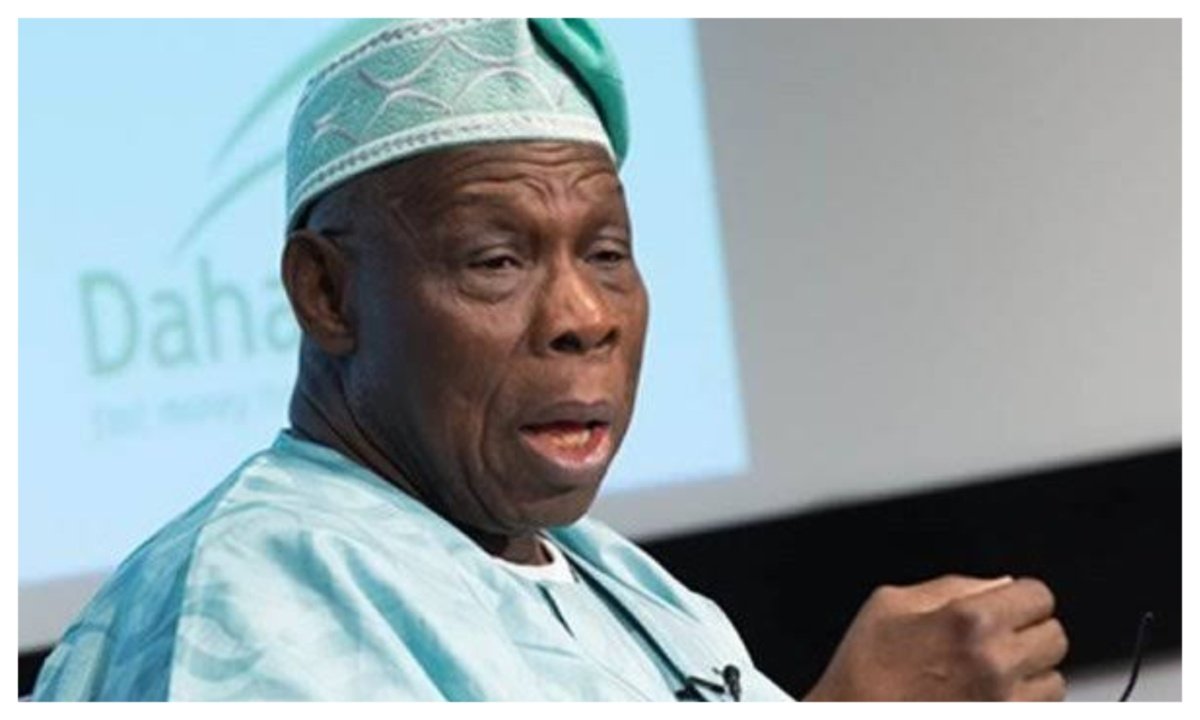
Obasanjo spoke on Friday in Abeokuta, Ogun State, at the Ajibosin Platform, a public forum themed “Leveraging Artificial Intelligence to Solve Grassroots Problems and Accelerate National Development.”
Tinubu had in April said his administration will continue to borrow whenever necessary, insisting it should not be viewed negatively.
“If we have to borrow, we borrow. Borrowing is not leprosy, we just have to work hard to be able to pay for it,” Tinubu had said during a meeting with Plateau leaders led by Governor Caleb Mutfwang and APC National Chairman, Prof. Nentawe Yilwatda, at the State House.
The former president recalled that when he started his farm 47 years ago, the naira exchanged at N1 to $1.85, questioning what the country had done to now have N1,500 to a dollar.
“When I started my farm, 47 years ago, naira to the dollar was one naira to $1.85. Forty-seven years ago. What has Nigeria done in 47 years that we now have 1,500 naira to the dollar? What have we done?” he asked.
He also questioned the capacity of the political leadership to improve the lives of Nigerians, asking, “What do our leaders know? And what do they not know? And from what they know, what can they do for us?”
Obasanjo further criticised Nigeria’s dependence on the World Bank and the International Monetary Fund, IMF, arguing that the institutions were not designed for Nigeria and were not built by Nigerians.
“World Bank and IMF were not designed for us. They were not built by us. They were built before we became independent. And that’s the people who would determine what we do,” he said, warning against adopting foreign economic prescriptions without considering Nigeria’s realities.
Also speaking at the event, historian and public policy scholar, Dr Umar Ardo, warned that artificial intelligence cannot confer sovereignty on a society that has not secured control over its own institutions, priorities and resources.
Ardo, while delivering his lecture on the anniversary theme, insisted that AI may produce answers but cannot produce right solutions for Africa if ownership and control remain abroad.
He recounted using AI as an intellectual assistant to interrogate ideas and organize material for his book, The Nigerian Development Doctrine, but said it exposed its limits.
“The experience showed me that AI can extend human intellectual capacity, but it also exposed its limits. A system may produce a plausible answer without producing the right solution for the problem of a particular society,” he said.
“It can identify patterns and organize knowledge, but it cannot replace human judgement, political responsibility or institutions capable of implementation. AI can strengthen our capacity to think and act, but it cannot confer sovereignty on a society that has not secured control over its priorities, institutions and resources,” he added.
He warned that technology is never neutral in its distribution, stressing that Africa’s problem has never been rejection of technology but acceptance on bad terms.
He insisted that if Nigeria fails to build the infrastructure of sovereignty: chip fabrication, data centres, African-owned datasets and continental coordination through the AU Data Policy Framework, AI will become another instrument through which Africa is managed, rather than an instrument through which Africa manages its own destiny.
Earlier in her address, the Chairperson of the occasion, Mrs Onikepo Akande, asserted that AI is already changing how people think and work, stressing that its importance cannot be overlooked.
Mrs Akande while acknowledging that AI can help identify opportunities, navigate challenges, improve logistics and help businesses compete, urged Nigerians to deploy technology judiciously to improve healthcare, agriculture, education and other sectors for sustainable development.