

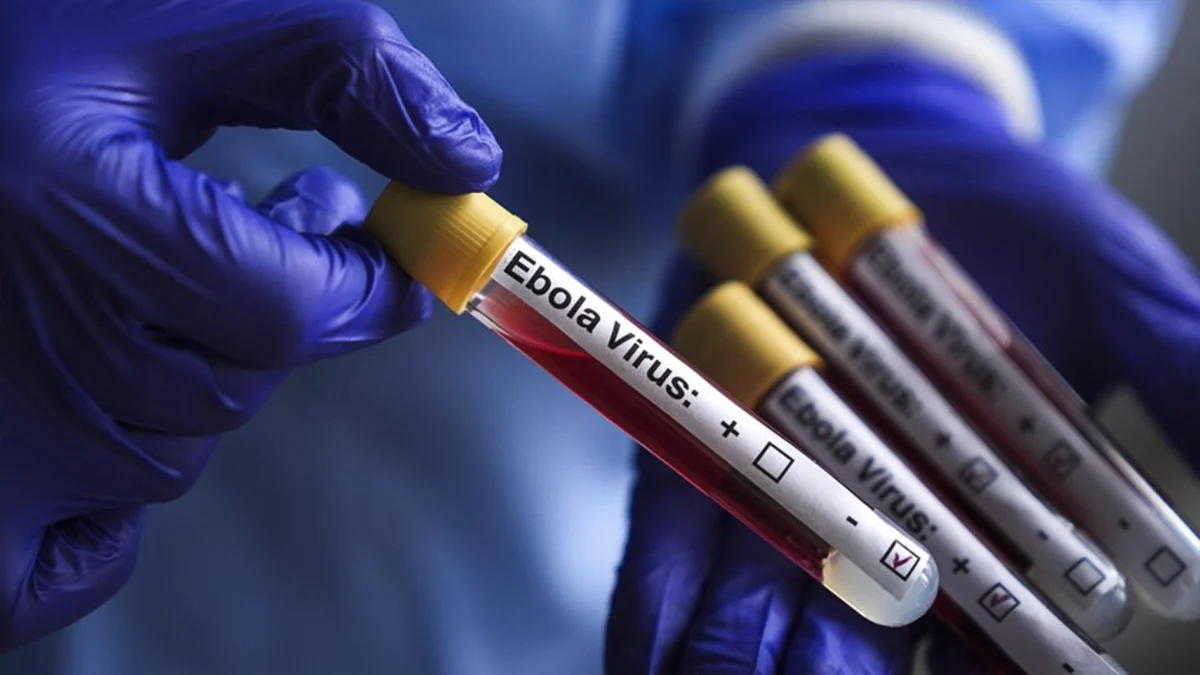
The Academy of Medical Sciences of Nigeria (AMSN) has strongly cautioned the Federal Government against prematurely declaring the country free of Ebola, following the medical evacuation of Nigeria’s index case of the disease to Switzerland.
In a joint statement issued on Monday, the academy warned that, while the source patient had left the country, Nigeria’s outbreak response was far from over.
The statement was jointly signed yesterday by the AMSN President, Emeritus Prof. Osato Giwa-Osagie; the Foundation President, Prof. Oladapo Ashiru; and the Chairman of the Rapid Response Committee, Prof. Boaz Adegboro.
The intervention follows confirmation by the Coordinating Minister of Health and Social Welfare, Professor Muhammad Ali Pate, that Nigeria’s index Bundibugyo virus disease (BVD) case was medically evacuated from Abuja to Switzerland on Monday morning, alongside her asymptomatic spouse.
The academy noted that the medical evacuation of the clinically stable patient was fully permitted under the International Health Regulations (IHR, 2005) and WHO protocols. It cited the 2014 precedent, when the US, UK, Germany, Spain and Switzerland similarly evacuated Ebola patients to high-level isolation units.
However, the medical experts stressed that the departure of the source case did not eliminate local risks.
“The source case leaving the country does not reduce the risk among the 53 contacts, who include health workers and domestic staff,” the statement read. “Each person must complete 21 days of follow-up, and WHO requires 42 days without a new case before an outbreak can be declared over.”
To ensure public transparency, the academy called on the Federal Ministry of Health and the Nigeria Centre for Disease Control (NCDC) to publish a brief account of the evacuation protocol, the WHO-Swiss coordination framework and the decontamination measures implemented.
While praising the Nigerian clinicians, nurses, laboratory scientists and public health officers who stabilised the patient, the academy raised red flags over systemic vulnerabilities exposed by the case.
The experts expressed concern over a 13-day delay between the onset of symptoms and final testing, during which the patient sought care at multiple private facilities.
This delay exposed several healthcare workers and revealed a low index of suspicion for viral haemorrhagic fevers (VHF) among febrile travellers, despite a Public Health Emergency of International Concern (PHEIC) having been declared in May.
Furthermore, the academy pointed out a stark disparity in health equity. “Even though a foreign national could be flown to a high-level isolation unit abroad, a Nigerian patient could not,” the body noted, urging Nigeria to urgently build domestic capacity to guarantee the same standard of care for citizens and visitors alike.
To secure the containment of the virus, the academy detailed a comprehensive roadmap for federal health authorities.
At the forefront of these demands is a strict contact-tracking protocol. The academy insisted that authorities must complete the 21-day daily monitoring of all 53 identified contacts, execute rapid testing for any who exhibit symptoms, and provide fully funded welfare packages to ensure total compliance with quarantine rules.
Alongside patient tracking, the academy emphasised health worker support, calling on the government to deliver immediate occupational health follow-ups and psychosocial support to every medical professional exposed during the initial chain of care.
To fortify national vigilance, the body recommended that a national alert be issued to mandate all public and private health facilities to check the travel history of every febrile patient, with immediate isolation and testing for anyone linked to affected regions.
On an infrastructure level, the experts urged the government to establish at least one high-level isolation and treatment unit in each of Nigeria’s six geopolitical zones, ensuring that these facilities are equipped with trained staff and granted access to investigational therapeutics through WHO-coordinated trials.
The roadmap also targets critical gaps in research and data. The academy stated that Nigeria must secure its fair share of medical specimens, sequence data and clinical records to allow local scientists to lead the investigation into the source of the infection, particularly regarding reported genetic links to cases in Kenya and Uganda.
Finally, prioritising public communication, the academy underscored that the government must actively engage the media through timely, official briefings to effectively curb rumours, panic and social stigma.
The academy also appealed to the public to remain calm and vigilant, reject the stigmatisation of contacts and healthcare workers, rely only on official updates from the NCDC, and seek early medical attention for any travel-related fevers.
WATCH TOP VIDEOS FROM NIGERIAN TRIBUNE TV