

…African countries seek to replicate Nigeria’s model
The Federal Government has presented its Renewed Hope Housing Public-Private Partnership (PPP) model at a continental forum in Addis Ababa, Ethiopia, where African countries showed strong interest in replicating it in their own housing programmes.
- …African countries seek to replicate Nigeria’s model
- ALSO READ: Court orders Tinubu’s minister to respond to suit seeking disclosure of NYSC records
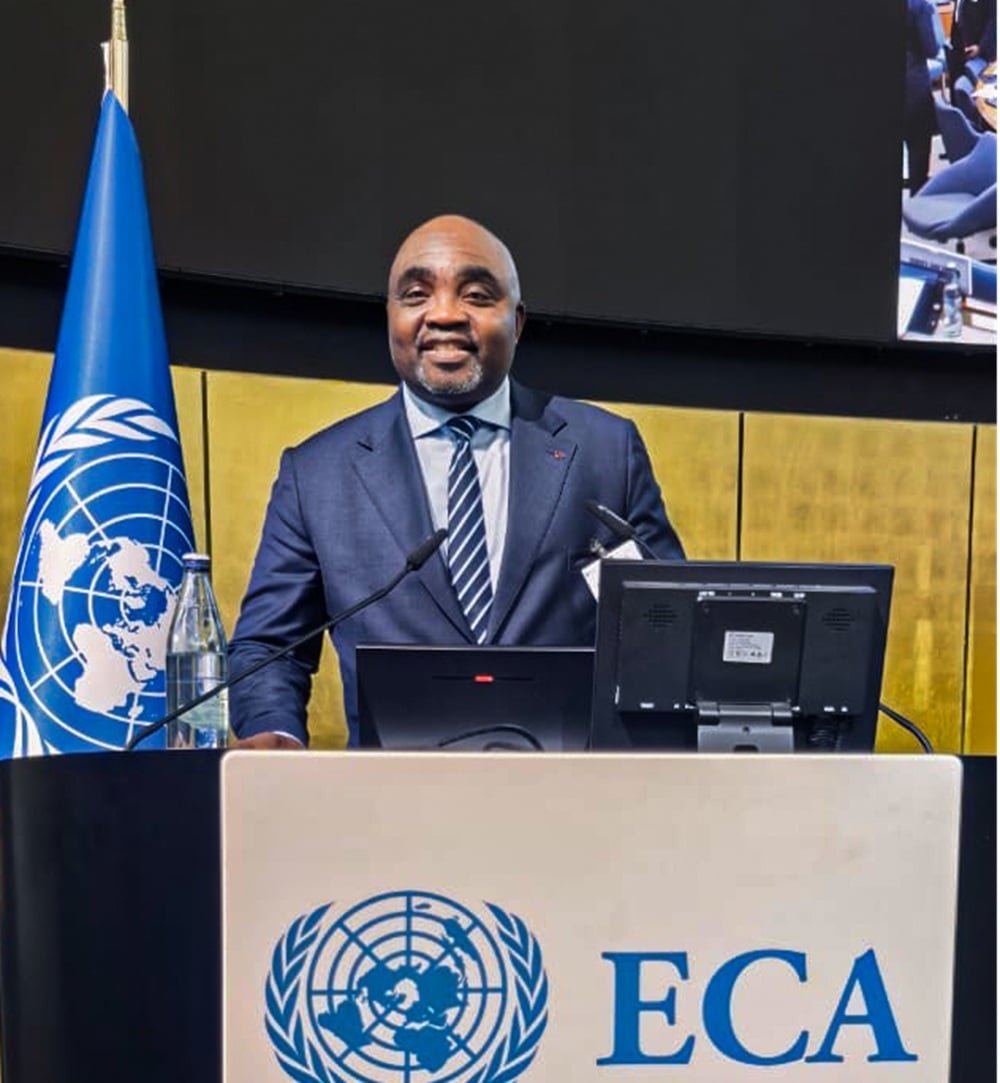
The presentation was made by the Director-General of the Infrastructure Concession Regulatory Commission (ICRC), Dr Jobson Oseodion Ewalefoh, at the Second Forum for Public-Private Partnership Units in Africa. The forum held at Africa Hall, United Nations Economic Commission for Africa, (UNECA) with delegations from 36 countries in attendance.
The forum was co-organised by the United Nations Economic Commission for Africa (ECA), the African Development Bank (AfDB) and the African Legal Support Facility (ALSF), under the theme “Making Social Sector PPPs Work: From Policy Ambition to Effective Service Delivery”. It builds on the inaugural edition held in 2024, which brought together more than 30 African PPP units around climate-resilient infrastructure.
This year’s edition brought together heads of PPP units, development finance institutions, private operators and transaction advisers. Their focus was how PPPs can deliver housing, healthcare, education, sanitation and water at prices citizens can afford. Unlike roads, ports or power plants, social infrastructure rarely earns enough from user fees to pay back investors on its own, which places fiscal sustainability, affordability and accountability for performance at the heart of every project.
Over the two days, delegates held a Leaders’ Dialogue, thematic breakout sessions and project clinics covering risk allocation, availability payments, viability gap funding, subnational PPP models and contract management. In the clinics, heads of PPP units presented live social sector projects, set out what had worked and where they had challenges, and invited peers and experts to help find solutions.
Nigeria was one of five countries that presented at the project clinic, alongside Malawi, Kenya, Djibouti and Côte d’Ivoire.
Speaking for the Nigerian delegation, Dr Ewalefoh explained that the Renewed hope cities will deliver 100,000 housing units across selected cities in Nigeria under a joint venture concession with the private sector.
“The beauty of this PPP structure is that it is not the conventional PPP. In this case, the private party owns the land, has the design, is financing it and is doing the construction,” he said.
ALSO READ: Court orders Tinubu’s minister to respond to suit seeking disclosure of NYSC records
Under the Renewed Hope Agenda of President Bola Ahmed Tinubu, the Federal Government’s role is to remove the risks that would otherwise keep private capital away. “The PPP here is that government agreed to de-risk the project,” Dr Ewalefoh said.
With commercial lending rates in Nigeria at over 23 per cent, financing housing at market rates remains out of reach for most developers and buyers. The government therefore stepped in with commitments that derisk the project, It guaranteed a market for the homes by designating middle-income federal civil servants as the off-takers. It committed to building access roads to the semi-urban sites. It also unlocked about $19 million in single-digit interest funding through the Federal Mortgage Bank of Nigeria, and a further $20 million in concessionary loans through the Family Homes Fund.
In addition, buyers benefit from lower mortgage rates through an about $112 million MOFI Real Estate Investment Fund (MRIF). Sale prices were negotiated with the developer to keep the homes affordable, and a cap of one unit per buyer was set to stop speculation. In all, these measures cut the effective cost of the project by about 30 per cent.
The structure means the government is delivering homes without funding their construction. About $39 million in concessionary funding is helping to unlock a project whose construction cost now stands at about $125 million in privatesectorinvestment.
“Government does not need to finance housing capital projects. It can crowd in private capital through policy, land availability and off-taker facilitation to create a replicable, scalable model for housing delivery,” the DG told delegates.
Nigeria’s model drew strong interest during the question-and-answer session. Many delegates asked how its de-risking mechanisms, particularly the off-taker guarantee and access to concessionary finance, could be adapted to their own countries.
The exchange ran both ways, and well beyond the clinic. Across the forum’s sessions, breakouts and discussions, delegations from all 36 participating countries shared their own social sector PPP experiences, with their successes and setbacks, so that every participant could take away what works. While delegates studied Nigeria’s approach, the Nigerian delegation also drew lessons from other countries’ projects on structuring, risk allocation and implementation, which will inform Nigeria’s own social sector PPP pipeline.
WATCH TOP VIDEOS FROM NIGERIAN TRIBUNE TV