

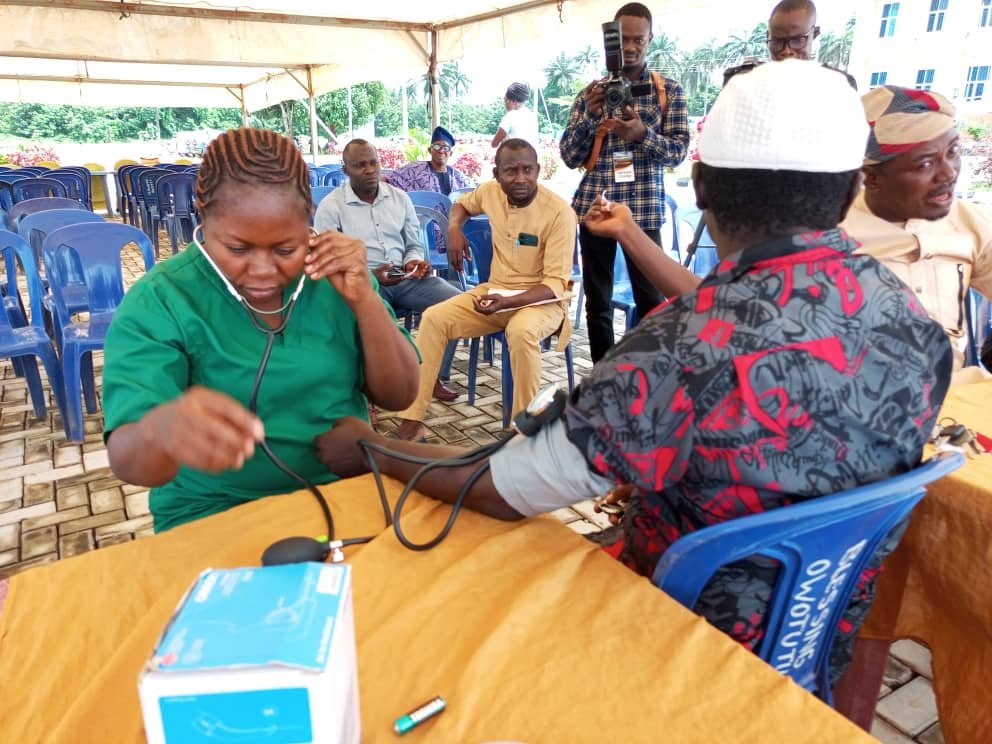
The discovery of undiagnosed cases of high blood pressure, elevated blood sugar and hepatitis among residents and university community members has highlighted the need for regular medical examinations, following a screening exercise organised by the Federal University of Health Sciences, Ila-Orangun, Osun State, on Wednesday.
About 1,000 people, including students, staff members and residents of neighbouring communities, benefited from the medical outreach conducted on Wednesday as part of activities marking the institution’s maiden convocation.
The exercise covered hypertension, diabetes, hepatitis B and C, obesity and other weight-related health conditions, with beneficiaries also receiving medical advice and referrals where necessary.
The Chairman of the university’s Medical Outreach Committee and Dean of the Faculty of Clinical Sciences, Dr Abayomi Ojo, said the exercise revealed that some participants were living with potentially dangerous medical conditions without knowing their health status.
According to him, the findings reinforce concerns about the tendency of people to neglect routine medical checks until symptoms develop or their conditions become severe.
Ojo explained that the medical team assessed participants’ height and weight to calculate their Body Mass Index (BMI), enabling it to identify individuals who were underweight, overweight or within the obesity range.
He said those whose results indicated possible health risks were counselled on appropriate lifestyle changes and referred for further medical attention where necessary.
The team also conducted blood pressure and blood glucose tests, alongside screening for hepatitis B and C, among other examinations.
Ojo described hypertension as a common health challenge that frequently goes unnoticed because many affected people may not experience obvious symptoms in its early stages.
He expressed concern that some participants tested positive for high blood pressure and elevated blood sugar levels, while screening results also indicated hepatitis infections in some individuals.
According to him, such conditions are particularly dangerous when they remain undetected, as affected persons may continue with their normal activities without seeking medical attention.
He urged Nigerians to develop the habit of undergoing periodic medical examinations, stressing that early detection could improve the chances of managing diseases and preventing avoidable complications.
Ojo also challenged the perception that remaining unaware of a medical condition offered any protection against its consequences.
He said people should instead seek reliable information about their health, identify possible risk factors and take preventive measures rather than avoid medical examinations out of fear of receiving an unfavourable diagnosis.
The outreach formed part of activities preceding the university’s first convocation ceremony, through which the institution extended its health services beyond the campus to members of its surrounding communities.
WATCH TOP VIDEOS FROM NIGERIAN TRIBUNE TV