

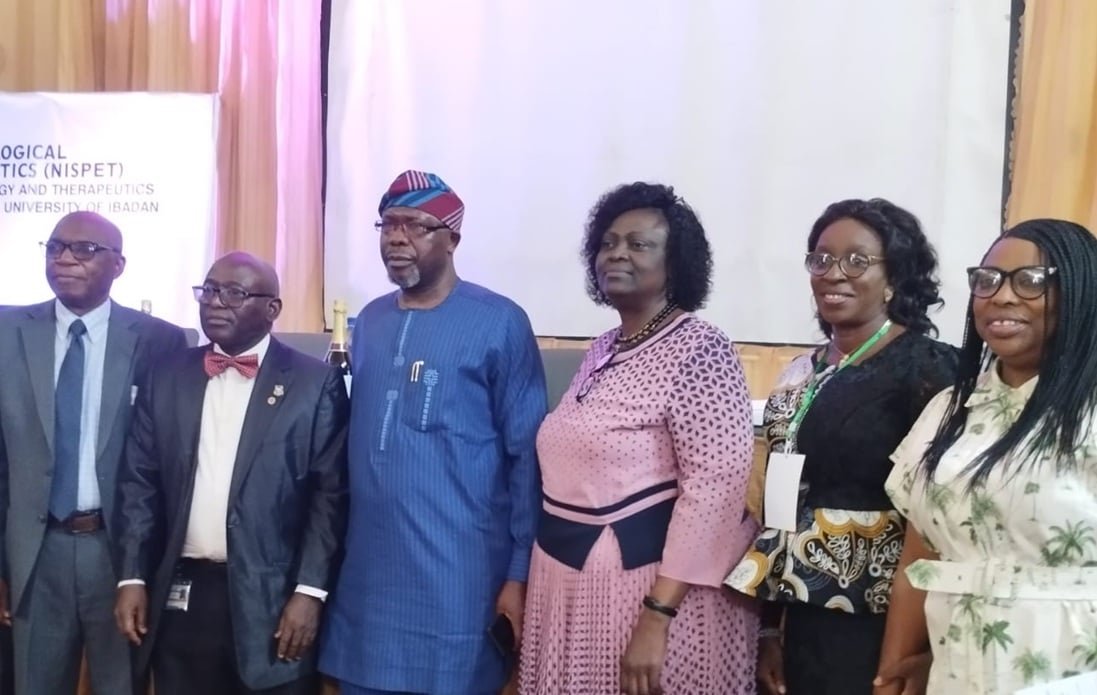
Former Director-General of the Nigerian Institute of Medical Research (NIMR), Prof. Babatunde Salako, has tasked the Federal Government with urgently expanding Nigeria’s clinical-trial infrastructure and strengthening local pharmaceutical manufacturing to reduce the country’s dependence on imported medicines.
Salako said Nigeria needed more Phase I to Phase IV clinical-trial centres, particularly in rural and underserved communities, to strengthen the country’s research capacity and generate evidence relevant to its population.
He made the call while delivering the keynote address at the opening of the 4th Nigerian Society of Pharmacology and Experimental Therapeutics (NISPET) Scientific Conference and Annual General Meeting in Ibadan. The conference was held under the theme, “Pharmacology Beyond Boundaries: Innovation and Translational Science for Sustainable Health.”
Salako said pharmacologists should play a more prominent role in clinical-trial design and management, ethical compliance, pharmacovigilance and the development of national drug policies.
He also called for stronger partnerships among universities, research institutes, pharmaceutical manufacturers, start-ups and government to ensure that scientific discoveries are translated into medicines, diagnostics and other health technologies.
“Nigeria has everything it needs to become a pharmacology powerhouse — biodiversity, disease diversity and a huge population. What is required now is coordination, ambition and bold leadership,” he said.
The former NIMR chief also called for an end to professional and institutional silos within the health sector, saying greater collaboration was essential to building a sustainable healthcare system.
“For too long, health professionals in Nigeria have operated in silence. But if we are to achieve a truly sustainable health system for our nation, a paradigm shift is urgently needed,” he said.
He urged professional associations and scientific societies to work together on research funding, health policy, medical education and workforce development.
Salako also urged greater investment in medicinal plants, natural products and ethnopharmacology, saying Nigeria’s biodiversity offered significant opportunities for indigenous drug discovery.
ALSO READ: Zamfara NVMA flags off anti-rabies vaccination campaign
He said traditional knowledge should be subjected to rigorous scientific validation before being developed into safe and effective therapeutic products.
He further advocated the integration of artificial intelligence, genomics, biotechnology, nanotechnology and digital health into pharmacological research and training.
Salako said Nigeria must urgently bridge the gap between scientific discoveries and their application in healthcare.
“Too often, promising discoveries remain untapped and trapped in academic journals, never reaching the patients who need them most,” he said.
He called for stronger links between researchers, clinicians, industry and policymakers to accelerate the translation of discoveries from the laboratory to the bedside.
He also encouraged the deployment of digital technologies to improve medication adherence, remote monitoring and treatment delivery, stressing that “innovation must serve humanity, not markets.”
Salako further advocated stronger African cooperation in clinical trials, pharmacovigilance, biotechnology and pharmaceutical development.
According to him, Nigeria can strengthen its role in African pharmacology by investing in research infrastructure, encouraging cross-sector collaboration and creating effective pathways for translating scientific discoveries into locally produced health solutions.
He said the future of pharmacology depended on breaking disciplinary, institutional and geographical boundaries while ensuring that research ultimately translated into better healthcare outcomes.
WATCH TOP VIDEOS FROM NIGERIAN TRIBUNE TV