

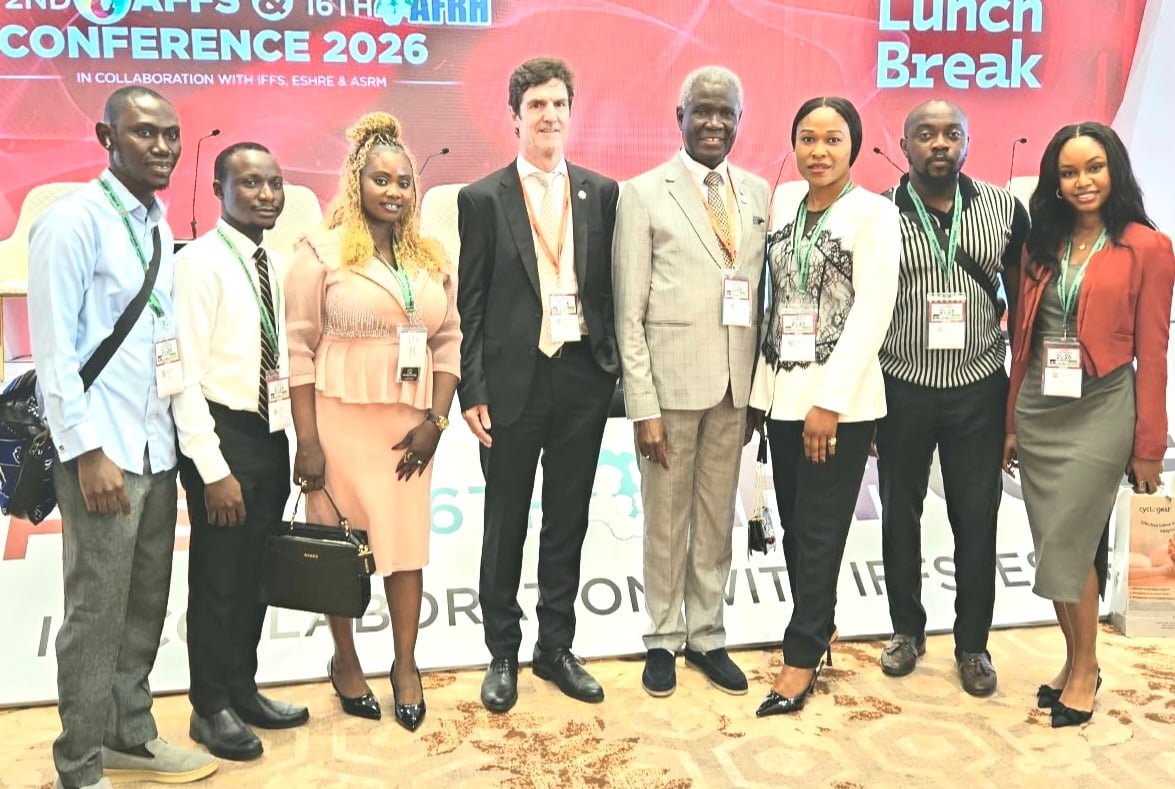
Professor of reproductive endocrinology and Secretary-General of the International Federation of Fertility Societies (IFFS), Oladapo Ashiru, has raised concerns over the severe threat environmental toxins pose to fertility and assisted reproductive technology (ART) outcomes.
Speaking at the recent 2nd African Federation of Fertility Societies (AFFS) and the 16th Association for Fertility and Reproductive Health (AFRH) conference in Abuja, Prof Ashiru urged clinics to assess and support couples through preconception cleansing before they begin fertility treatments.
Prof Ashiru, who also serves as the President of the Africa Reproductive Care Society and Chairman of the MART Group of Health Services, warned delegates that everyday exposure to contaminated air, water, food and soil introduces endocrine-disrupting chemicals (EDCs) that directly damage sperm, eggs and developing embryos.
According to the presentation, routine semen analysis fails to explain an estimated 30 to 40 per cent of male-factor infertility. Prof Ashiru revealed that hidden complications — such as sperm DNA damage, oxidative stress and epigenetic changes — are increasingly responsible for failed embryo development and lower live birth rates.
Data cited at the conference highlighted several alarming trends, including sperm damage: sperm DNA fragmentation levels above 30 per cent significantly reduce blastocyst formation during IVF.
Seminal cadmium doubling can increase sperm DNA fragmentation by roughly 8 per cent.
On chemical and pesticide risks, agricultural workers exposed to organophosphate pesticides face a 50 per cent higher risk of sperm abnormality. Occupational exposure to bisphenol A (BPA) and phthalates is directly linked to low sperm concentration and poor semen quality.
Similarly, exposure to air pollution in the 90 days leading up to semen collection drastically reduces sperm motility.
A prospective study in China found that couples living within 500 metres of a major road suffered a 15 per cent lower live birth rate per IVF cycle.
Prof Ashiru emphasised that environmental infertility is both a global crisis and a severe local issue in Nigeria.
He specifically pointed out the high-risk exposures faced by communities in Nigeria’s oil-producing Niger Delta, who contend with constant oil spills and severe air and water pollution.
He noted that international bodies, including the International Federation of Gynecology and Obstetrics (FIGO), have recognised these toxic threats, urging obstetricians and gynaecologists worldwide to address them actively.
To combat these challenges, Prof Ashiru shared compelling clinical findings from the MART/MARTLIFE Detox Clinic in Lagos.
The clinic utilises a preconception detoxification approach based on Modern Mayr Therapy, which integrates lymphatic drainage, infrared sessions, hydrotherapy, oxygen-based therapies and antioxidant supplementation to prepare patients with a history of toxic exposure or unexplained IVF failure.
A study published in Global Reproductive Health compared 131 patients who underwent this detoxification protocol with 87 who did not.
The results demonstrated a clear statistical advantage for detoxified patients across all major success metrics.
According to him, it was a 41.2 per cent pregnancy rate in detoxified patients against 31 per cent in non-detoxified patients, while 27.5 per cent against 21.8 per cent in clinical pregnancy rate, and 23.7 per cent against 15 per cent for live birth rate.
Prof Ashiru explained that this therapy successfully eliminates heavy metals and nutritional toxins, boosts mitochondrial quality and shields reproductive cells from the damaging effects of EDCs.
“Every couple deserves to begin their journey to parenthood in the healthiest possible environment,” Prof Ashiru stated. “Toxins in our air, food and everyday products can affect sperm and egg quality long before conception, yet they are rarely discussed in the fertility clinic. Assessing exposure and supporting the body before treatment gives couples a better chance of a healthy pregnancy.”
Concluding his address, the IFFS Secretary-General called for an aggressive, combined push for public advocacy, clinician education and expanded research into how environmental exposures dictate fertility outcomes.
He advised individuals planning a family to consult qualified fertility specialists regarding their occupational exposures, diets and lifestyles.
WATCH TOP VIDEOS FROM NIGERIAN TRIBUNE TV