

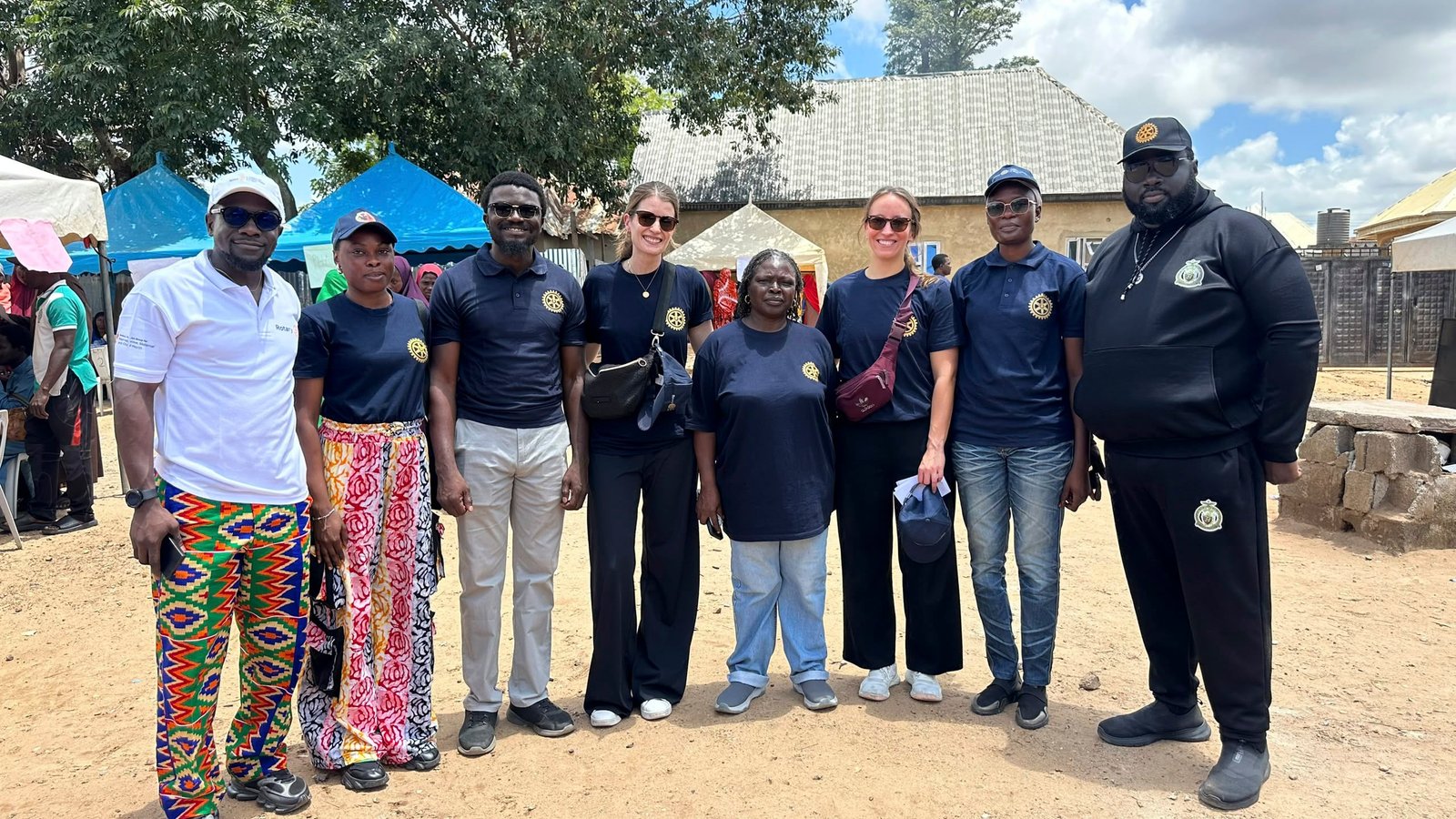
The Federal Capital Territory Administration has mapped out 100 communities across the six area councils for monthly maternal and child health outreaches as part of efforts to expand access to reproductive, maternal and child health services.
Coordinator, Reproductive Health, FCT Primary Health Care Board, Maimuna Mikail Isah, disclosed this during a Rotary Action Group for Reproductive, Maternal, and Child Health (RMCH) medical outreach in Kayar Darkasa community, Kuje Area Council of the FCT.
Isah said the planned activities were contained in the Board’s Annual Operational Plan (AOP) for 2027 and would run for one year, with the six area councils scheduled to host the outreaches on a quarterly basis.
She said the initiative would also help sustain some of the interventions currently being implemented by Rotary RMCH as the organisation prepares to exit the project.
“Most of the activities carried out by Rotary are all captured in our AOP. So, as they are exiting, we should be able to carry out those activities and make sure it’s sustained,” Isah said.
She explained that the Board would also collaborate with other partners interested in community-based reproductive, maternal and child health interventions to ensure continuity of services.
According to her, the need for community-based interventions was demonstrated during the Kuje outreach, where health workers detected previously undiagnosed cases of high blood pressure and high blood sugar.
“Even today now, I’m just seeing a client that never knew that she had high BP before. She has never known that she has high blood sugar. So, we just detected that the blood sugar is so high and the blood pressure too is very high,” she said.
Isah said the woman had shown no obvious symptoms, adding that early detection through the outreach could enable her to receive treatment before complications developed.
She disclosed that about four people were referred to the General Hospital for further management during the exercise, while health workers collected beneficiaries’ contact details to facilitate follow-up.
“Like the woman I just took her number and I want to follow up. I will want to make sure she gets to the facility,” she said.
Project Manager, Rotary RMCH Germany, Daniela Kaempfe, said the outreach demonstrated the importance of taking healthcare services directly to communities, particularly women and children who may face barriers to accessing formal health facilities.
Kaempfe, who described the exercise as well organised and impressive, urged women to use health facilities for appropriate care in order to reduce maternal and child mortality.
She called for greater government ownership of community health interventions, noting that development projects eventually come to an end.
“I think it would be important for the government to maybe take over the activities because projects, at some point, they will stop,” Kaempfe said.
She urged government to ensure that health facilities were equipped with essential medicines and that health workers received adequate training to provide quality care to mothers and children.
Chief Midwife, Rotary RMCH, Hannatu Francis Dung, said the outreach was designed to address financial barriers preventing some residents from accessing healthcare at established facilities.
“We realise that this is where the health services are most needed because these days, the economic situation is eating deeply into the people and they’re not able to go to the health facility to access services,” Dung said.
She said the team provided health education and encouraged residents to seek care from facilities where trained health workers, equipment and laboratory services were available.
Dung explained that Rotary had deliberately involved FCT and Kuje Area Council health officials in the outreach to strengthen government ownership and ensure sustainability.
“We do not come alone. We come together with the government personnel,” she said, noting that officials from the FCT Primary Health Care Board, including the Reproductive Health and Safe Motherhood coordinators, participated in the exercise.
She added that Kuje Area Council also provided health workers and officials for the programme, while council representatives had expressed their commitment to sustaining the lessons and activities from the outreach.
Dung said patients whose conditions could not be managed during the exercise were referred to appropriate health facilities, with referral letters issued where necessary.
She cited the case of a woman who had been unable to conceive after about three years of marriage and had previously been referred from a general hospital to the University of Abuja Teaching Hospital, Gwagwalada, but could not proceed because of lack of funds.
According to her, she contacted a consultant gynaecologist at the hospital and secured an arrangement for the woman to access further care.
Dung said the team also collected phone numbers of beneficiaries to enable health workers follow up on referrals and determine whether patients accessed the recommended services.
Representing the Chairman of Kuje Area Council, Samuel Shekwolo, the Senior Special Assistant, Hon Azana Ibrahim, urged pregnant women experiencing complications during labour to seek immediate medical attention rather than attempting to manage emergencies at home.
He said the council was committed to supporting healthcare workers to ensure that pregnant women received prompt attention.
“It is not encouraged for them to remain at home trying that kind of thing. They should be able to rush to the hospital for a doctor to attend to them immediately, because if you leave that patient at home, it may end up dying,” Ibrahim said.
He assured residents that the council would continue to encourage health workers to attend promptly to patients requiring medical attention.
WATCH TOP VIDEOS FROM NIGERIAN TRIBUNE TV