

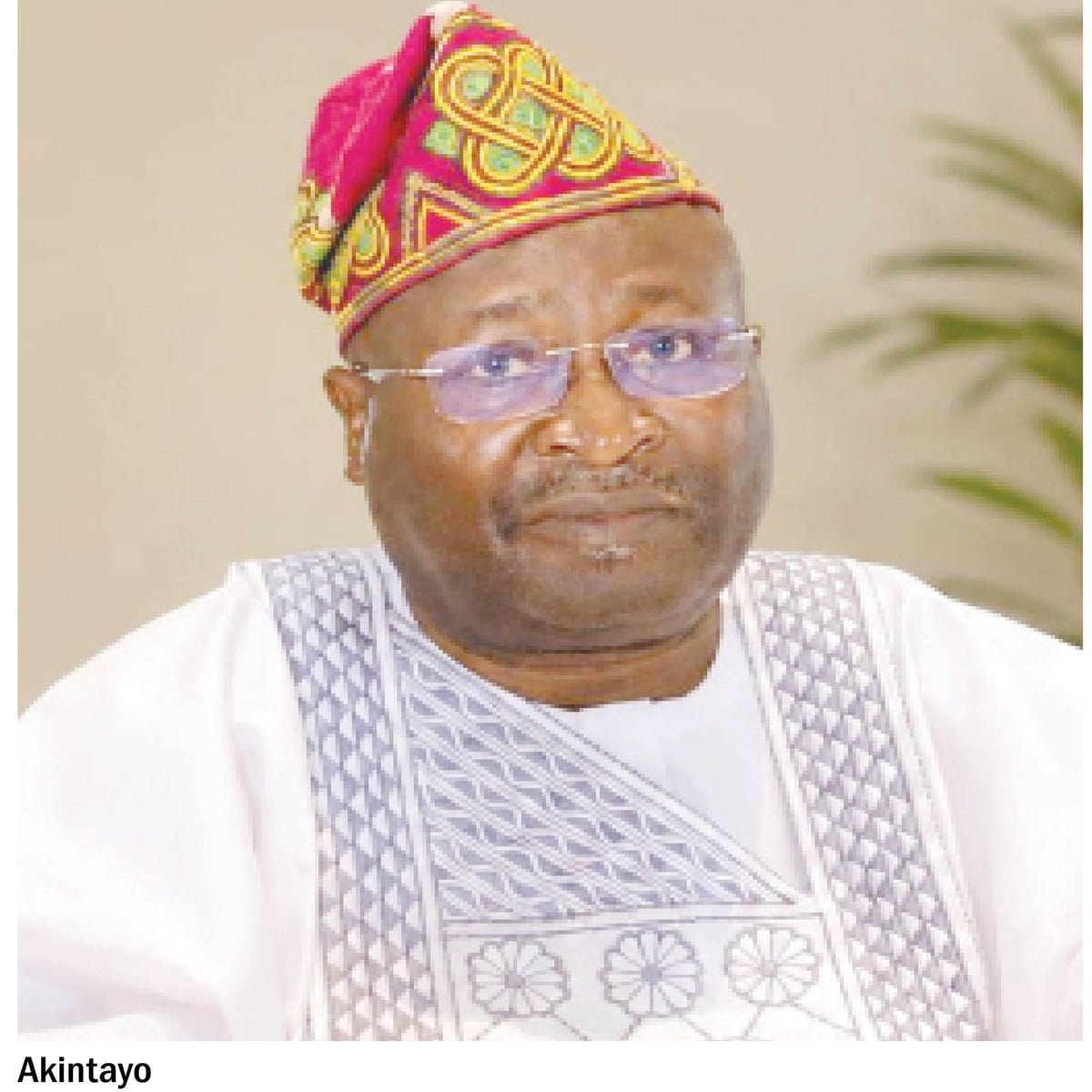
Olumide Akintayo, a Fellow and past President of the Pharmaceutical Society of Nigeria, speaks with Sade Oguntola on the urgent need to strengthen Nigeria’s healthcare and pharmaceutical sectors, including a greater role for community pharmacists in strengthening primary healthcare and expanding access to essential services.
The theme is: “Empowering Pharmacists for Healthier Futures.” What does that empowerment actually look like in the Nigerian context in 2026?
Healthcare and science are constantly evolving. The rules, responsibilities and expectations within the health sector also change with time. Therefore, we must continually examine our health system and ask whether it is adequately positioned to meet the needs of Nigerians.
Nigeria has consistently struggled with the performance of its health system. At one point, the country was ranked somewhere around the 120s among global health systems. I may not remember the exact position, but the point is that our performance has been poor.
If we are serious about building a healthier future, universal health coverage is one practical route to achieving it. But universal health coverage cannot be achieved without the appropriate health professionals and without assigning those professionals responsibilities that correspond with the needs of the population.
One area we need to look at seriously is community pharmacy. The United Kingdom provides an interesting example. During COVID-19, many physician surgeries and clinics were shut down or significantly restricted, but community pharmacies continued to provide essential services. The UK government subsequently invested £300 million to strengthen community pharmacy.
By May 2026, there was another £380 million investment under the Pharmacy First initiative. The objective was to transform community pharmacies into primary clinical-care points and reduce the burden on general practitioners.
Nigeria needs to recognise that community pharmacies can also serve as important primary-care facilities.
Pharmacists can provide basic screening for non-communicable diseases such as hypertension and diabetes. They can operate pharmacy-based clinics and contribute to maternal and child health education and advocacy.
In rural communities especially, the pharmacy may be one of the closest and most trusted health facilities available to people. Pharmacists can counsel patients on nutrition, folic acid, pregnancy-related issues and other basic health matters.
The issue is not simply about giving pharmacists more responsibilities. We must also create the enabling environment, provide the necessary training, establish appropriate guidelines and ensure that these responsibilities are properly regulated.
We have seen similar initiatives in other countries, including the United States, where community pharmacy clinics have received significant support. Unfortunately, many Nigerian professionals leave the country because they believe other environments provide more conducive conditions for professional practice.
How do we ensure that pharmacists and other health professionals do not go beyond their scope of practice? We have seen situations involving traditional birth attendants, for example, and conflicts between different health professions. How do we manage that?
Government has a responsibility to regulate the health system. Where professionals go beyond their scope, there must be appropriate regulatory mechanisms. However, the existence of violations should not prevent us from advancing the health system.
We have to consider our local peculiarities, the availability of health professionals and the realities of the communities we are trying to serve. Policies must be constantly reviewed and strategies adjusted.
There is no policy that is completely foolproof. What matters is good management, continuous monitoring and the willingness to correct defects when they are identified.
Traditional birth attendants, for example, were used in many rural communities because there were insufficient numbers of formally trained professionals. If that arrangement is not producing the desired results, then we should redesign the system rather than simply ignore the problem.
When you were President of the Pharmaceutical Society of Nigeria, what was the biggest barrier to empowering pharmacists? And is that barrier still present in 2026?
The biggest barrier is political. I have always argued that there is an informal system within our health sector that tends to favour physicians. A large proportion of leadership positions in government health institutions are occupied by physicians.
Under the current administration, for example, there are several physicians within the Federal Executive Council, and most of the chief executives of health-sector agencies are also physicians, with some exceptions involving specialised agencies and regulatory councils.
The implication is that one professional perspective becomes dominant in shaping the health system.
I became President of the Pharmaceutical Society of Nigeria in 2012 and left the position in 2015. Unfortunately, very little has changed since then. We repeatedly sent memoranda to the Ministry of Health and the National Primary Health Care Development Agency on the need to properly integrate community pharmacists into primary healthcare.
COVID-19 demonstrated what pharmacists are capable of doing. The National Primary Health Care Development Agency engaged about 250 community pharmacies for COVID-19 vaccination. In less than six months, those pharmacies administered vaccines to more than 75,000 people.
That demonstrated that community pharmacies can contribute significantly to immunisation. Why should people have to wait for special immunisation days when a properly regulated pharmacy within their community can provide access throughout the year?
How do we move from this professional competition to a system where pharmacists, nurses, doctors, laboratory scientists and other professionals genuinely work as a team and are respected for their respective roles?
We need strong and bold leadership. Sometimes, professional groups can exert enormous pressure on political leaders. In the health sector, physicians have historically been able to use strikes and other forms of industrial pressure to influence government decisions.
Government must be prepared to engage with professionals and negotiate fairly on welfare issues, but it must also protect the broader interests of the health system. Take the example of former Lagos State Governor Fashola. Governor Fashola sacked LASG doctors who kept holding Government to ransom through recurrent strike action at some stage in his stewardship in Lagos State. Government sometimes has to stand firm when faced with professional pressure while still ensuring that legitimate welfare concerns are addressed.
There have also been discussions around joint health-sector unions and demands that have existed since 2014. The adjustment of CONHESS since January 2, 2014, as it relates to non-physician cadres of health workers, is continually being sabotaged. Even when President Bola Tinubu promised a redress after a JOHESU advocacy visit on June 5, 2023, during a nationwide strike by health workers in the early days of his administration, the promise was jeopardised.
These issues should not continually be reduced to a situation where one professional group threatens industrial action and government is forced to respond.
We need a health system in which every profession has a voice and where policy decisions are based on the overall needs of the health system.
You have used the phrase “the politics of the health sector.” What exactly do you mean by that?
Look at the composition of the National Council on Health. At the state level, you have commissioners and permanent secretaries of health. At the federal level, you have the health ministers, and many of the heads of health-sector parastatals are physicians.
If you put 100 people in a room and approximately 90 of them come from one profession, it is inevitable that the thinking and policies emerging from that room will be heavily influenced by that profession. That is what I mean by the politics of the health sector.
I am also concerned about the leadership of the Federal Ministry of Health under Muhammad Pate. In my view, being a physician does not automatically make someone a health-sector leader. Leadership of the health system requires an understanding of the contributions of all the health professions.
One major issue is the failure, as I see it, to properly constitute the boards of professional regulatory councils and the boards of management of health institutions. Without properly constituted regulatory councils, how do you effectively discipline practitioners? How do you regulate companies? How do you accredit institutions?
There have also been efforts to establish a national health-facility regulatory structure that, in my view, could place too much control in the hands of one profession.
We resisted similar provisions when the National Health Act was being developed. We have also seen proposals to place physicians on the councils regulating professions such as nursing, physiotherapy and medical laboratory science.
I do not believe that is the right direction. A professional council should be allowed to regulate its own profession while working within the broader framework of the health system.
Q: What is the implication of these policies for the public health system?
A: One of the biggest concerns is the conversion of publicly guaranteed markets into private commercial interests.
Take the Drug Revolving Fund. Government provides funds for the procurement of medicines. Those medicines are then sold with a modest markup, often around 30 per cent, so that the money can revolve and sustain the supply of medicines. There are examples of public hospitals that developed their pharmacy operations successfully without destroying that system.
At the National Orthopaedic Hospital in Lagos, for example, the pharmacy department developed a pharmacy outlet around 2014 worth more than ₦200 million. It included facilities for manufacturing and other pharmaceutical activities. That model demonstrated that public hospitals can develop sustainable pharmaceutical services.
My concern is that under the current system, some federal hospitals are allowing private interests to take over portions of the drug supply chain through arrangements where, for example, the private operator receives 70 per cent and the hospital receives 30 per cent.
In my view, such arrangements raise questions under the Public Procurement Act of 2007 and the Pharmacists Council of Nigeria Act of 2022. There are also legal challenges relating to some of these arrangements.
What about the Basic Health Care Provision Fund?
The National Health Act of 2014 established a provision of one per cent of the Consolidated Revenue Fund for basic healthcare. There have also been discussions and resolutions around increasing that allocation to two per cent, but the original one-per-cent provision itself has not been consistently adhered to.
The fund is intended to support areas such as social health insurance and the procurement of essential medicines. Government should remain the custodian of the quality and security of essential medicines.
I am concerned about arrangements in which essential medicines are procured through private companies without sufficient consideration of their experience, capacity and regulatory standing.
For example, there has been discussion around a company referred to as Medipool. My concern is that a company with limited experience in pharmaceutical wholesaling and distribution should not automatically be placed at the centre of the national essential-medicines supply chain.
Many states already have drug management agencies operating through registered pharmacies and established systems. If the federal government introduces a private arrangement without properly considering these existing structures, there could be significant consequences.
You have also raised concerns about corruption within the health sector. Where does this manifest?
One example is the use of amenity or private wards within public hospitals. There are situations where consultants allegedly divert patients from the public system into private arrangements, with payments going into private accounts while government facilities, drugs, theatres and other public resources are still being used.
The corruption in the procurement mechanisms of the federal health institutions (FHIs), because they are without Boards of Management, has reached an apogee.
That is a form of leakage within the health system. The ICPC rated the MDAs in the health sector as the most corrupt. The public health system must be protected from arrangements in which private interests benefit disproportionately from resources that belong to the public.
Let us turn to fake medicines. We still have unlicensed drug shops and patent medicine vendors operating beyond their permitted scope despite the existence of regulations from the Pharmacists Council of Nigeria. Why does the problem persist?
Drug regulation is a complex issue. Under the constitutional arrangement, drug matters fall under the Exclusive Legislative List. The Poison and Pharmacy Act, including provisions relating to patent medicine vendors, gave the minister significant powers.
At a particular point, those powers were delegated to 774 local government areas. That resulted in hundreds of licensing authorities across the country instead of one central licensing agency, the PCN. This development is the foundation for the proliferation of unregistered drug outlets, estimated at about three million nationwide.
The proliferation of medicine shops is partly a consequence of that arrangement. The regulatory challenge is made worse by the limited number of inspectors available.
The Pharmacists Council of Nigeria has fewer than 200 pharmaceutical inspectors. NAFDAC also faces significant capacity constraints. So, while the number of premises continues to increase, the regulatory capacity required to monitor them does not increase at the same rate.
How important is the pharmaceutical industry to Nigeria’s economy and health security?
It is extremely important. The pharmaceutical sector is specialised and strategically important. The availability of quality medicines is central to the credibility of any health system.
There is also a major economic opportunity. The pharmaceutical industry contributes significantly to the economies of countries such as the United States, China and India. Nigeria’s pharmaceutical market is currently estimated at around $2 billion, but there is potential to grow it substantially, potentially towards $10 billion.
There are companies and investors already trying to expand pharmaceutical manufacturing in Nigeria. We have seen investments in active pharmaceutical ingredients, HIV medicines, cephalosporins and other areas.
There have also been discussions around large investments in the production of pharmaceutical raw materials.
This is why I believe the President should establish a dedicated presidential committee on the pharmaceutical sector. Such a committee should examine the entire pharmaceutical value chain, including illegal premises, manufacturing, distribution and the implementation of national drug-distribution guidelines.
More than 70 per cent of medicines are imported. How do foreign exchange pressures, raw-material costs and government policy affect pharmacists and patients?
We need to be very clear about the issue of VAT. The pharmaceutical sector has not treated VAT as a major component of pharmaceutical operations for more than a decade. So, removing VAT alone will not solve the fundamental problem. The bigger issue is drug security and self-reliance.
COVID-19 demonstrated the danger of depending heavily on imported medicines. At various points, countries such as India restricted the export of certain pharmaceutical products. When that happens, countries that depend heavily on imports become vulnerable.
We also need to consider the security implications of weak borders and uncontrolled drug channels. Products entering through informal channels may pose serious risks to patients.
Nigeria must develop the capacity to produce active pharmaceutical ingredients and finished medicines locally. We have approximately five world-class pharmaceutical manufacturing plants, but our production environment is not yet sufficiently competitive for us to become a major global pharmaceutical manufacturing destination.
Trade waivers and temporary interventions are not sustainable solutions. We need legislation, proper funding and policies that deliberately promote local pharmaceutical manufacturing.
The National Drug Policy 2021 emphasises affordability, accessibility and efficacy. But if pharmaceutical companies are forced to source foreign exchange at extremely high rates, achieving those objectives becomes difficult.
Government should therefore develop legislation that promotes local industry and discourages unnecessary imports of products that can be manufactured locally, including luxury pharmaceutical products.
NAFDAC has made efforts in this area, but there needs to be much broader stakeholder consultation.
There are new drug-distribution guidelines and proposals around mega-drug markets or centres. Will these help or hurt legitimate community pharmacists?
They should not be described simply as mega-drug markets. The concept is Coordinated Wholesale Centres, or CWCs. The idea originated within the Pharmaceutical Society of Nigeria during my presidency, with support from the Health Ministry, PCN and NAFDAC.
The first phase identified centres in Sabon Gari in Kano, Bridge Market in Onitsha, Ariaria in Abia and Idumota in Lagos. Kano State eventually built the first Coordinated Wholesale Centre in Kano. The centre displaced the old Sabon Gari market and was commissioned about four years ago. It is still operating.
The presence of the Pharmacists Council of Nigeria, NAFDAC and the police provides a more structured environment for regulation and enforcement. This model can improve the quality and security of medicines.
The Federal Ministry of Health needs to entrench the concept rather than allow it to remain dependent on individual initiatives. Again, this is why I believe a presidential committee is necessary.
Look at the United States. Some chain pharmacies generate millions of dollars in turnover from a single outlet, and major chains operate thousands of outlets. There is enormous economic potential in a properly organised pharmaceutical distribution system.
NAFDAC carries out raids and seizures, yet fake medicines keep returning to the market. What structural enforcement measures would work in 2026?
We must address the structures and markets that absorb fake medicines. As long as the demand exists and the distribution structures remain in place, fake medicines will continue to return.
We need to properly fund regulatory agencies and strengthen the laws. The Fake Drug Act needs to be amended. Some of the current penalties are far too low. A fine of ₦500,000 is not sufficient deterrence for someone who may be making millions from counterfeit medicines.
We need substantially heavier fines, potentially in the range of ₦25 million to ₦50 million, together with forfeiture of assets and proceeds derived from the illegal activity.
There should also be consideration of the responsibilities of landlords who knowingly provide premises for illegal pharmaceutical activities.
Regulatory councils must also be functional. NAFDAC and the Pharmacists Council of Nigeria need more inspectors, better salaries, adequate legal support and protection for personnel working in dangerous environments.
Regulatory agencies should also be able to reinvest internally generated revenue into enforcement.
For example, agencies operating at airports have mechanisms for generating and using revenue to sustain their operations. Pharmaceutical regulators should have similarly sustainable funding arrangements.
I have been involved in this sector for about 40 years, and we are still discussing many of the same problems. That means we have to continuously strategise and restrategise.
Who should take the blame for the proliferation of fake medicines? Is it the government, the consumers or the system itself?
Everyone in the value chain has a responsibility. Government has a responsibility because of poor funding, weak laws and inadequate regulation.
Consumers also have a responsibility. People sometimes knowingly patronise unregistered premises because they believe the prices are cheaper or because they want medicines without proper prescriptions.
There are situations where people break seals, enter through back doors or deliberately seek out illegal sources. More broadly, we have developed a culture where people believe they can operate outside the rules without consequences.
That culture of impunity has to change. In about 40 years of practice, it was only recently that I saw a Nigerian court sentence someone operating a pharmacy facility to imprisonment for unlawful dispensing of medicines. That was a Federal Court in Calabar, around May or June of this year. We need more effective enforcement.
What does the law actually say about who can dispense and prescribe medicines?
Only registered pharmacies should dispense medicines. There are also specific categories of professionals who are legally authorised to prescribe medicines. These include registered medical practitioners, veterinary doctors or surgeons, and dentists.
Yet many private hospitals dispense medicines directly. The problem is not necessarily the absence of laws. The problem is enforcement. NAFDAC, the Pharmacists Council of Nigeria and other relevant regulatory institutions have responsibilities, but those responsibilities must be properly enforced.
There are also concerns about the prices patients pay in private hospitals and pharmacies.
A World Health Organisation study cited differences in medicine prices, with private hospitals reportedly charging more than 192 per cent of the public pharmacy baseline and private pharmacies around 185 per cent. These are issues that must be addressed if we genuinely want affordable healthcare.
WATCH TOP VIDEOS FROM NIGERIAN TRIBUNE TV