

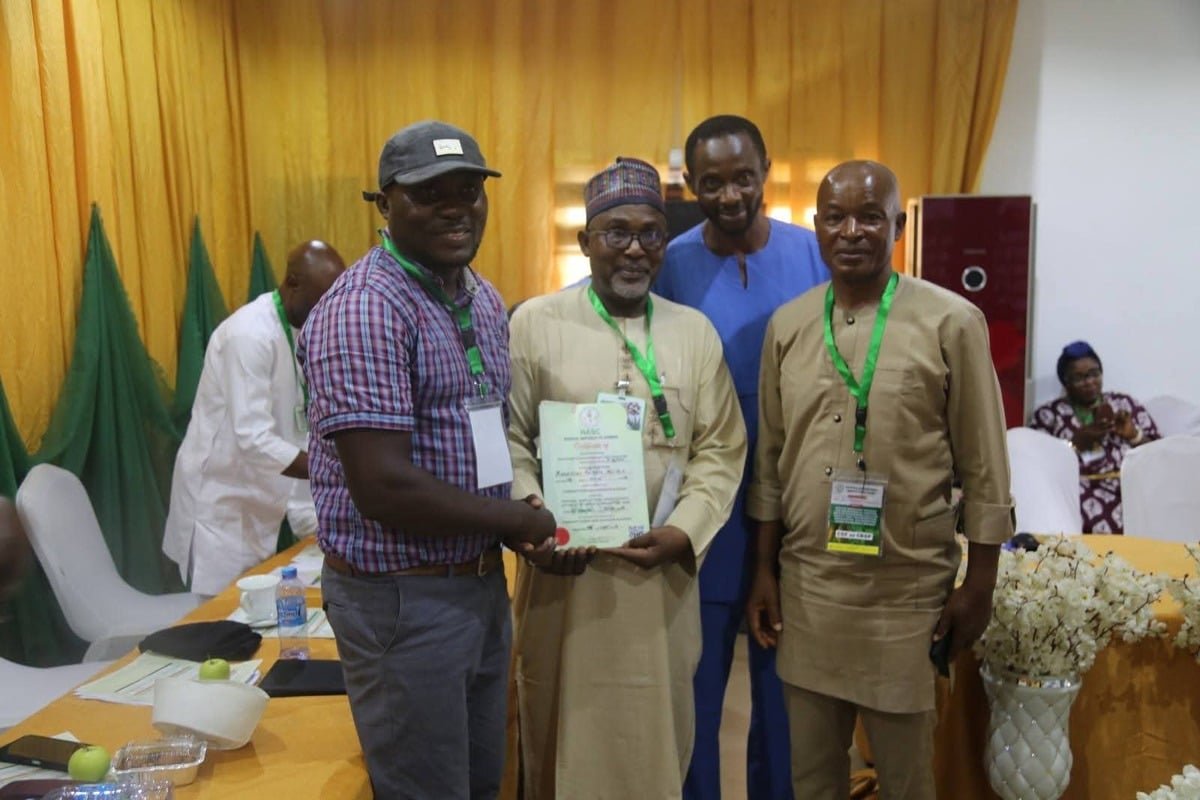
The National Agricultural Seeds Council (NASC) has commenced the training and onboarding of prospective Certified Seed Entrepreneurs (CSEs) as part of efforts to strengthen quality seed yam production, certification, and marketing in Nigeria.
Speaking during a one-day mandatory training and onboarding program for CSEs organized by the Council in collaboration with the International Institute of Tropical Agriculture (IITA) under the PROSSIVA Project, the Director-General/Chief Executive Officer of NASC, Fatuhu Muhammed, said access to quality planting materials remained critical to improving agricultural productivity, farmers’ resilience, and food security.
Muhammed, who was represented by the Director of the DG’s Office, Mal. Dahiru Rabiu noted that strengthening Nigeria’s yam seed system was essential given the crop’s importance to the country’s food and agricultural economy.
He said the training was designed to equip prospective CSEs with the technical, regulatory, and business knowledge required to establish and operate credible seed farm enterprises.
Muhammed urged the participants to see themselves not merely as trainees but as future partners in building a sustainable and commercially viable seed yam industry.
He emphasized that seed yam production and marketing remained regulated activities, noting that commercial seed production without registration contravened the National Agricultural Seeds Council Act, 2019.
“Under Section 20(1) of the National Agricultural Seeds Council Act, 2019, a person shall not produce seed in commercial quantities unless registered as a seed producer by the Council,” he said.
ALSO READ: NASC trains seed inspectors, cassava producers in Abuja
He added that the sale or supply of seeds was also subject to certification requirements, describing the regulations as safeguards for farmers and the integrity of Nigeria’s seed system.
Muhammed therefore urged the prospective CSEs to comply fully with requirements for registration, production, certification, quality control, traceability, and lawful marketing.
He said the success of seed entrepreneurs would not be measured solely by the volume of seed yam produced but also by the quality, integrity, and confidence farmers could place in their products.
The NASC, he said, would continue to provide an enabling regulatory and technical environment for the development of a sustainable seed yam system.
He said the Council would strengthen quality assurance, certification, monitoring, enforcement, and digital traceability while collaborating with research institutions, development partners, and private-sector actors to improve farmers’ access to quality planting materials, particularly at the last mile.
The Director-General further commended IITA and SAHEL Consulting for their continued support for the PROSSIVA Programme and praised the NASC technical team for organizing the training.
He said the opportunity for prospective CSEs was significant but came with responsibilities, including producing quality seed, complying with regulations, operating viable enterprises, and earning farmers’ confidence.
Muhammed said the ultimate objective was to transform Nigeria’s yam seed system from a fragmented supply structure into an organised, quality-assured, traceable and commercially sustainable seed delivery system.
WATCH TOP VIDEOS FROM NIGERIAN TRIBUNE TV