

The Federal Government has disclosed that about 60,000 women have accessed emergency healthcare services in the last three years through interventions designed to remove financial barriers to maternal care.
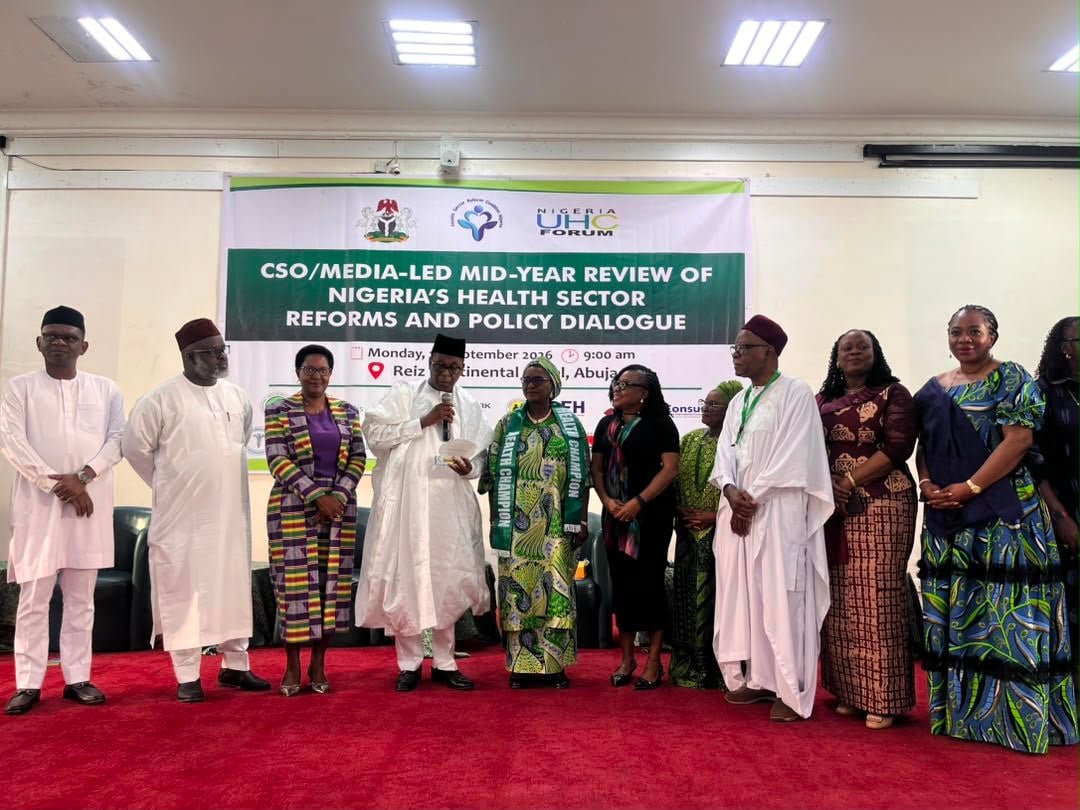
Coordinating Minister of Health and Social Welfare, Prof. Muhammad Ali Pate, disclosed this at a high-level dialogue on the mid-term review of Nigeria’s health sector reforms, where government officials, civil society organisations, development partners and other stakeholders assessed progress and challenges in the sector.
Pate said the intervention was particularly targeted at women who might otherwise be unable to afford emergency healthcare during pregnancy and childbirth.
“60,000 women in three years, imagine without that provision, how many women,” he said.
The minister called on state governments and other stakeholders to mobilise additional resources to sustain and expand the intervention, stressing that the Federal Government alone could not resolve the challenges facing Nigeria’s health system.
Pate said the government was also strengthening primary healthcare through investments in infrastructure, medical equipment, essential commodities and human resources.
He said more than 4,000 primary healthcare facilities were being strengthened in collaboration with state and local governments, while the annual intake of health professionals had increased from about 5,000 to 10,800.
“We need to get them, equip them, with commodities, medical equipment, all of those things that we need,” he said.
According to him, the reforms were part of efforts to rebuild a health system weakened by years of inadequate investment, noting that reversing the decay and establishing a sustainable path to recovery would take time.
“It takes time to build, first of all, to stop the decay and to have a path and to rebuild,” Pate said.
He urged civil society organisations and other stakeholders to complement criticism of government policies with practical recommendations that could improve healthcare delivery.
“We don’t have the perfection… But if we do, give us solutions. Not complain, but give us solutions,” he said.
Chair and Co-convener of the Nigeria UHC Forum, Chief (Mrs) Moji Makanjuola, said the mid-term review provided an opportunity for non-state actors to assess the country’s health transformation alongside policymakers and health agencies.
Makanjuola said the dialogue would enable stakeholders to identify successful interventions, address implementation gaps and strengthen accountability based on evidence.
“This dialogue offers a unique opportunity to appraise Nigeria’s health transformation journey, create a pathway to institutionalize what works, learn from what doesn’t, and do things differently where necessary,” she said.
She identified the media as a critical link between health policymakers and citizens, saying effective reporting was necessary to help Nigerians understand reforms and demand accountability.
“The media serves as an important bridge between policy and the people, translating complex health policies and reforms into information that citizens can understand, interrogate and act upon,” Makanjuola said.
She disclosed that the Nigeria UHC Forum would intensify advocacy ahead of the 2027 elections to secure stronger political commitments to healthcare.
“Health investment is primarily a political decision, and that’s why we strive to put health on the political front burner,” she said.
Also speaking, CSO/HSRC Chairperson, Muhammad Mustapha, called for a shift in the assessment of health reforms from government spending and infrastructure projects to actual services reaching Nigerians.
Mustapha said the effectiveness of health financing should be measured by resources reaching frontline facilities and the services delivered with them.
“Health financing should therefore be judged not only by what is allocated, but by what reaches the frontline and what services those resources purchase,” he said.
He urged the government to make the functionality of primary healthcare centres a key benchmark for evaluating the reforms, rather than focusing primarily on the number of facilities renovated.
“The next phase should move from counting facilities renovated to measuring facilities that are consistently functional and delivering quality services,” Mustapha said.
He also advocated stronger Ward Development Committees and increased community participation in health governance.
“Communities cannot effectively hold facilities accountable for resources they do not own,” he said.
The UNFPA Representative in Nigeria, Ms. Muriel Mafico, described the ongoing reforms as bold and courageous but stressed that transforming the health sector required collective action.
She called for stronger partnerships among government institutions, development partners, civil society organisations and other stakeholders.
“The changes we want to see require multi-sectoral, multi-partner initiatives,” Mafico said.
She urged stakeholders to take ownership of the reform process, saying legislators, government agencies, civil society groups, development partners and frontline health workers all had roles to play.
“We are not here as spectators, we all have a role to play,” she said.
Director-General of the National Agency for Food and Drug Administration and Control, Prof. Mojisola Adeyeye, said achieving Universal Health Coverage also depended on strong regulatory institutions capable of ensuring access to safe and quality medicines, medical products and nutritious foods.
Adeyeye said NAFDAC had strengthened its workforce and introduced quality management systems and standard operating procedures to improve regulatory efficiency and consistency.
“We started thinking of standard operating procedures—procedures that can be repeatable, reproducible, year after year after year. We were building quality into the system,” she said.
She said the agency’s successful international regulatory benchmarking had further strengthened Nigeria’s capacity to protect public health and regulate health commodities.
“Why is this so important? Because of public health. Part of what they audit us for is the quality, safety, efficacy of commodities,” Adeyeye said.
Chairman of the Advisory Board of the Africa Health Budget Network, Hon. Mohammed Usman, called for improved implementation, transparency and accountability in health budgeting.
Usman said budgetary allocations must translate into effective frontline services and tangible benefits for communities, stressing that reforms would only be meaningful if they improved access, affordability and equity.
“Africa Health Projects Network calls for stronger attention to health budget implementation, transparency, accountability and value for money,” he said.
He also called for closer collaboration among government institutions, lawmakers, civil society organisations, the media, development partners and citizens.
“No single stakeholder can deliver the health system Nigeria deserves,” Usman said.
The stakeholders agreed that the success of Nigeria’s health reforms should ultimately be measured by their impact on citizens, especially poor and vulnerable populations, through improved access to quality healthcare, functional primary healthcare facilities, reduced financial hardship and stronger accountability.
WATCH TOP VIDEOS FROM NIGERIAN TRIBUNE TV