

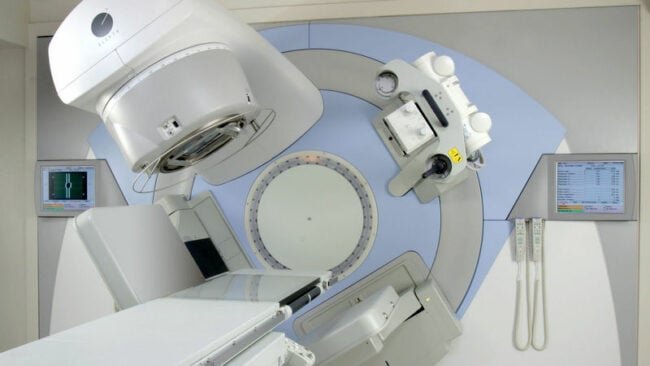
Nigeria needs at least 1,000 radiotherapy machines to meet the treatment needs of cancer patients but has fewer than 20, Head of the Department of Radiation Oncology, University College Hospital (UCH), Ibadan, Dr Adebayo Oladeji, has disclosed.
Oladeji said the severe shortage was limiting access to a critical component of cancer care, with patients facing treatment delays even when they could afford the cost.
Speaking in Ibadan to mark World Radiotherapy Day, he identified inadequate infrastructure, late presentation, and treatment costs as major challenges confronting cancer care in Nigeria.
World Radiotherapy Day is observed every September 7 to highlight the role of radiotherapy in cancer treatment. The date commemorates the first use of a linear accelerator (LINAC) to treat cancer on September 7, 1953.
The theme for this year’s observance, “More Awareness, Better Access, Greater Hope,” underscores the need to match growing public awareness with the capacity to provide timely treatment.
According to Oladeji, about 60 per cent of cancer patients require radiotherapy at some point during their treatment.
He said international recommendations provide for at least one radiotherapy machine for every 200,000 people, meaning Nigeria, with a population of more than 200 million, would require about 1,000 machines.
“Currently, in Nigeria, we have less than 20 radiotherapy machines. That is serving over 200 million,” he said.
Oladeji said several states have no radiotherapy centres, citing Oyo, Osun, and Ogun as examples. Patients from such states, he added, often have to travel to Lagos for treatment, further increasing the financial burden through transport and other expenses.
He called for greater investment in radiotherapy infrastructure by federal and state governments, while urging philanthropists, corporate organisations and individuals to support the effort.
“Governments alone seem not to be able to offer this treatment. Therefore, we are using this awareness to seek the goodwill of philanthropists in the society,” he said.
Oladeji acknowledged the Federal Government’s Cancer Aid Fund, which supports treatment for breast, cervical, and prostate cancers, particularly among indigent patients. However, he warned that financial assistance could not achieve its full impact where treatment facilities were unavailable.
“Even if they want to access it, but the machine is not available, the overall impact may still not be obvious for us to see,” he said.
He disclosed that UCH was pursuing a public-private partnership (PPP) arrangement to acquire a radiotherapy machine, expressing hope that the initiative would yield results within the next few months.
He noted that the hospital already had the specialist manpower required but stressed that one machine would not be enough to meet demand, given that UCH serves patients from across the South-West and other parts of Nigeria.
Oladeji explained that radiotherapy is broadly delivered through external beam radiotherapy and brachytherapy. While external beam radiotherapy is used for most cancers, brachytherapy complements treatment in selected cancers, including cervical, uterine, and prostate cancers.
He said a cancer diagnosis should not automatically be viewed as a death sentence, stressing the importance of early detection and prompt treatment.
“There are two main things that can easily alter the outcome. Number one is early detection. Number two is prompt treatment,” he said.
He urged Nigerians to seek medical attention whenever they notice unusual changes in their bodies.
“Early detection saves lives. The moment you see anything that is strange in your body, please get to see your doctor,” he advised.
He added that cancer awareness must translate into access to care.
“Let people get aware. When they get aware, let them come to the hospital. Unfortunately, if they come and there is no machine, the story will still be the same,” he said.
WATCH TOP VIDEOS FROM NIGERIAN TRIBUNE TV