

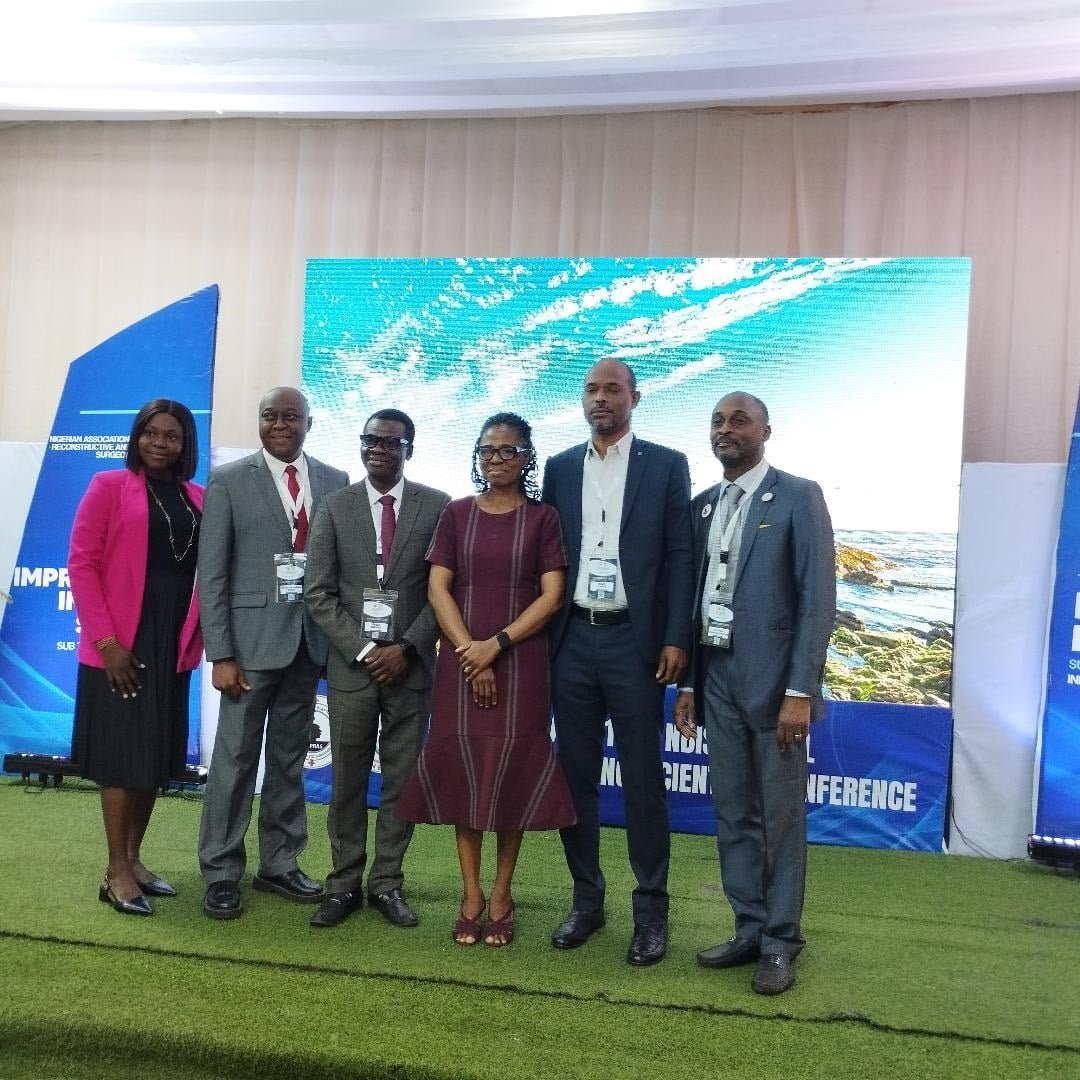
The President of the Nigerian Burn Injuries Society (NBIS), Dr Innih A. Kadiri, has called for stronger efforts to improve paediatric burn care and tackle burn wound infections, describing both as critical challenges affecting the survival and long-term wellbeing of burn patients in Nigeria.
Kadiri made the call in his welcome address at the 31st Nigerian Association of Plastic, Reconstructive and Aesthetic Surgeons (NAPRAS) and 19th NBIS Joint Annual General Meeting and Scientific Conference in Ibadan, Oyo State.
He said the NBIS conference theme, “Paediatric Burn Care”, with the subtheme “Burn Wound Infection”, focused on two critical areas of burn management, noting that children remain particularly vulnerable to burn injuries while wound infections continue to contribute significantly to morbidity, mortality and poor outcomes.
According to him, the conference provides an important platform for healthcare professionals to exchange knowledge, build professional networks and discuss innovative approaches to burn management and reconstructive surgery in Nigeria.
He expressed confidence that the scientific deliberations would generate practical solutions capable of improving burn care in Nigeria and beyond.
Kadiri reaffirmed NBIS’ commitment to advancing burn care and expressed optimism that the conference would produce meaningful ideas and practical interventions to improve outcomes for burn patients, particularly vulnerable children.
The President of NAPRAS, Prof Iffeanyichukwu L. Omah, also called for stronger research, practical training, data sharing and international collaboration to advance plastic surgery in Nigeria and position the country as a regional hub for the speciality.
Omah highlighted the association’s growing emphasis on hands-on training for residents and consultants, citing breast reconstruction, microsurgery, hand surgery and aesthetic surgery programmes as important initiatives.
He also raised concern over impostors in the profession and pledged continued engagement with regulatory authorities to tackle the menace.
Speaking at the occasion, the Vice-Chancellor of the University of Ibadan, Prof Kayode O. Adebowale, called for stronger public-private partnerships to improve burn care, reconstructive surgery and other specialist healthcare services across Nigeria.
Adebowale, who spoke through the Deputy Vice-Chancellor (Academics), Prof Juwon Arotiba, explained that conditions requiring reconstructive surgery, including congenital abnormalities, burns and traumatic injuries, often have consequences that extend beyond physical injury to affect patients’ psychological wellbeing, development, education, productivity and social participation.
The Vice-Chancellor therefore advocated comprehensive, interdisciplinary care that addresses not only surgical repair but also the long-term functional, psychosocial and developmental needs of patients.
He stressed that Nigeria must strengthen its health systems to ensure that specialist expertise is translated into accessible, safe and effective services for vulnerable populations.
He noted that paediatric burns and wound infections constitute serious public health concerns in Nigeria, particularly given the country’s large young population, and urged specialists to develop evidence-based strategies for prevention, early intervention and treatment.
Adebowale also challenged specialists to take prevention beyond hospitals by educating communities on injury prevention, early presentation and available treatment options.
The Chief Medical Director of the University College Hospital (UCH), Ibadan, Prof Jesse Abiodun Otegbayo, also called for stronger collaboration and research to improve burn and reconstructive care in Nigeria.
Otegbayo, who spoke through the Deputy Chairman, Medical Advisory Committee (DCMAC), Prof Olusola Olawoye, described burn injuries as a major public health concern that requires multidisciplinary teams to ensure comprehensive patient care.
He consequently urged healthcare professionals to strengthen multidisciplinary collaboration while prioritising continuous professional development to keep pace with rapidly evolving medical knowledge, surgical techniques, technologies, treatment protocols and evidence-based practices.
The CMD also noted that the country’s large population and significant burden of trauma, burns and conditions requiring reconstructive interventions demanded research capable of producing solutions that were accessible, affordable and sustainable within the Nigerian health system.
ALSO READ: I know a man nicknamed ‘Half Salary’ in Osun — Tinubu taunts Aregbesola
Earlier, Oyo State Governor, Engr Seyi Makinde, represented by the Commissioner for Health, Dr Oluwaserimi Ajetunmobi, speaking on the conference theme, “Quality Improvement in Plastic Surgery”, stressed that plastic and reconstructive surgery goes beyond aesthetics to restoring function, dignity, independence and quality of life.
He therefore called for safer, more effective, timely, equitable, patient-centred and evidence-based care, supported by multidisciplinary collaboration among different health professionals.
He challenged NAPRAS, NBIS, government, tertiary institutions and other partners to work together to expand access to specialist reconstructive care, prevent avoidable injuries, improve outcomes for children, reduce complications and infections, and strengthen rehabilitation and innovation.
WATCH TOP VIDEOS FROM NIGERIAN TRIBUNE TV