

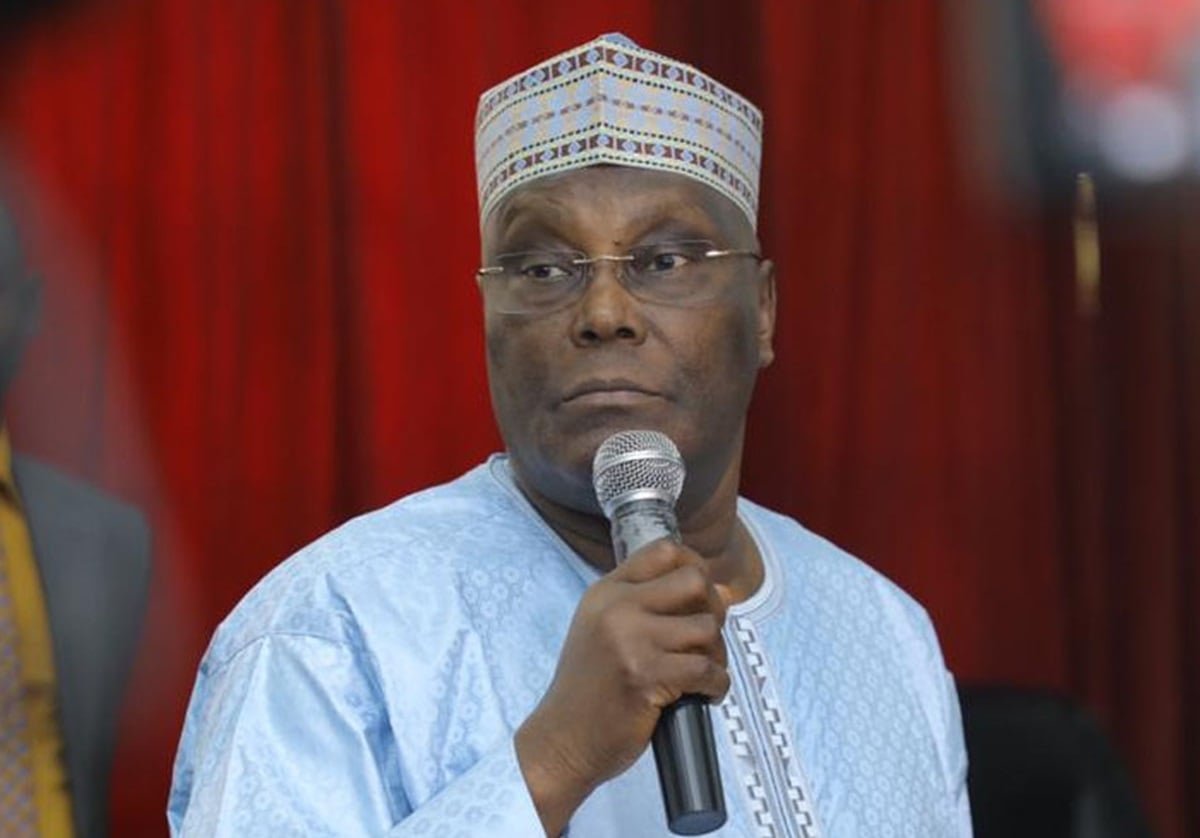
Former Vice President Atiku Abubakar has unveiled details of his proposed petroleum subsidy reform.
Revealing the details on Thursday through his Senior Special Assistant on Public Communication, Phrank Shaibu, the presidential candidate of the African Democratic Congress (ADC) declared that his administration would replace Nigeria’s old import-subsidy architecture with a targeted, capped, transparently budgeted and independently audited production subsidy designed to lower energy costs while accelerating domestic refining.
Atiku said the Atiku Economic Recovery Plan (AERP) 2027 recognised that the choice before Nigeria is not simply between subsidy and no subsidy, but between an opaque intervention that breeds waste and a disciplined economic instrument that delivers measurable benefits to citizens.
“My proposal is not to resurrect the old subsidy regime. We will move subsidy from importation to production, from middlemen to Nigerian refineries, and from unverifiable claims to verifiable barrels.
“The principle is simple: the subsidy will follow the barrel.”
Under the AERP, qualifying public and private Nigerian refineries would receive domestic crude at a preferential price, subject to strict production, efficiency, transparency and domestic-supply conditions.
Atiku acknowledged that supplying crude below its market-equivalent value represents a real opportunity cost to the Federation and said his plan would account for that cost openly rather than pretend it does not exist.
“The cost will be known. The ceiling will be known. The beneficiaries will be known. And, most importantly, the benefit delivered to Nigerians will be measurable.
“We will determine what Nigeria can afford before we subsidise. We will not subsidise first and discover the bill afterwards.”
Atiku said the AERP would specifically prevent refinery owners from pocketing the benefit of preferential crude without passing it to consumers.
He said no refinery would receive subsidised crude without a corresponding, independently verified quantity of petroleum products being supplied to the Nigerian market under a transparent pricing formula reflecting the benefit of the preferential crude price.
He added that crude allocation, refinery intake, production yields, inventories and domestic deliveries would be reconciled, ensuring that every subsidised barrel can be followed from allocation through refining to the Nigerian consumer.
“No phantom cargoes. No fictitious imports. No unverifiable under-recoveries. No retrospective claims.
“If you receive subsidised Nigerian crude, you must refine it in Nigeria, supply the agreed products to Nigerians and pass the benefit to Nigerians. Otherwise, you do not qualify.”
Atiku said eligibility would be open and rules-based for all qualifying public and private refineries, thereby preventing the programme from becoming a vehicle for enriching any particular refinery or politically connected operator.
The Waziri Adamawa said allocation would be based on independently verified capacity, efficiency, domestic supply and compliance rather than political discretion.
He stressed that the programme would also contain strict safeguards against arbitrage, as subsidised crude and products benefiting from the intervention could not simply be diverted to more profitable foreign markets while Nigerian consumers bear the fiscal cost.
Atiku said any operator that diverts subsidised crude or products, manipulates production records, violates domestic-supply obligations or fails to pass the prescribed benefit to consumers would lose eligibility, refund the subsidy benefit and face applicable regulatory and legal sanctions.
“Nigeria will not subsidise anybody’s private profit. Public support must produce a measurable public benefit.”
Atiku said the production subsidy would operate within a predetermined annual fiscal ceiling approved through the federal budget, ending the culture of open-ended subsidy liabilities.
“No refinery gets unlimited support. No marketer brings the government a surprise bill. No agency manufactures an under-recovery after the transaction.
“The National Assembly will see the appropriation. Nigerians will know the maximum exposure. Independent auditors will see the barrels. And the public will see what was produced for every naira of support.”
He said where oil revenues exceed the budget benchmark, a predetermined and legally appropriated portion of the additional revenue may be deployed within the established fiscal ceiling, adding that no windfall would be assumed before it materialises, and weaker oil prices or production would not be used as justification for breaching the ceiling.
Atiku said the fiscal framework would also disclose the opportunity cost and implications for revenues accruing to federal, state and local governments, rather than conceal the intervention through deductions from the Federation Account.
Atiku stressed that the AERP intervention would carry statutory sunset and periodic review provisions.
He said as domestic refining capacity expands, utilisation improves, competition increases and production costs decline, support per barrel would progressively reduce according to predetermined benchmarks.
“Our objective is not permanent subsidy. It is to use temporary and disciplined support to build a refining industry strong enough eventually not to need subsidy.
“We will measure the fiscal cost against refinery output, domestic prices, jobs, investment and benefits delivered to consumers. If the policy is not delivering value greater than its cost, it must be adjusted or terminated.”
Atiku said this approach would reduce petrol and diesel costs and transmit the benefits throughout the economy.
He added that lower transportation costs would benefit commuters and farmers; lower energy and logistics costs would support manufacturers and traders; and falling production costs would help moderate inflation and restore purchasing power.
“The ultimate objective is not merely cheaper petrol. It is cheaper transportation, cheaper food, stronger businesses, more Nigerian jobs and greater purchasing power.
“Nigeria’s crude should first help build Nigerian refining capacity and Nigerian prosperity.”
Atiku said the transparency built into his proposal stands in stark contrast to President Tinubu’s handling of subsidy removal.
“President Tinubu stood at Eagle Square on May 29, 2023 and declared that ‘subsidy is gone.’ Nigerians were immediately handed the bill.
“Petrol prices exploded, transportation costs multiplied, food prices soared and households were told that their suffering was the necessary price of reform.
“But after Nigerians paid that price, the government’s own accounts created questions that President Tinubu has still not satisfactorily answered.”
Atiku cited NNPCL’s audited financial statements recording approximately ₦4.84 trillion in Energy Security Expenses in 2023 and ₦7.13 trillion in 2024, saying Nigerians deserve a precise explanation of the economic substance of those expenses and the extent to which they incorporate under-recoveries, pricing differentials or other costs associated with petroleum supply.
“We are not interested in playing games with accounting terminology.
“If government continued absorbing differences between the economic cost of petroleum products and what was recovered from the market, then Nigerians are entitled to ask how that differs economically from the subsidy they were told had disappeared.
“You cannot abolish subsidy at Eagle Square and allow subsidy-like costs to resurface in government accounts without explaining the contradiction.”
Atiku said Nigerians cannot be expected to bear market-level pump prices on the promise that subsidy has ended while Federation resources simultaneously bear petroleum-related costs that remain insufficiently explained.
“Nigerians cannot pay for subsidy removal twice — through punishing pump prices and through unexplained subsidy-like costs against their commonwealth.”
Atiku said the petroleum controversy must also be viewed within the wider questions surrounding the management of Federation revenues.
“Our reconciliation of published Federation Account figures has identified approximately ₦30 trillion in revenues, deductions, savings, transfers and related funds requiring transparent reconciliation.
“Let nobody misrepresent the argument. We are not saying ₦30 trillion is fuel subsidy or that ₦30 trillion has been proven stolen.
“We are saying that approximately ₦30 trillion reflected across Federation revenues, deductions, savings, transfers and related classifications requires a complete, month-by-month public reconciliation.
“The distinction is important — but so is the question.”
Atiku said President Tinubu must therefore answer two separate questions:
“First, if subsidy was removed, where is the subsidy-removal windfall and what precisely are the petroleum-related costs subsequently recorded in the government’s accounts?
“Second, what accounts for the approximately ₦30 trillion in Federation revenues, deductions, savings, transfers and related funds requiring reconciliation?
“These are government figures. The accounts are in government’s custody. The burden cannot be transferred to Nigerians or the opposition.
“Publish every deduction. Identify every beneficiary. Show every transfer. Show every balance. Show the legal authority.
“If the money is properly accounted for, open the books and end the argument.”
Atiku also vowed that previous subsidy transactions would be subjected to lawful scrutiny and that any person found through due process to have fraudulently obtained or diverted public subsidy funds would face prosecution and asset recovery.
“Anyone who stole subsidy money should prepare to return it. But we will not replace one opaque system with another.”
Atiku said the difference between the two approaches is ultimately straightforward.
“Tinubu’s approach was: announce first, impose the pain immediately, and explain the accounts later.
“Ours will be: define the intervention, establish the ceiling, appropriate the money, track the crude, verify the production, guarantee the consumer benefit, publish the accounts and progressively reduce the subsidy.
“That is the Atiku alternative: Target it. Cap it. Budget it. Track it. Audit it. Make Nigerians feel the benefit. Reduce it as domestic production grows. And ultimately, end the need for it altogether.”
WATCH TOP VIDEOS FROM NIGERIAN TRIBUNE TV