

Twenty-five years ago, owning a mobile phone in Nigeria was still a luxury. Making a call could mean joining a queue at a public telephone centre, travelling across town to deliver a message or waiting weeks for a letter.
Nigeria had only about 22,500 cellular lines in early 2001, alongside roughly 700,000 fixed lines, despite a population of about 120 million.
Today, MTN Nigeria has 92.2 million subscribers.
The distance between those two numbers tells one of the biggest infrastructure stories in Nigeria’s modern economy. But the transformation was not created by SIM cards alone. It required billions of naira in network investment, thousands of base stations, fibre links, spectrum, transmission infrastructure, data facilities and, increasingly, 4G and 5G technology.
It also required an operator willing to keep investing in a market where the cost of running a telecom network has repeatedly risen faster than the price consumers are willing to pay for connectivity.
Karl Toriola, chief executive officer of MTN Nigeria, said the company’s 25-year journey has been about more than subscriber growth.
“Twenty five years ago today, MTN began commercial operations in Nigeria. At the time, making a phone call was a privilege for many Nigerians. People queued at public telephone booths & centres, travelled long distances to deliver messages, and sometimes waited weeks for letters to arrive. A mobile phone was beyond the reach of most,” Toriola said.
Today, more than 90 million people are connected to the MTN network, he said, adding that, “But the real story is not the number of connections. It is what Nigerians have done with them. Businesses have been built. Families have remained close across great distances. Students have gained access to knowledge. Creators have found audiences around the world. Entire industries have emerged and grown on the infrastructure that MTN and others in the telecommunications ecosystem have helped to build.”
The real story is infrastructure
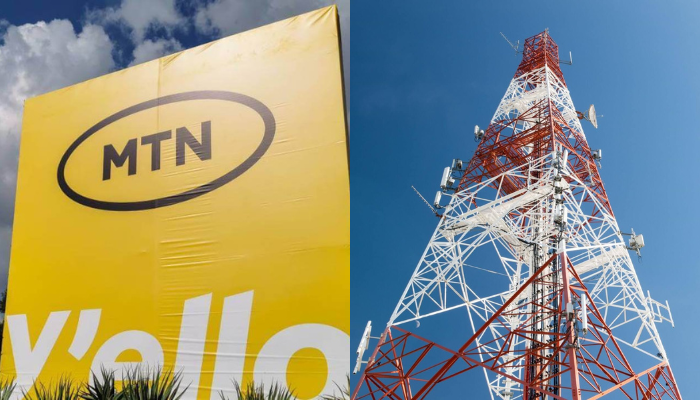
MTN’s growth was not simply a story of selling more mobile phones. Every new customer required infrastructure.
As the network expanded from Lagos, Abuja and Port Harcourt to other parts of the country, MTN deployed more base stations and transmission links, expanded its core network and invested in the power needed to keep the system operating.
The company crossed one million subscribers in its early years, 10 million in 2006 and 50 million by 2013.
Each stage brought a different challenge.
The first was getting Nigerians connected. The next was making those connections useful beyond voice calls.
MTN was among the early operators to deploy 3G/HSPA+ in Nigeria in 2008. Then came 4G, accelerating the shift from voice-centric services to mobile broadband. Today, the company is deploying 5G, which had reached about 13 percent population coverage in its latest results.
The progression mirrors Nigeria’s changing digital needs: from calls and texts to video, mobile banking, social media, cloud services and increasingly data-intensive applications.
Data is changing the network
MTN had 55.7 million active data users at the end of June. That number represents a fundamental change in what its network is expected to do.
A telecom network that once primarily carried voice calls now supports video streaming, digital payments, social media, online learning and business communications.
More smartphones require more radio capacity. More video requires more bandwidth. More digital businesses require reliable connectivity. And more traffic requires more fibre and transmission capacity connecting base stations to the core network and the wider internet.
The surge in demand is also one reason complaints about slow data speeds, dropped calls and inconsistent network quality have persisted even as operators invest.
A network can have extensive geographic coverage yet still perform poorly at busy locations when demand grows faster than capacity.
The problem is not always a lack of network sites. It can involve congestion, transmission limitations, fibre cuts, power interruptions, equipment constraints and the difficulty of expanding infrastructure quickly enough to match demand.
Yahaya Ibrahim, chief technical officer of MTN Nigeria, said operators must also deal with broader infrastructure constraints.
“Telecom operators have to contend with unreliable grid electricity, high diesel costs, vandalism, fibre cuts and difficult access to some locations. Currency depreciation and inflation have also increased the cost of imported network equipment, maintenance and expansion,” Ibrahim said.
Why network quality remains a challenge
The shift from voice to data has made network capacity more important.
“A customer streaming video or using a video call consumes substantially more network capacity than someone making a traditional voice call. As data usage rises, operators must continually add capacity to existing sites, deploy new sites, upgrade transmission links and expand fibre. This is particularly important in densely populated urban areas, where large numbers of customers can place heavy loads on relatively few sites,” Modupe Kadri, MTN Nigeria’s chief financial officer, said, positing that, customers ultimately do not care where the power feeding a network comes from; customers simply expect their phones and internet connections to work.
That expectation is becoming harder to meet as the cost of operating the network rises.
The power problem
A mobile network requires continuous power. Where the national grid is unreliable, operators and their infrastructure partners have had to depend on diesel generators, batteries, solar systems and other backup solutions.
That makes Nigeria’s telecom story partly an energy story.
When diesel prices rise, network operating costs rise. When the naira weakens, imported equipment and spare parts become more expensive. Inflation also raises the cost of construction, logistics and maintenance.
For an operator serving more than 90 million people, keeping thousands of sites operational is therefore as much an energy-management challenge as it is a telecommunications one.
And the customer rarely sees any of this.
As Kadri put it, customers do not care whether a network site is being powered by the national grid, a generator or another source. They simply expect the service to work.
MTN Nigeria is “working around the clock” to make that happen.
More investment, more capacity
MTN has responded by continuing to invest in network expansion, capacity upgrades, fibre and newer technologies.
The strategy is increasingly focused not only on geographical coverage but also on the capacity and resilience of existing infrastructure.
That means adding capacity where traffic is growing fastest, upgrading older equipment, strengthening transmission links and expanding fibre.
MTN Nigeria invested approximately N621 billion in capital expenditure in the first six months of 2026, according to the figures in the company’s latest results.
The rollout of 4G and 5G is also part of the response, allowing customers to move onto technologies capable of handling greater data demand. But technology alone cannot solve the problem. Reliable power, secure fibre routes, access to infrastructure and a regulatory environment that supports continued investment are equally important.
Toriola said MTN’s ability to keep investing has been tested repeatedly. “We have travelled this road with Nigeria. Through moments of extraordinary progress and periods of significant challenge, we have continued to invest, learn, adapt and believe in the future of this country,” he added.
The economics became harder
MTN’s first 25 years were marked by rapid subscriber growth, but growth did not always translate into easy economics.
The naira has weakened sharply since 2001, inflation has increased and the cost of fuel and equipment has risen.
Telecom operators have also faced higher regulatory and compliance costs.
For MTN, one of the biggest shocks came in 2015, when the Nigerian Communications Commission (NCC) imposed a record $5.2 billion fine over improperly registered SIM cards. The dispute eventually ended with the fine being reduced to $3.9 billion.
The episode demonstrated that telecommunications infrastructure does not operate independently of government policy.
Mobile networks have become critical national infrastructure, making operators subject to requirements around identity, security, taxation and consumer protection.
More than 92m customers
The significance of MTN’s network extends beyond its balance sheet.
A mobile connection has become a piece of economic infrastructure. A trader can receive a payment notification without visiting a bank. A small business can advertise through social media. A freelancer can work for an overseas customer. A student can access educational material online. A creator can reach an audience directly.
Banks, retailers, logistics companies, media businesses and government agencies increasingly depend on digital networks.
The value of telecom infrastructure therefore cannot be measured only by the revenue generated by operators. It also lies in the economic activity made possible by the infrastructure.
That is arguably the bigger story behind MTN’s 25 years in Nigeria.
The unfinished network
The next phase may be more difficult than the first. The easiest customers to connect are generally those in dense urban areas, where one site can serve many people. Rural communities present a different challenge because the cost of building and powering infrastructure can be high relative to the number of customers.
Nigeria has connected tens of millions of people, but reliable broadband access remains uneven.
The question is increasingly shifting from whether Nigerians can connect to whether they can afford and reliably use enough connectivity to participate fully in the digital economy.
Toriola acknowledged that the work is unfinished.
“As we mark 25 years, we do so with pride, but also with humility. We recognise that the work is far from complete. Millions of Nigerians still need access to reliable, affordable and inclusive digital services. The next chapter must bring more people into the digital economy and create even greater opportunities for Nigeria’s young and growing population,” he said.
MTN’s first 25 years show what private capital, spectrum and regulation can achieve when deployed to build infrastructure at national scale.
Its next 25 years will test something harder: whether that infrastructure can become resilient, inclusive and affordable enough to carry Nigeria’s next phase of economic growth.
Toriola’s final assessment captures both the achievement and the challenge ahead, stating, “We have come a long way. And we are only getting started.”
For a country that moved from 22,500 cellular lines to a mass-market mobile economy in a single generation, the next transformation could be even bigger.

Get Newsletter Updates
Enjoying our column?
Subscribe to our specialised **Tech Pulse** feed to receive fresh reports and analyses directly in your inbox.


