

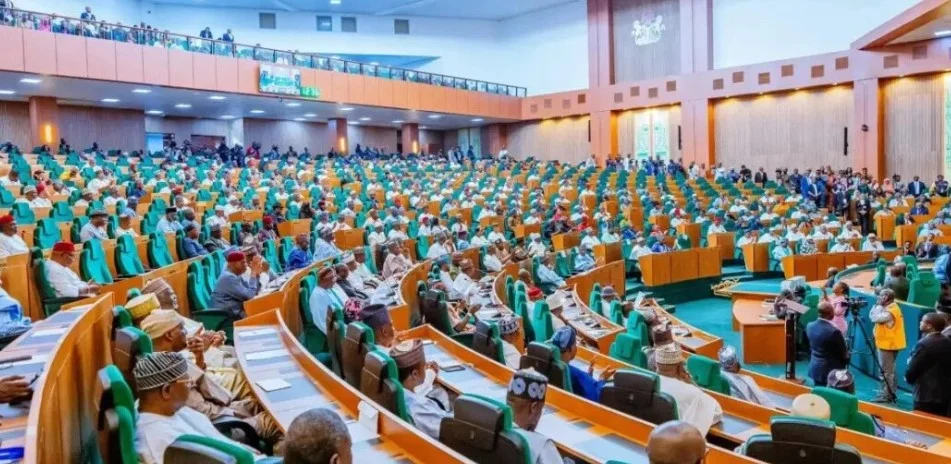
The House of Representatives Committee on Petroleum Resources (Downstream) on Tuesday launched a fresh initiative to reconcile divergent positions between petroleum importers and domestic refiners, as lawmakers opened consultations with key industry players on reforms aimed at guaranteeing energy security, stable fuel supply and a more competitive downstream petroleum sector.
At an interactive session held at the National Assembly, the committee met with the Depot and Petroleum Products Marketers Association of Nigeria, the Independent Petroleum Marketers Association of Nigeria and the Major Energies Marketers Association of Nigeria amid growing debate over the future of fuel imports in the wake of Nigeria’s expanding domestic refining capacity.
The engagement comes at a time the downstream petroleum industry is undergoing significant changes following the implementation of the Petroleum Industry Act, the deregulation of the petrol market, the rehabilitation of state-owned refineries and the commencement of large-scale refining by private operators.
These developments have reignited discussions over the pace at which Nigeria should reduce dependence on imported petroleum products while safeguarding supply and price stability.
The Chairman of the Committee, Ikenga Ugochinyere, said the House was committed to building consensus among operators rather than imposing policies without consultation.
According to him, reforms affecting the downstream petroleum industry must reflect the realities of operators whose investments sustain the country’s fuel distribution network.
“We are here not to interrogate, not to accuse and not to put anyone on trial. We are here to listen. We are here to talk to one another as partners who share one common destiny—a Nigeria where energy is affordable, supply is stable and no citizen suffers because petroleum products are out of reach,” he said.
The Imo lawmaker assured stakeholders that the committee would adopt an inclusive approach to lawmaking and oversight, stressing that no far-reaching policy would be developed without broad consultations across the industry.
He described marketers, depot owners and other downstream operators as the critical link between government policy and consumers.
“The marketers, depot owners, independent operators and major marketers remain the bridge between government policy and the pump. When that bridge is strong, Nigerians enjoy stable prices and reliable supply. When it is weak, the entire nation feels the consequences,” he added.
He noted that Nigeria was at a defining moment in the evolution of its energy sector, citing increasing domestic refining capacity, changing import dynamics and ongoing efforts to strengthen pipeline security and improve product distribution nationwide.
He noted that the submissions made by stakeholders would guide future legislative interventions designed to encourage investment, deepen competition, strengthen local refining and guarantee affordable and uninterrupted fuel supply.
He also assured operators that the committee would continue to prioritise constructive engagement in carrying out its constitutional oversight responsibilities.
*DAPPMAN seeks stronger regulatory framework
Presenting DAPPMAN’s position, its Executive Secretary, Olufemi Adewole, urged the Nigerian Midstream and Downstream Petroleum Regulatory Authority to develop practical operating-stock guidelines under Section 182 of the Petroleum Industry Act.
He said the guidelines should establish clear standards for stock measurement, reporting, quality assurance and accessibility.
Adewole argued that strategic petroleum reserves should not be assessed solely by the volume of products in storage but also by the industry’s ability to finance, transport and deploy those products rapidly during emergencies or supply disruptions.
DAPPMAN also proposed a joint market-monitoring framework involving the NMDPRA and the Federal Competition and Consumer Protection Commission (FCCPC) to oversee supply concentration, product availability, allocation transparency, fair competition and early warning indicators of market stress.
The association further called on the Federal Government to accelerate investment in critical logistics infrastructure—including roads, railways, inland waterways, pipelines and petroleum depots—to reduce the industry’s dependence on long-distance trucking from a limited number of coastal supply locations.
It also advocated the establishment of a permanent government-industry consultative platform comprising regulators, marketers, refiners, NNPC Limited, transport agencies and security institutions to periodically assess supply conditions, infrastructure gaps and emerging operational risks.
*IPMAN identifies structural challenges
Meanwhile, the Independent Petroleum Marketers Association of Nigeria has described the downstream petroleum industry as one of the country’s most strategic economic sectors, noting that it remains indispensable to transportation, manufacturing, agriculture, healthcare, power generation and national security.
IPMAN National Chairman, Abubakar Shettima observed that recent reforms—including the implementation of the PIA fuel price deregulation, refinery rehabilitation and increased private-sector refining capacity—have positioned Nigeria to transition from a major importer of refined petroleum products to a leading refining and distribution hub in Africa.
However, the association said the sector continues to face significant structural constraints, “including high financing costs, multiple taxation, foreign exchange volatility, inadequate storage, transportation infrastructure, pipeline vandalism and limited access by independent marketers to refinery products.”
It urged the House committee to support reforms that would “strengthen logistics, improve market competition, lower distribution costs, attract investment and ensure the sustainable availability and affordability of petroleum products across the country.”
*MEMAN cautions against blanket import restrictions
Speaking on behalf of MEMAN, its Executive Secretary, Clement Isong, acknowledged that Nigeria now possesses sufficient refining capacity to satisfy domestic demand and compete in export markets.
He, however, warned against imposing blanket restrictions on petroleum product imports, arguing that strategic imports remain necessary to guarantee national energy security during periods of supply disruption.
According to him, the Federal Government should retain the flexibility to authorise imports whenever domestic supply falls short of demand.
He said such flexibility would help shield consumers from supply shortages and sharp increases in pump prices.
Isong recommended the establishment of a national strategic petroleum reserve capable of sustaining at least 60 days of domestic consumption to protect the country against global supply shocks and price volatility.
He cited developments in the Liquefied Petroleum Gas market, where increased imports helped bridge supply gaps and moderate prices, as evidence that carefully managed imports can complement domestic production without undermining local investment.
While reaffirming MEMAN’s support for the Federal Government’s policy of expanding domestic refining capacity, Isong maintained that “decisions on petroleum product imports should remain the responsibility of the Federal Government and the NMDPRA.”
He argued that preserving regulatory flexibility would ensure adequate supply, sustain healthy market competition and ultimately protect Nigerian consumers.
Although stakeholders differed on the extent to which petroleum imports should continue as local refining capacity expands, there was broad consensus on the need for policy consistency, infrastructure investment, regulatory coordination and sustained engagement between government and industry.
The House committee said it would consider the recommendations presented during the engagement as part of ongoing efforts to develop a legislative framework capable of supporting a resilient, competitive and self-sustaining downstream petroleum industry while safeguarding Nigeria’s long-term energy security.