

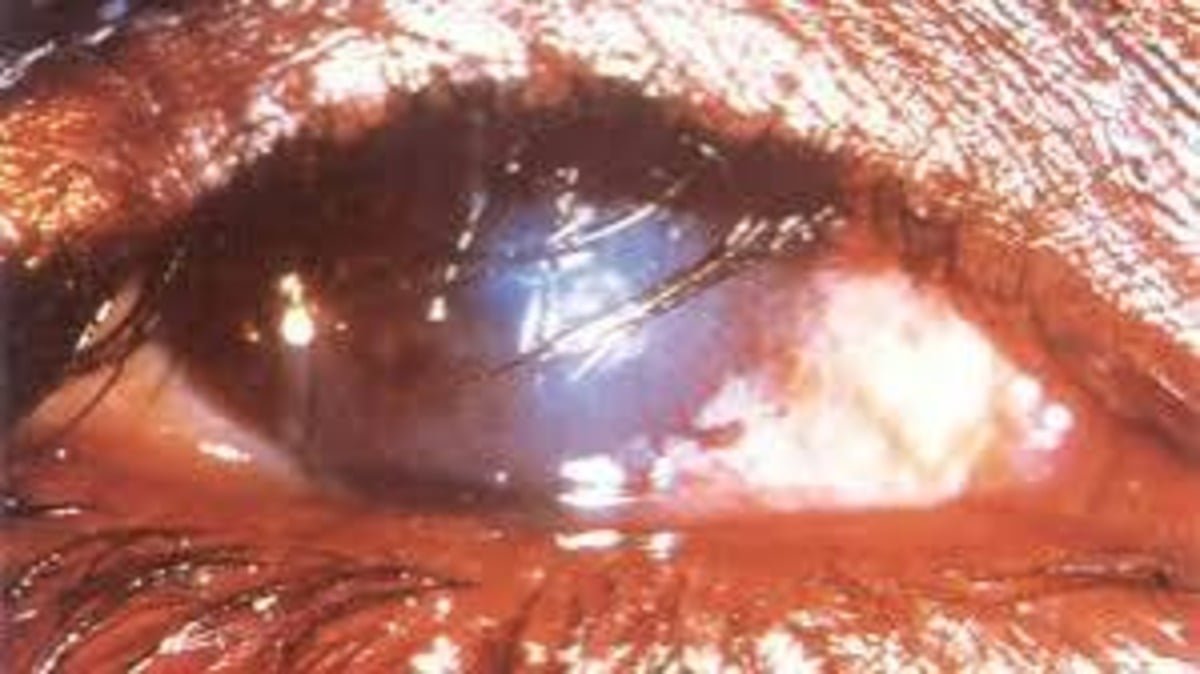
Nigeria is close to eliminating trachoma as a public health problem, with only 11 Local Government Areas (LGAs) left to achieve elimination, the Director of the National Trachoma Programme at the Federal Ministry of Health and Social Welfare, Nicholas Olobio, has said.
Olobio disclosed this on Thursday in Abuja during a learning event organised by Sightsavers to review progress under the AcceleraTE Trachoma Elimination Programme, which has supported Nigeria’s trachoma response since 2018.
He said Nigeria had made significant progress towards eliminating the blinding disease, revealing that mass drug administration (MDA) had been stopped in 116 LGAs, representing about 87 per cent of the country’s elimination target.
ALSO READ: We are not slowing down on infrastructure delivery—Tinubu
“One of the things we’ve achieved is that we’ve stopped mass drug administration in 116 LGAs. That translates to about 87 per cent progress,” Olobio said.
He added that more than 100,000 surgeries had been conducted to treat trachomatous trichiasis, the advanced stage of the disease, representing over 90 per cent of the national target.
“We’ve also done over 100,000 surgeries, which is over 90 per cent of the target,” he said.
According to him, attention is now focused on the remaining endemic LGAs, including areas where the disease persists or re-emerges after intervention.
“We’ve introduced complementary indicators. We don’t only do surgeries; we also collect samples and carry out surveillance to check for ongoing infection and ensure the disease does not return after treatment,” Olobio said.
He stressed that eliminating trachoma required more than surgery and medicines, noting that investments in water, sanitation and hygiene (WASH) were equally critical to preventing transmission.
“Giving drugs alone cannot do the magic. People need safe water, proper sanitation and good hygiene. Once the environment is clean, transmission drops,” he added.
Also speaking, Sightsavers Country Coordinator, Teyil Wamyil Mshelia, said the AcceleraTE programme had supported Nigeria’s trachoma elimination efforts through surgeries, antibiotic distribution, surveillance, data management and behaviour change campaigns.
She said the programme, which follows the World Health Organization SAFE strategy of surgery, antibiotics, facial cleanliness and environmental improvement, had enabled more than 60,000 trachomatous trichiasis surgeries, the distribution of nearly 29 million doses of azithromycin, 174 trachoma surveys and the training of over 50,000 community case finders.
Mshelia added that digital innovations such as the TT Tracker application had improved patient monitoring from surgery through follow-up, while collaboration with the WASH sector had strengthened efforts to address poor sanitation and hygiene in endemic communities.
She, however, identified insecurity and population displacement as major threats to achieving nationwide elimination, particularly in Borno, where some affected communities remain inaccessible.
“We need to think strategically about how to work in insecurity and how to track populations displaced by conflict or migration so they can still access treatment and services,” she said.
Chairman of the National Trachoma Taskforce, Adamu Mohammed, said Nigeria had recorded remarkable progress but warned that insecurity in Borno continued to hamper efforts to eliminate the disease in the remaining LGAs.
“We have gone a long way. What is remaining is about 11 LGAs that are yet to achieve elimination,” Mohammed said.
He explained that most of the outstanding LGAs were located in Borno, where insecurity had limited access for health workers and partners.
“Presently, the most affected state is Borno. The LGAs that are difficult to access because of insecurity form the bulk of the LGAs in the country that have yet to achieve trachoma elimination,” he said.
Mohammed called for stronger government support to guarantee safe access for health workers delivering medicines and surgical services in hard-to-reach communities.
Stakeholders at the event noted that states including Bauchi, Nasarawa, Plateau, Kano, Katsina, Adamawa, Taraba, Kaduna, and the Federal Capital Territory had recorded major gains and no longer carried the same level of disease burden.
They said while Nigeria’s goal of eliminating trachoma was now within reach, achieving it would require sustained funding, stronger state ownership, expanded WASH interventions, and improved access to communities affected by insecurity.
WATCH TOP VIDEOS FROM NIGERIAN TRIBUNE TV