

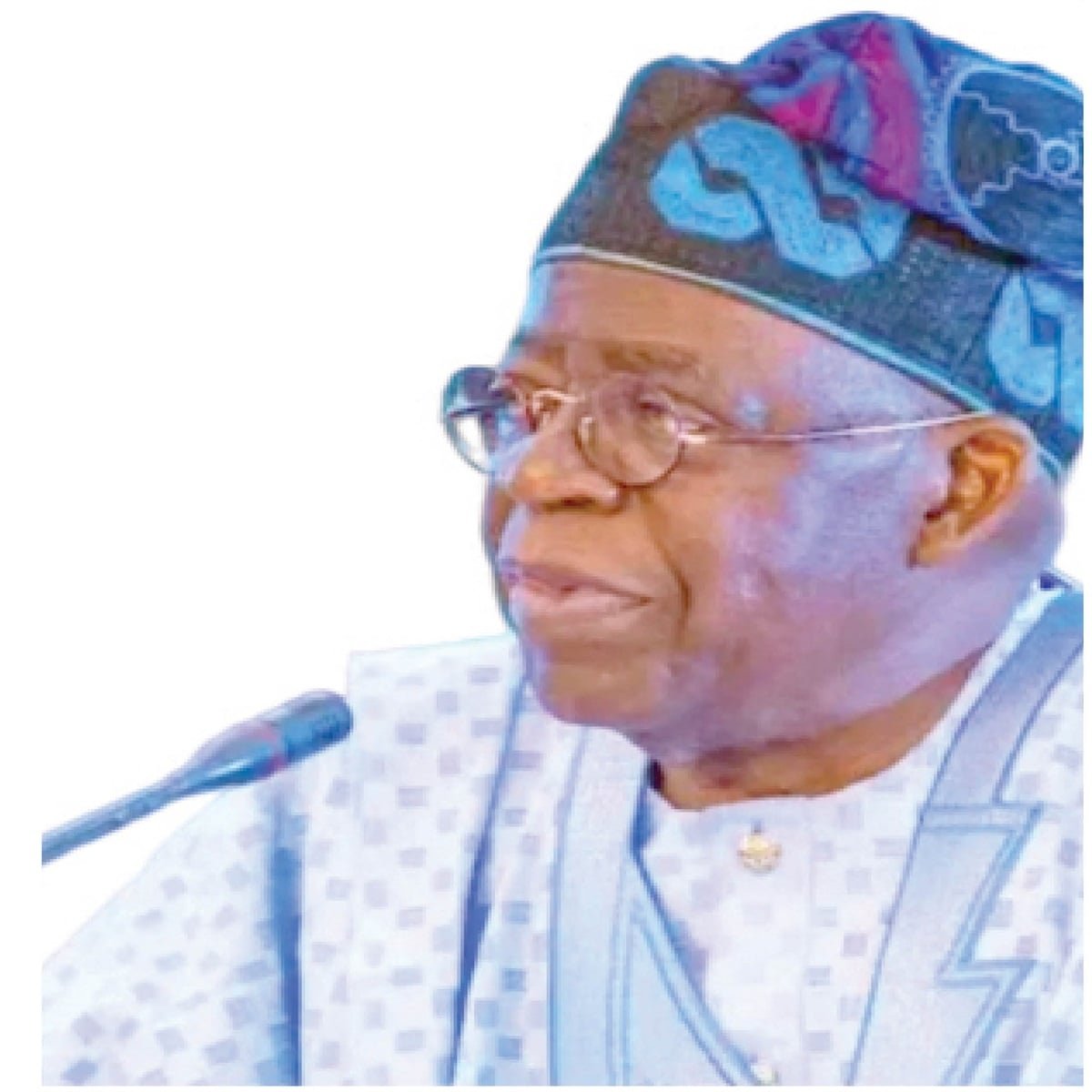
President Bola Ahmed Tinubu has challenged African nations to transform their vast natural resource endowments into real economic power, declaring that the continent can no longer afford to remain a supplier of raw materials while others reap the benefits of industrialisation and value addition.
Speaking at the opening of the 2026 African Natural Resources and Energy Investment Summit (AFNIS) in Abuja, the President, represented by the Minister of Solid Minerals Development, Dr. Dele Alake, said Africa’s future prosperity depends on its ability to process its minerals locally, build industrial capacity, and create value across the supply chain.
Held under the theme, “One Africa, One Resource Vision,” the summit brought together African leaders, policymakers, mining executives, and international investors from the United States and China to chart a common strategy for unlocking the continent’s vast natural resource potential.
ALSO READ: UK under-16 social media ban: How it affects Nigerian content creators, tech startups
Tinubu said, for generations, Africa has been described by what lies beneath our soil, adding that the question before leaders today is whether Africa will finally turn its wealth into power.
The President argued that Africa must move beyond fragmented approaches to development and embrace a unified vision that prioritises beneficiation, manufacturing, and industrial growth.
According to him, the continent’s strategic reserves of critical minerals place Africa at the heart of the global energy transition, but sustainable economic gains will only come when African countries move up the value chain.
“There will be no global energy transition without Africa’s critical minerals,” he said. “The future will belong to those who create value, not merely those who extract resources.”
Highlighting Nigeria’s efforts to reposition its mining industry, Alake said the Federal Government had undertaken major reforms aimed at sanitising the sector, attracting investment, and promoting local processing.
He disclosed that more than 10,000 dormant mineral titles had been revoked to curb speculation and make assets available to genuine investors.
The minister said the reforms had already attracted significant investments, including lithium processing projects worth $900 million and $600 million, a completed $200 million lithium processing facility awaiting commissioning, and a $1 billion iron ore project expected to strengthen domestic steel production.
Alake also revealed that recent geological surveys had confirmed commercially viable deposits of lithium, nickel, copper, gold, platinum group metals, and other strategic minerals in Kaduna State and several other parts of the country.
According to him, the discoveries further reinforce Nigeria’s ambition to become a leading destination for mining and mineral processing investments in Africa.
The minister, who was recently re-elected Chairman of the African Mineral Strategy Group (AMSG), stressed the importance of developing the human capital needed to drive the continent’s industrial transformation.
“The economy of the future will require geologists, engineers, metallurgists, data analysts and technology experts. Africa must ensure its young people are prepared to participate meaningfully in this transformation,” he said.
Also speaking, Secretary-General of the AMSG, Moses Michael Engadu, called for deeper collaboration among African countries, arguing that collective action would enable the continent to maximise its resource advantage.
He said Africa possesses all the resources required to emerge as one of the world’s defining economic powers if countries work together rather than compete in isolation.
From the legislative arm, Chairman of the Senate Committee on Solid Minerals Development, Ekong Sampson, underscored the need to secure mineral assets and ensure that Africa’s natural wealth translates into tangible benefits for its people.
Similarly, Chairman of the House Committee on Solid Minerals, Jonathan Gaza, praised the growing synergy between the executive and legislature in advancing mining sector reforms and building institutional support for long-term growth.
Founder and Chief Executive Officer of OilDynamix Limited, Dr. Vincent Amu, said the company’s proprietary mineral exploration technology has the potential to significantly shorten the time required to identify commercially viable mineral deposits across Nigeria and the wider African continent.
Speaking with journalists on the sidelines of the summit, Amu said one of the major obstacles limiting investment in mining remains the high cost of exploration and concerns about the reliability of geological data.
According to him, the company’s technology, known as Termovision Tomography, uses thermal signatures captured by satellite systems to identify mineral deposits, providing what he described as a faster and more cost-effective alternative to conventional exploration methods.
“The biggest takeaway from AFNIS 2026 is that we now have technology capable of unlocking Africa’s vast mineral potential within months rather than years,” he said.
Amu claimed the technology delivers a high degree of accuracy in locating mineral deposits while reducing the financial burden on prospective investors.
“What discourages many people from entering mining is the cost of exploration and the unreliability of the data they receive. We are trying to make exploration cheaper, faster and more dependable so that more investors can participate in the sector,” he said.
The OilDynamix chief executive said the technology has already been deployed in several countries and is attracting growing interest from state governments and mining operators across Nigeria.
He disclosed that discussions are ongoing with stakeholders in Nasarawa, Kaduna, Katsina, Benue, and Kogi states, while previous projects in Cross River State have already advanced to mining operations.
Amu also referenced a recent field visit by AFNIS participants to a lithium project, noting that emerging technologies could help mining companies accelerate resource mapping and reduce operational costs.
“Time is money. If you save time, you save money. Accuracy is equally important because investors need confidence that the deposits identified are actually there and in commercially viable quantities,” he said.
Beyond technology adoption, Amu called for policy measures to strengthen indigenous participation in the mining industry.
He urged the Federal Government to consider duty waivers on imported mining equipment, simplify licensing procedures, and provide temporary tax incentives for local mining operators.
“Import duties significantly increase the cost of mining operations. If government can reduce those costs, streamline licensing processes and support local miners with targeted incentives, more Nigerians will be encouraged to invest in the sector,” he said.
The OilDynamix boss further stressed the need for innovation-driven approaches to exploration, arguing that modern technologies can improve safety, lower operational expenses, and reduce the risks associated with field surveys in remote locations.
He explained that the company’s Termovision Tomography technology, introduced into the Nigerian market in 2019, relies on thermal emissions from mineral deposits detected through satellite imagery and analysed using proprietary systems.
According to him, the innovation has continued to gain acceptance among mining companies seeking more efficient methods of identifying mineral resources as Nigeria intensifies efforts to diversify its economy through the solid minerals sector.
“Use accurate information for your mining operations because the quality of the data determines the quality of the outcome. When miners work with reliable information, recovery rates improve, yields increase and investment risks are significantly reduced,” Amu said.
His remarks reinforced one of the central themes of AFNIS 2026, that technology, investment, and policy reforms will be critical to transforming Africa’s vast mineral resources into industrial growth, jobs, and long-term economic prosperity.
WATCH TOP VIDEOS FROM NIGERIAN TRIBUNE TV