

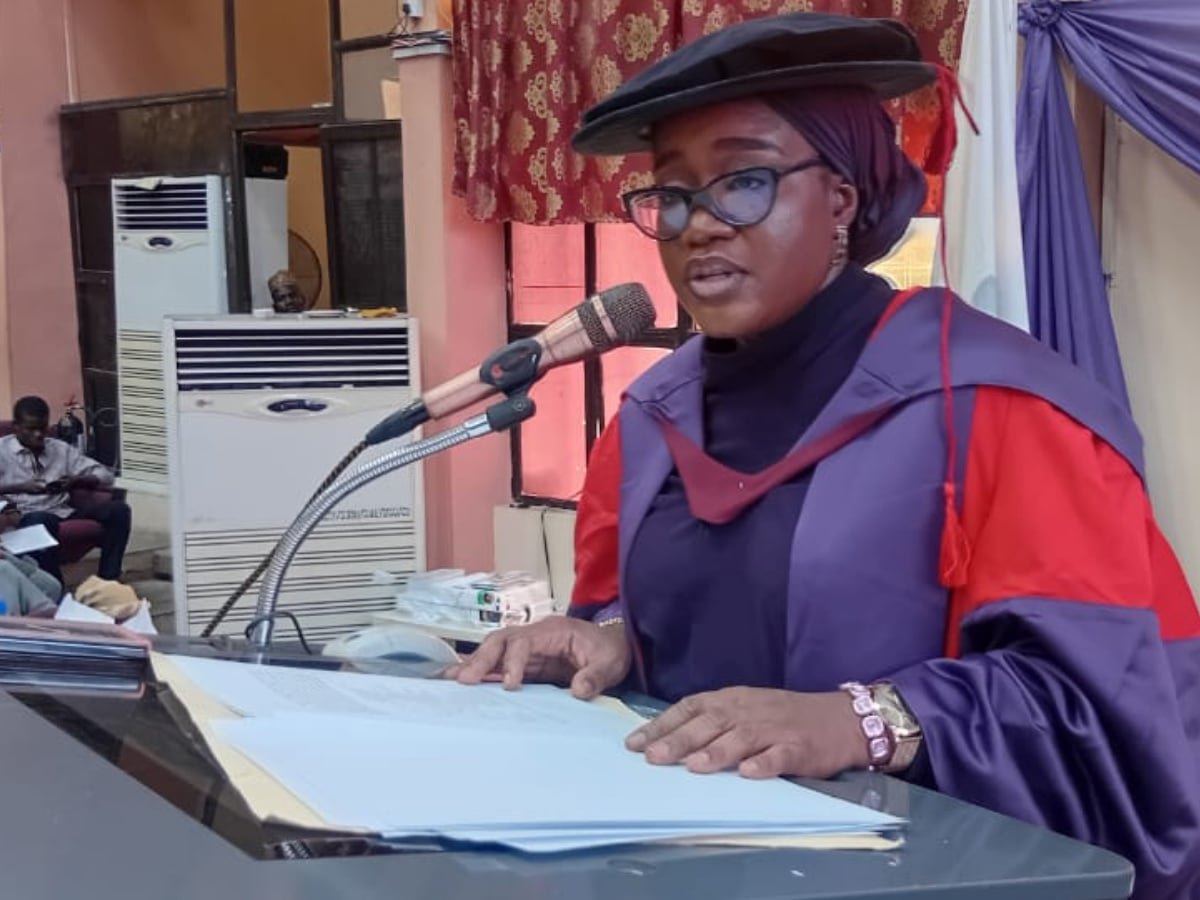
The Executive Secretary of the Kwara State Primary Health Care Development Agency (KSPHCDA), Prof. Nusirat Elelu, has warned that Nigeria and the global community are confronting a deepening planetary and public health crisis that requires urgent, equity-driven interventions.
ALSO READ: Neglecting workers’ well-being undermines Nigeria’s developmental future — UNILAG don
Speaking at the opening of the 4th Ibadan International Public Health Conference, organised by the Faculty of Public Health, University of Ibadan, Elelu delivered a keynote address titled “Planetary and Public Health Management in Global Crisis: Ensuring Equity in Disease Prevention and Control”.
She stressed that the combined effects of climate change, environmental degradation, emerging diseases, and fragile health systems are worsening disease outbreaks and widening health inequalities, particularly in vulnerable populations.
According to Elelu, planetary health—the interdependence between human health and the Earth’s natural systems—has become central to addressing contemporary health challenges, including zoonotic diseases, non-communicable diseases, and future pandemics.
She noted that environmental disruptions such as deforestation, pollution, biodiversity loss, and global warming are accelerating the spread of vector-borne diseases, including malaria, dengue fever, Lassa fever, and onchocerciasis.
Warning of Nigeria’s growing vulnerability, she cited projections indicating that climate change could expand malaria transmission into previously unaffected regions of the country by 2070.
Drawing lessons from the COVID-19 pandemic, Elelu said weaknesses in disease surveillance, healthcare infrastructure, and emergency preparedness exposed significant gaps in Nigeria’s health security architecture.
She also described antimicrobial resistance (AMR) as a “silent pandemic”, warning that it could result in millions of deaths globally if urgent action is not taken.
To address these challenges, she advocated comprehensive reforms, including the adoption of integrated One Health surveillance systems, strengthening primary healthcare services, expanding local vaccine production, and tightening regulations governing antibiotic use.
Elelu further urged the country to adopt a zero-tolerance approach to over-the-counter antibiotic sales and invest in real-time surveillance systems that integrate human, animal, and environmental health data.
“Equity is not charity. Equity is the intervention,” she declared, urging governments and policymakers to move beyond rhetoric and accelerate implementation of evidence-based public health strategies.
In his remarks, the Vice-Chancellor of the University of Ibadan, Prof. Kayode Adebowale, called for stronger international collaboration, equity-focused policies, and resilient health systems to confront growing planetary and public health threats.
Represented by the Deputy Vice-Chancellor (Academic), Prof. Juwon Arotiba, Adebowale said recent global health emergencies have demonstrated that no nation is immune to public health crises, underscoring the need for coordinated, multisectoral responses.
He noted that while health threats affect all countries, their consequences are disproportionately borne by vulnerable and underserved populations.
According to him, the goal must extend beyond responding to crises to building resilient health systems capable of delivering quality healthcare, disease prevention, and protection for all people regardless of their circumstances.
Also speaking, the Oyo State Commissioner for Health, Dr. Oluwaserimi Ajetunmobi, said the state government has prioritised health security through sustained investments in disease surveillance, epidemic intelligence, emergency preparedness, laboratory systems, risk communication, and health workforce development.
She disclosed that Oyo State has integrated climate-sensitive strategies into its public health planning, including the establishment of a Climate Change and Health Desk Office within the Ministry of Health.
According to Ajetunmobi, the initiative aligns with the state’s broader One Health framework, which recognises the interconnectedness of human, animal, and environmental health systems.
She added that the future of public health depends not only on responding effectively to outbreaks but also on addressing the underlying social and structural determinants of health that drive vulnerability and inequity.
The Executive Secretary of the Oyo State Primary Health Care Board, Dr. Muideen Olatunji, also called for stronger primary healthcare systems, climate-resilient health policies, and enhanced global collaboration to address emerging public health challenges and ensure equitable disease prevention and control.
He emphasised the need for stakeholders worldwide to strengthen primary healthcare systems, advance universal health coverage, embrace the One Health approach, promote environmentally sustainable health policies, and ensure that no individual, community, or nation is left behind.
Earlier, the Dean of the Faculty of Public Health, University of Ibadan, Prof. Magbagbeola. D. Dairo said the conference was designed to provide a platform for intellectual engagement, knowledge exchange, and collaboration among scholars, practitioners, and policymakers.
He noted that the gathering seeks to promote renewed commitment to integrated, multisectoral, and equity-driven approaches capable of safeguarding both human and planetary health in an increasingly complex global environment.
WATCH TOP VIDEOS FROM NIGERIAN TRIBUNE TV