

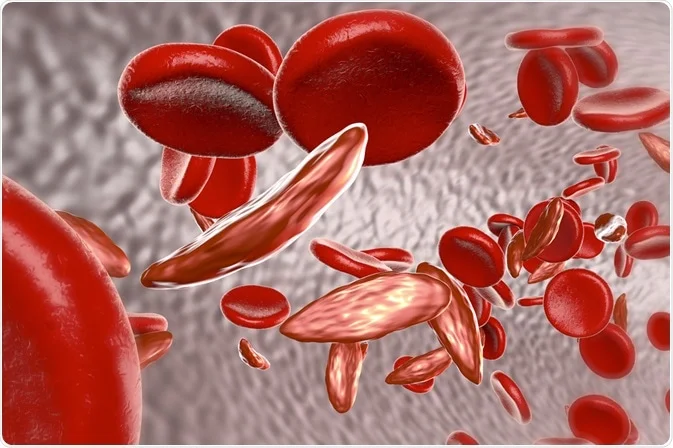
The Federal Government has intensified efforts to reduce the burden of sickle cell disease in Nigeria by advancing the implementation of universal newborn screening and expanding access to diagnosis, treatment and financial protection for affected families.
Speaking at a press briefing on Friday to commemorate the 2026 World Sickle Cell Day in Abuja, the Coordinating Minister of Health and Social Welfare, Prof. Muhammad Ali Pate, said the government’s priority is to ensure early detection of sickle cell disease and improve survival outcomes through equitable access to healthcare services.
World Sickle Cell Day is observed annually on June 19 to raise awareness about the inherited blood disorder and mobilise action towards improving prevention, diagnosis, treatment and care for people living with the disease.
Pate, who was represented by the Permanent Secretary of the ministry, Daju Kachollom, said this year’s theme, “Closing the Survival Gap: Equity in Sickle Cell Care,” reflects the need to guarantee that every Nigerian living with the condition can access timely diagnosis, quality treatment and financial protection regardless of location or income.
“Today, our focus is not simply on raising awareness. It is on accelerating action to close the survival gap and ensure that every Nigerian living with sickle cell disease has access to timely diagnosis, quality treatment and financial protection,” he said.
ALSO READ:
The minister noted that Nigeria remains the country with the highest burden of sickle cell disease globally, with about 25 per cent of adults carrying the sickle cell gene and an estimated 100,000 infants dying annually from complications associated with the condition.
According to him, sickle cell disease accounts for about eight per cent of infant mortality in the country and remains one of the leading non-communicable diseases contributing to maternal, neonatal, infant and child morbidity and mortality.
To address the challenge, he said the Federal Ministry of Health and Social Welfare, with support from the Clinton Health Access Initiative (CHAI), is implementing the Universal Newborn Screening Policy for Sickle Cell Disease across selected primary and secondary healthcare facilities in Lagos, Kano and the Federal Capital Territory.
Pate also disclosed that the ministry has revised the National Guidelines for the Prevention, Control and Management of Sickle Cell Disease to strengthen the use of Hydroxyurea therapy and other evidence-based interventions.
He added that training of primary healthcare workers has commenced in the South-West zone and will be expanded nationwide to support implementation of the screening policy.
The minister further revealed that the Federal Government has established six Centres of Excellence for Sickle Cell Disease, one in each geopolitical zone, equipped with High-Performance Liquid Chromatography (HPLC) machines and other diagnostic tools to support newborn screening and specialised care.
He said the ministry has also adopted Sicklescan, a point-of-care screening technology, as a first-line diagnostic tool to improve early detection and expand access to testing.
According to him, discussions are ongoing with the National Health Insurance Authority (NHIA) to include affordable newborn screening, essential diagnostics and subsidised Hydroxyurea therapy in the national health insurance benefit package.
“Access to life-saving care must be determined by need and not by the ability to pay,” he said.
Earlier, Director of Public Health, Dr. Charles Nzelu, described sickle cell disease as one of Nigeria’s most pressing public health challenges, noting that only about 50 per cent of children born with the disease survive beyond the age of five.
“The best form of control for sickle cell is prevention,” Nzelu said, urging Nigerians to know their genotype and seek genetic counselling before marriage.
He also called on development partners, civil society groups, traditional and religious institutions, and the media to support government efforts aimed at reducing the burden of the disease.
Also speaking, Director of the Centre of Excellence for Sickle Cell Disease Research and Training at the University of Abuja, Professor Obiageli Nnodu, said researchers have screened more than 38,000 babies in the FCT and established a disease registry containing over 10,000 patients from 25 centres nationwide.
She disclosed that more than 700 genetic counsellors have been trained across the country, while efforts are ongoing to increase the use of Hydroxyurea therapy among patients.
Nnodu said the centre is collaborating with government and other stakeholders to strengthen newborn screening, improve patient care and position Nigeria as a leader in sickle cell disease research and treatment.
Meanwhile, a sickle cell survivor, Kenneth Maduka, shared a personal account of living with the condition, describing years of pain crises, sleepless nights and financial hardship.
“It hasn’t been easy. The pains, the crises, the sleepless nights, the tears and everything. But one thing that has kept me going is hope. I believe that this life I have is given by God, and I keep doing the things I am supposed to do to stay healthy,” he said.
Maduka, who identified himself as a teacher with a master’s degree in biotechnology, said many persons living with sickle cell disease receive little or no support from government and often rely on assistance from charitable organisations and individuals.
“Sometimes when you go to hospitals, they tell you they don’t run NHIA for sickle cell. The drugs are expensive and not subsidised. As of me, I have not been getting anything from the government. Most of the help we get comes from foundations and individuals,” he said.
He called on the government to incorporate greater support for sickle cell patients into healthcare policies, particularly by making treatment more affordable.
Maduka also highlighted the impact of stigma on people living with the condition, saying many patients are denied opportunities despite being qualified and capable.
“Stigma has been a major challenge. It takes the place of our name, our ability and our capacity. There are jobs people are denied not because they cannot do them, but because of their health status. Sometimes we even hide our identity to avoid discrimination,” he said.
According to him, awareness campaigns aimed at reducing stigma would help improve the quality of life for people living with sickle cell disease.
Reflecting on his journey, Maduka said surviving beyond the age of 21 often brings greater stability for many patients, provided they adhere to medical advice and avoid known triggers.
“By the grace of God, I have not had any major crises in the past five years. I take my routine drugs and stay away from cold and harsh weather. The crises are still there, but they are not as intense as when I was younger,” he said.
WATCH TOP VIDEOS FROM NIGERIAN TRIBUNE TV