

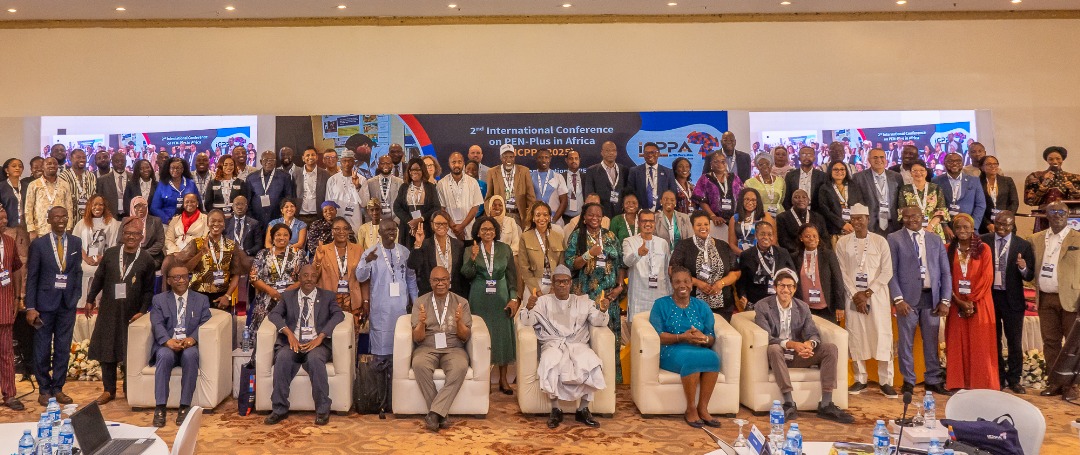
Nigeria has called for increased action on non-communicable diseases (NCDs) in Africa, citing the growing burden of these diseases on the continent’s socio-economic development.
The Minister of State for Health and Social Welfare, Dr. Iziaq Adekunle Salako, made the call in Abuja on Tuesday, while delivering a keynote address at the 2nd International Conference on PEN-Plus in Africa (ICPPA 2025).
The conference, themed ‘Advancing implementation of PEN-Plus for Severe NCDs in Africa: Technical Innovations, Operational Insights, and Scalable Solutions’, brought together policymakers, global and regional experts, donors, development partners, private sector representatives, and NCDs focal points from ministries of health across Africa.
PEN-Plus is the WHO package of essential NCDs interventions or treatments, designed to provide quality care for people with NCDs at the primary health level.
While speaking further, the Minister raised concerns that NCDs are on the trajectory to surpass communicable, maternal, neonatal, and nutritional diseases as the primary cause of mortality in Africa by 2030, describing it as a circumstance all stakeholders need to work hard and together to deflect.
In Nigeria, NCDs account for 24-30% of deaths, with a substantial part of these deaths occurring in the age group 30-69 years. The country has been responding to this growing challenge through policy development, strategic planning, and integrated healthcare initiatives.
The Federal Ministry of Health and Social Welfare, with support from the World Health Organization (WHO), is working to pilot the implementation of the Package of Essential NCDs Intervention Plus (PEN-Plus), focusing on children and young adults to improve access and quality of care for Type-I Diabetes, Rheumatic Heart Disease, and Sickle Cell Disease at the first referral level of healthcare.
Salako called on the conference to leverage the opportunity to strengthen the implementation of the PEN-Plus strategy, improve funding and investment for NCDs prevention and control, and enhance access to care for severe NCDs.
“Let us be part of history by saving this generation and generations unborn from the financially devastating, emotionally traumatizing, and physically agonizing effects of these 3 severe NCDs in our dear continent of Africa,” Salako urged.
The Acting Director for Communicable and Non-Communicable Diseases at the WHO Regional Office, Dr. Akpaka Kalu, in his remarks, spoke about the importance of addressing non-communicable diseases (NCDs) in Africa.
He said, “We bring this conference to Africa, to Nigeria, especially Nigeria, because Nigeria has the highest number of cases, given its population. It is time to deal with the problem of diabetes type 1 in Africa, it is time to deal with rheumatic heart disease and other heart diseases in Africa.”
Kalu noted that early detection and providing services close to where people live and work are crucial.
“Early detection is the answer. And of course, changes in lifestyle are needed. More appropriately, eat appropriately, exercise, and ensure that you monitor your blood pressure, you go for your medical check-ups to ensure if you are sick, it is detected early.”
The PEN-Plus initiative aims to bring specialized services for non-communicable diseases in Africa to the first referral facility level, making quality care more accessible to those in need.
“You can get appropriate and quality care for non-communicable diseases at the best referral level, the primary health level. That is the only way to save lives.”
Kalu pointed out that the achievements of the PEN-Plus initiative is not needed as per instruction, instead: 20 countries in Africa are implementing the PEN Plus program with support from the Hemsley Charitable Trust.
“They are providing services to people at the lowest level, managing conditions that were thought impossible before successfully, through task shifting, training nurses, training doctors, training all health workers to manage cases based on this WHO package of care, the PEN-Plus.”
The WHO Afro Regional Director Prof. Mohamed Yakub Janabi in his remarks, said, Nigeria has taken bold steps in the fight against non-communicable diseases, from the 2019 launch of the first national multisectoral action plan for the prevention and control of NCDs to the implementation of key policies that bring prevention and treatment closer to the people, especially the most vulnerable.
Janabi noted that the burden of severe NCDs is rising across Africa, including diabetes, hypertension, chronic respiratory illnesses, and heart conditions. “Without treatment, these conditions are lifelong and often deadly.”
He said that two years ago, the regional PEN-Plus strategy was endorsed. “Thanks to the generous support of the Hemsley Charitable Trust and the collaboration of the NCDI Poverty Network, 20 countries have now expanded access to care. Over 15,000 patients are receiving treatment.”
Janabi cited the example of Malawi, where secondary referral facilities are delivering services and over 440 clinicians and nurses have been trained. “This shows that with national leadership, regional cooperation, and strong partnership, it is possible.”
Janabi said that more needs to be done. “Millions across our region continue to face severe NCDs without access to essential care. We need to scale PEN-Plus to all 47 member states by investing in local health workers and ensuring that care is accessible to those who need it most.”
Janabi expressed gratitude to the government and people of Nigeria for hosting the important meeting.
“I also want to commend the Minister of Health, Professor Muhammad Ali Pate, and his team for their commitment to advancing equitable access to healthcare,” Janabi said
He said that the conference is a vital opportunity to share experiences, build momentum, and expand what works. “Together, we can close the gap. Together, we can deliver on the promise of health for all.”
ALSO READ TOP STORIES FROM NIGERIAN TRIBUNE