

The Federal Government has raised the alarm over the devastating psychological impact of conflict on children, revealing that 79.7 per cent of displaced Nigerian children suffer post-traumatic stress disorder (PTSD), while 84.8 per cent experience depression and 90.7 per cent have functional impairments affecting their ability to learn, relate with others and sleep.
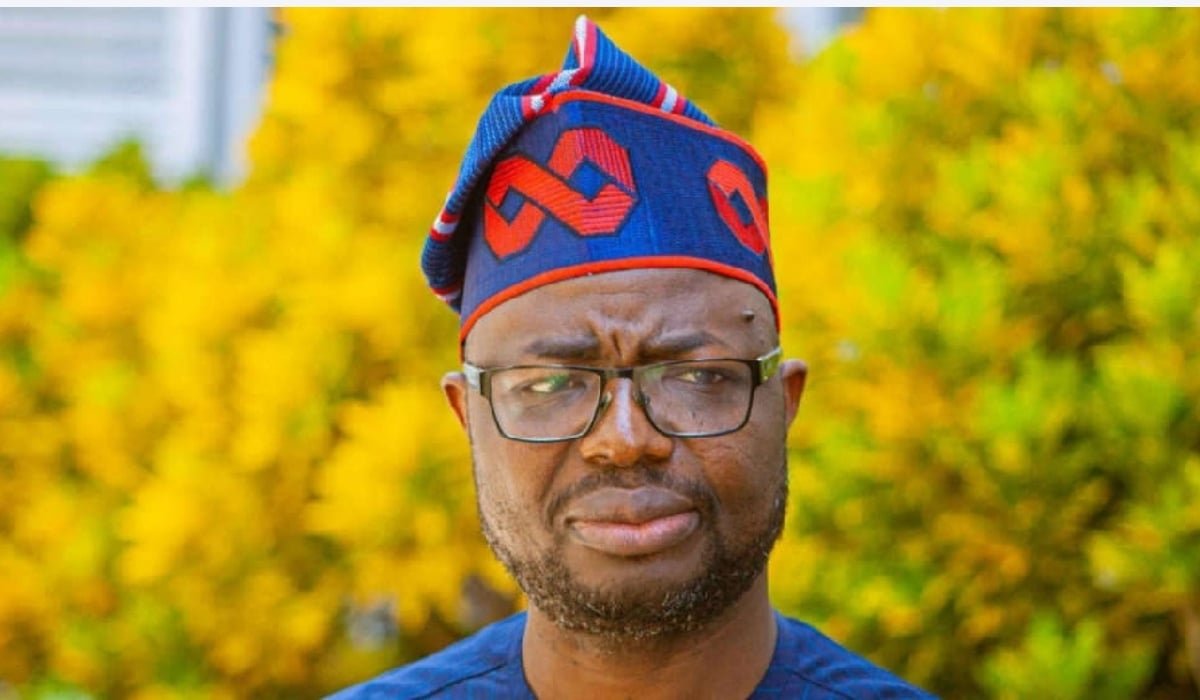
The Minister of Humanitarian Affairs and Poverty Reduction, Dr Bernard Doro, disclosed this yesterday in Maiduguri, Borno State, at the National Dialogue on the Psychosocial Impact of Conflict on Children in Nigeria.
The three-day dialogue was convened by the Office of the Special Adviser to the President on Health in collaboration with the North East Development Commission (NEDC) and the Borno State Government.
Doro said the figures represented a documented and measurable pattern of psychological distress among children exposed to conflict and should compel government and other stakeholders to treat mental health as a core component of humanitarian intervention.
He also cited a field study conducted among children in Chibok, Borno State, which found that 41.5 per cent of children exposed to Boko Haram insurgency met the clinical threshold for PTSD.
A continent-wide analysis, he added, placed conflict-related PTSD among African children at about 36 per cent.
“Globally, there is a bias towards physical health compared to mental health. Because mental health manifests with subtle symptoms, healthcare professionals and policymakers do most times ignore mental health. This narrative needs to change, especially as it affects our young people, because the impact of mental health can be catastrophic,” Doro said.
He said the scale of the crisis was further demonstrated by the displacement of more than one million children in the region from the only homes they knew, while more than 7,000 women and girls had been held by Boko Haram.
“These are the children of Bama, Konduga, Gwoza, Chibok. Children we have all met, I’m sure, in our interactions. And they go quiet in mid-sentences, manifesting the very symptoms of mental illness,” he said.
According to the minister, humanitarian assistance that addresses only children’s physical needs without attending to their psychological wellbeing cannot constitute complete rescue.
“A child who has been fed, but not healed in mind, has not truly been rescued,” Doro said.
He said the Ministry of Humanitarian Affairs and Poverty Reduction would work with the Office of the Special Adviser to the President on Health and other stakeholders to strengthen community referral pathways, so that children identified as being in psychological distress in camps and schools could access appropriate care.
Doro also pledged to integrate trauma exposure into the National Social Registry alongside economic vulnerability, saying this would enable government to identify communities and households where psychological needs were greatest.
He further promised support for the training of frontline humanitarian workers and teachers to enable them to identify children experiencing psychological distress.
“A child spends more hours with a teacher than a therapist,” he said.
The minister also agreed to lead a coordinated national response to the issue and ensure the implementation of policy recommendations that would emerge from the dialogue.
He warned that untreated childhood trauma could become a long-term burden on Nigeria’s education, healthcare and security systems.
“None of this is a charity; it is an investment. Untreated trauma in a generation of children is a cost that returns to our schools, our clinics, and our security architecture for decades,” Doro said.
Earlier, the Special Adviser to the President on Health, Dr Salma Ibrahim Anas, said the decision to hold the dialogue in Borno was deliberate because of the state’s prolonged exposure to insurgency and conflict.
Anas said although no part of Nigeria was completely insulated from conflict, Borno had experienced the magnitude of the insurgency more severely and was therefore an appropriate location for stakeholders to examine its consequences on children.
She said the objective was to use evidence generated from research to develop a policy framework that would guide coordinated action at federal and sub-national levels.
ALSO READ: TRCN warns teachers against fake application portals
Anas recalled the experience of a woman who fled Bama with seven children but arrived at the Dalori Internally Displaced Persons camp with only one child, with no knowledge of the whereabouts of the others.
She said such experiences demonstrated the often-overlooked psychological consequences of conflict, particularly on children who had been separated from their families.
“Some have been born only in this crisis,” Anas said, stressing that children who had spent their formative years amid violence could carry the psychological consequences into adulthood and potentially transmit the effects to the next generation.
She said the initiative aligned with the Renewed Hope Agenda of President Bola Ahmed Tinubu, particularly its emphasis on national security, education, health, social investment and human capital development.
Representing the Managing Director of the NEDC, Mohammed Goni Alkali, the commission’s Borno State Coordinator, Engineer Muhammadu Umaru Maska, said sustainable peace in the North-East required more than military intervention.
He said reconstruction, infrastructure development, youth empowerment, livelihood restoration, support for internally displaced persons and social cohesion were critical to addressing the underlying conditions that fuel conflict.
Maska said rebuilding destroyed schools, hospitals, roads, markets, water facilities and houses was not merely an infrastructure exercise but a means of restoring hope, dignity and confidence in government.
“Development should be regarded not as a mere economic activity, but as a powerful instrument of conflict prevention and peacebuilding,” he said.
Representing the United Nations Office for the Coordination of Humanitarian Affairs (OCHA), Ballama Mustapha said the psychological scars of conflict were often invisible but could shape the wellbeing and development of an entire generation.
He disclosed that 7.8 million people remained in need of humanitarian assistance across the three North-East states under the 2025 Humanitarian Response Plan, including approximately 1.8 million children.
Under the 2026 plan, he said 5.9 million people had been identified for humanitarian assistance, although available funding remained inadequate relative to the scale of need.
He called for greater coordination among government, humanitarian agencies, development partners, communities and children themselves.
“The wounds we cannot see must not become the reason we fail to act,” he said.
The UNICEF representative, Francis Otuochi, said mental health and psychosocial support must be incorporated into government-led child protection, healthcare, education and social welfare systems rather than treated as temporary interventions.
Otuochi disclosed that an estimated 270,864 children in Borno, Adamawa and Yobe states require mental health and psychosocial support under the 2026 humanitarian needs and response plan.
He said more than 161,000 women and men and over 23,000 persons living with disabilities were also identified as requiring such support.
“Conflict continues to cause profound harm to children, including fear, anxiety, family separation, disrupted learning, and exposure to violence and trauma,” he said.
Otuochi urged government to integrate psychosocial support into its plans and budgets, strengthen the social service workforce and establish an effective monitoring framework for mental health and psychosocial services.
He said UNICEF remained committed to supporting the Federal Government, state governments, civil society organisations and development partners to translate the outcome of the dialogue into sustainable services for children affected by conflict.
The representative of the National Council of Traditional Rulers of Nigeria, Zanna Lawan Maina, District Head of Damboa, also expressed support for the initiative, stressing the importance of traditional institutions in community mobilisation, peacebuilding and reconciliation.
He said the traditional institutions in Borno had continued to support efforts to restore peace and rebuild confidence among communities affected by insurgency.
WATCH TOP VIDEOS FROM NIGERIAN TRIBUNE TV