

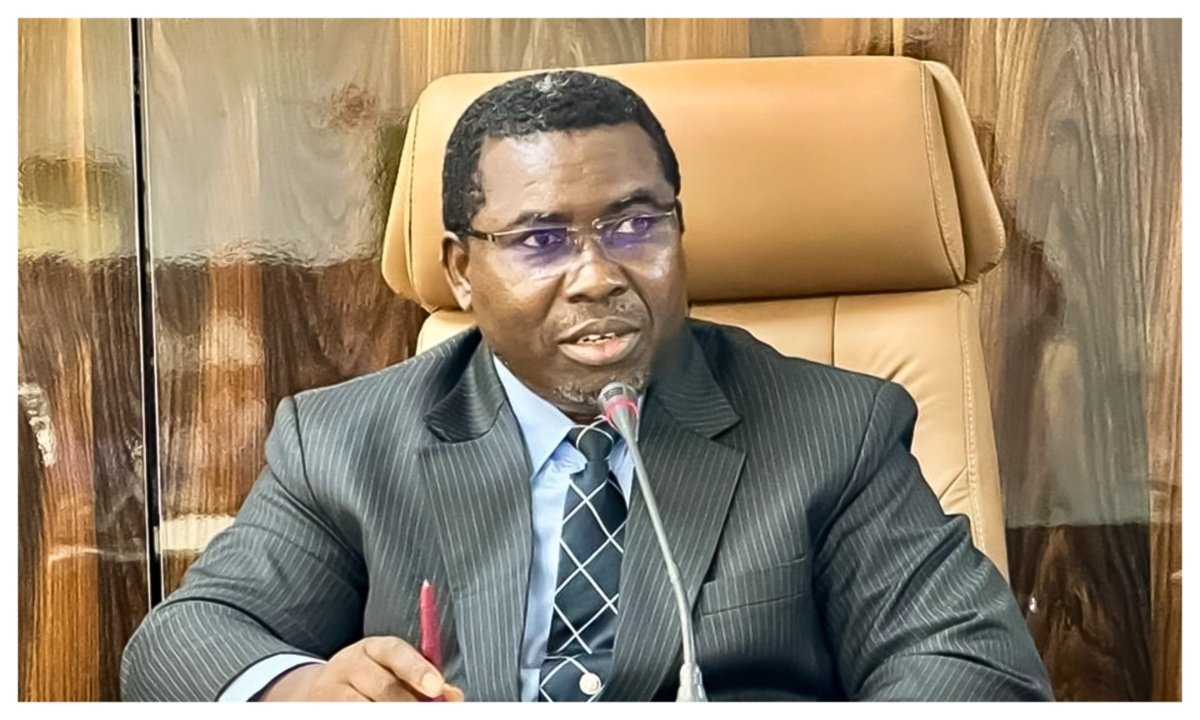
INEC Chairman, Prof Joash Amupitan, disclosed this during a meeting with the ECOWAS Pre-Election Fact-Finding Mission to Nigeria, led by former Sierra Leone Vice-President, Victor Bockarie Foh.
Amupitan explained that the Commission had moved beyond administrative preparations to conduct physical assessments of its readiness across the country’s geopolitical zones.
According to him, the zonal tour began in the South-West, with Lagos as its first destination, before moving to Kaduna in the North-West and Enugu in the South-East.
“Out of the six geopolitical zones, we have visited four. We started in the South-West, Lagos, then from Lagos moved to the North-West, Kaduna. From Kaduna, we moved to the South-East, Enugu, and then just this week, we concluded our tour of the North-East,” Amupitan said.
He noted that the Commission was scheduled to proceed to the South-South but decided to receive the ECOWAS delegation before continuing with its planned activities.
“Out of 14 activities, we have successfully executed nine. So, it is time for us to now go to the zones, to the field, to assess their readiness ahead of elections,” he stated.
According to him, the visits would also provide an opportunity to receive reports from states on their preparations, particularly regarding logistics, security and other challenges that could affect the smooth conduct of the elections.
He explained that the engagements would enable INEC to identify peculiar challenges in different states and make necessary adjustments to its overall election plan.
The INEC chairman gave an instance of how the Commission identified areas requiring earlier deployment of electoral materials and personnel because of difficult terrain and security concerns.
“During our meeting earlier this week, we realised that there are some areas where we needed earlier deployment than we had planned because of the terrain and some of the security issues,” he said.
Amupitan added that the zonal meetings also provided an opportunity for the Commission to engage directly with Resident Electoral Commissioners, electoral officers at the local government level and heads of departments.
He said INEC was using the exercise to reinforce professionalism, neutrality and accountability among its personnel to ensure that the 2027 general election would be free, fair, credible and transparent.
The chairman described the presence of the ECOWAS delegation as more than a routine diplomatic engagement, saying it reflected a shared commitment to democratic governance and electoral accountability across West Africa.
“We therefore view your presence here today not as a routine diplomatic engagement, but as a testament to our shared commitment to upholding the highest standards of constitutional governance, democratic integrity and accountability across the subregion,” he said.
He noted that Nigeria’s position as Africa’s largest democracy made the successful conduct of its elections important not only to the country but also to the West African subregion and the continent.
Amupitan described the 2027 general election as a significant milestone in Nigeria’s democratic journey, which began with the return to uninterrupted democratic governance in 1999.
Earlier, the Head of the ECOWAS Pre-Election Fact-Finding Mission, Victor Bockarie Foh, explained that the delegation was in Nigeria to assess the level of preparedness of INEC and other stakeholders ahead of the elections.
Foh said the mission was part of ECOWAS’ conflict prevention framework and was undertaken in accordance with decisions by the regional bloc’s Heads of State.
He explained that the delegation would meet political party leaders, government officials, electoral authorities, civil society organisations and other stakeholders involved in the electoral process.
He added that the mission would also obtain relevant legal documents governing the 2027 electoral process and gather information on the political atmosphere, candidates and conditions under which the elections would be conducted.
Foh said the findings would help ECOWAS determine areas where the regional organisation could provide support to INEC and other stakeholders to promote a peaceful and credible electoral process.
A representative of the delegation also explained that the mission was a statutory engagement conducted whenever a member state was preparing for elections.
He said the delegation was particularly interested in hearing directly from INEC about its level of preparedness and identifying possible areas of support.
However, during the meeting, the ECOWAS delegation sought clarification from the INEC chairman on whether the discussions should continue in the presence of television cameras or be held privately.
The representative said the mission would not want sensitive information disclosed publicly where the Commission or delegation was not prepared to make it available.