

Members of the Strategic Mobilisation Network for Tinubu Continuity 2027 (SMN TC2027) have called on Nigerians to support the re-election of President Bola Ahmed Tinubu in 2027, saying the country needs policy consistency to consolidate ongoing economic reforms, complete critical infrastructure projects and translate current gains into sustainable prosperity.
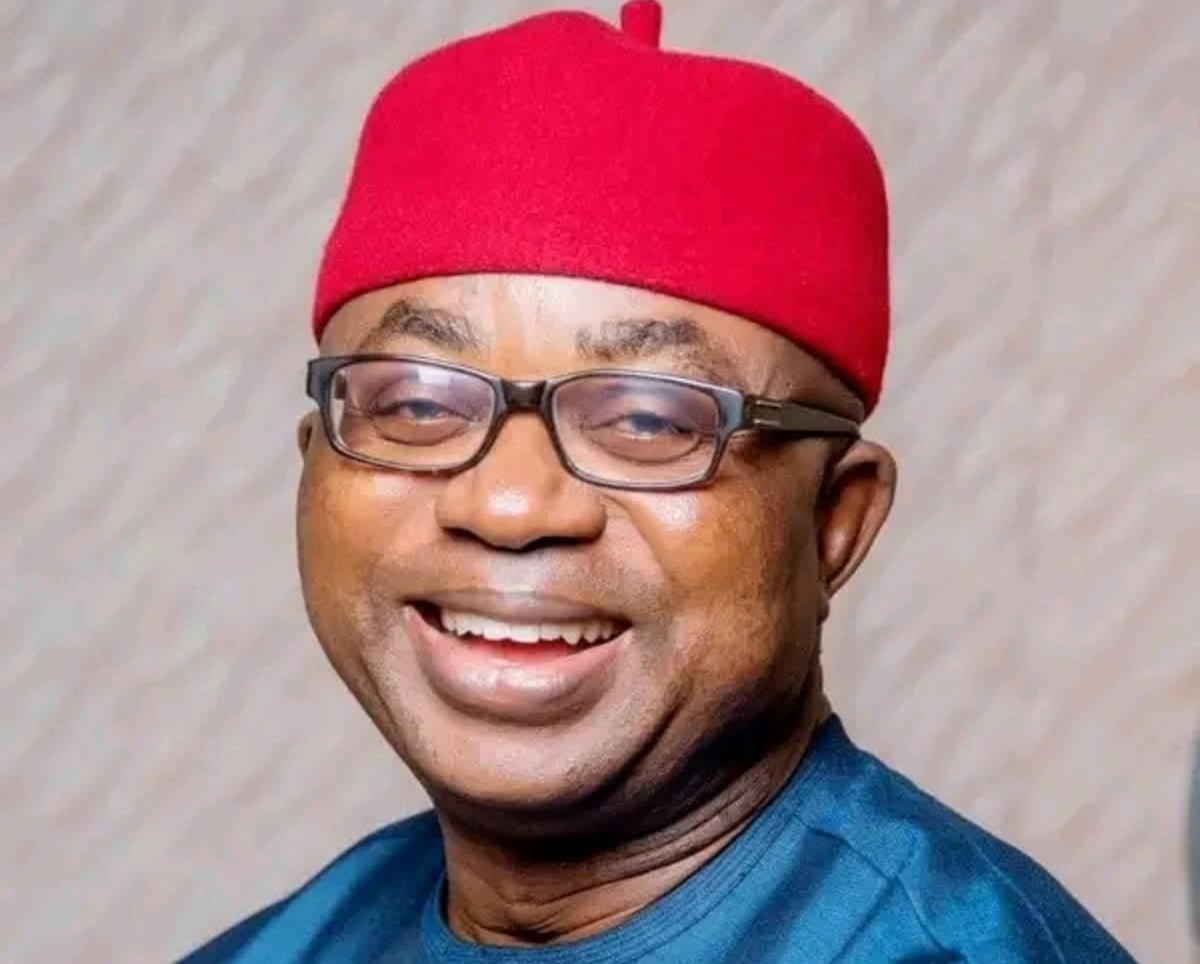
Speaking during an interactive session with members and stakeholders of the campaign group in Umuahia, Abia State, the President of Globe Legislators and patron of the group, Rt. Hon. Sir Sam Onuigbo, said support for continuity of the administration must not mean ignoring its shortcomings. He said the government must address existing weaknesses, improve policy implementation and ensure that the benefits of its programmes reach ordinary citizens.
In his address, titled “The Case for Continuity, Consolidation and Prosperity”, the former federal lawmaker said Nigeria had made important strides under the Tinubu administration, insisting that abandoning ongoing reforms midway could undermine the progress already recorded.
He also said the argument for another four years was not that the country had overcome all its challenges, but that the foundations for sustainable economic growth and national development had been laid and deserved to be strengthened.
According to him, the administration inherited an economy burdened by rising inflation, declining government revenue, foreign exchange distortions, an unsustainable fuel subsidy regime and mounting debt obligations.
He cited the removal of the fuel subsidy and the unification of the foreign exchange market as difficult but necessary decisions taken by President Tinubu to address structural weaknesses in the economy.
While acknowledging the hardship these policies imposed on households, particularly through increased transportation and food costs, Onuigbo argued that the reforms were necessary to address longstanding economic distortions and redirect public resources towards critical sectors.
As the country approaches the 2027 general election, Onuigbo said the network’s message would be anchored on four principles: continuity, consolidation, completion and prosperity.
“Continuity means sustaining policies and reforms that are producing results; consolidation involves strengthening existing gains and ensuring wider public benefits; completion requires finishing ongoing projects and fulfilling outstanding commitments, while prosperity represents the ultimate objective of national development.”
“We are not asking Nigerians to believe that everything is perfect. We are asking them to believe that Nigeria’s progress is worth sustaining and that the work already started deserves to be completed,” he said.
Onuigbo called for a disciplined, organised and visible mobilisation effort, stressing that “every community reached and every meaningful conversation would contribute to the network’s objective of securing support for the President’s second term in 2027”.
Onuigbo noted that Nigeria’s headline inflation, which stood at 22.41 per cent in May 2023 and subsequently peaked at about 36.4 per cent, had declined to 14.63 per cent as of September 2026.
He, however, cautioned that declining inflation should not be confused with a reduction in the prices of goods and services, explaining that it merely indicated a slower rate of price increases.
The former federal lawmaker said the ultimate objective must be to translate improved macroeconomic indicators into increased purchasing power, lower living costs and better welfare for ordinary Nigerians.
On economic growth, he highlighted the increase in Nigeria’s gross domestic product (GDP) growth rate from 3.38 per cent in 2024 to 3.87 per cent in 2025, adding that the economy grew by 4.43 per cent in the second quarter of 2026, compared with 3.89 per cent in the first quarter.
He also pointed to the improvement in the country’s foreign reserves, which he said had risen to approximately $55 billion in October 2026, describing the development as an important indicator of improved external-sector resilience and investor confidence.
The SMN TC2027 patron further identified developments in the petroleum industry as evidence of the need to sustain ongoing economic reforms.
Onuigbo cited increased crude oil production, which he said had risen from approximately 1.3 million barrels per day in 2023 to 1.73 million barrels per day in 2026, as well as the emergence of the Dangote Refinery as a major milestone in Nigeria’s domestic refining capacity.
According to him, the growth of domestic refining offers opportunities to reduce dependence on imported petroleum products, conserve foreign exchange, create employment and position Nigeria as a potential supplier of refined products to other African countries.
He also highlighted the Presidential Initiative on Compressed Natural Gas (CNG) and Electric Vehicles, noting that alternative energy sources could help reduce transportation costs and provide relief to transport operators and commuters.
On education, Onuigbo described the Nigerian Education Loan Fund (NELFUND) as a significant intervention capable of expanding access to tertiary education for young Nigerians from financially disadvantaged backgrounds.
He cited figures indicating that more than 1.64 million students had benefited from over N372.62 billion in student loans, with more than 320 institutions participating in the programme.
He urged the government to sustain and improve the initiative to ensure that more qualified students could access financial support and complete their education.
The former lawmaker also identified major infrastructure projects, including the Lagos-Calabar Coastal Highway and the Sokoto-Badagry Superhighway, as important investments capable of connecting communities, facilitating trade and opening up new economic opportunities.
He said continuity would provide an opportunity to complete ongoing projects and ensure that investments already committed to national development yielded lasting benefits.
Addressing the challenges confronting small businesses, traders, artisans and other operators in the informal sector, Onuigbo drew attention to the Credit Corporation of Nigeria (CREDICORP) and other government financing initiatives.
He said improved access to affordable credit could help market women expand their businesses, artisans acquire modern equipment and young entrepreneurs establish viable enterprises.
On agriculture, he acknowledged that food security and the high cost of food remained major national concerns, stressing the need for sustained investment in mechanisation, irrigation, improved seedlings, fertilisers, storage facilities and market access.
He said government interventions must translate into increased agricultural production, reduced post-harvest losses, improved farmers’ incomes and more affordable food for consumers.
Onuigbo described insecurity as a major challenge that continued to affect the lives and livelihoods of Nigerians. He called for sustained investment in security institutions, stronger military operations and improved policing structures, noting that the proposed State Police framework could bring policing closer to communities.
Turning to the responsibilities of the Strategic Mobilisation Network, Onuigbo charged members to build an effective grassroots mobilisation structure capable of taking the message of the Renewed Hope Agenda beyond political meetings and social media platforms.
He said the network must engage directly with market associations, students, professionals, artisans, traditional rulers, religious leaders and community organisations.
According to him, members must understand the practical concerns of different groups and explain how government policies and programmes relate to their everyday experiences.
He urged them to listen to Nigerians, acknowledge their economic difficulties and engage respectfully with those who hold different political opinions.
Onuigbo also cautioned against misinformation, exaggerated claims, political insults and promises that could not be substantiated, insisting that the network’s credibility would depend on its ability to communicate with facts.
The former lawmaker said the effectiveness of the organisation should be measured not merely by meeting attendance but by its ability to build relationships, expand community engagement and achieve measurable mobilisation outcomes.
He recalled that a strategic meeting held on August 28, 2026, had laid the groundwork for the network’s establishment and identified key segments of society that should be included in its mobilisation activities.
He described the November 2 gathering as an opportunity to deepen the conversation and strengthen the organisation’s operational direction.
WATCH TOP VIDEOS FROM NIGERIAN TRIBUNE TV