

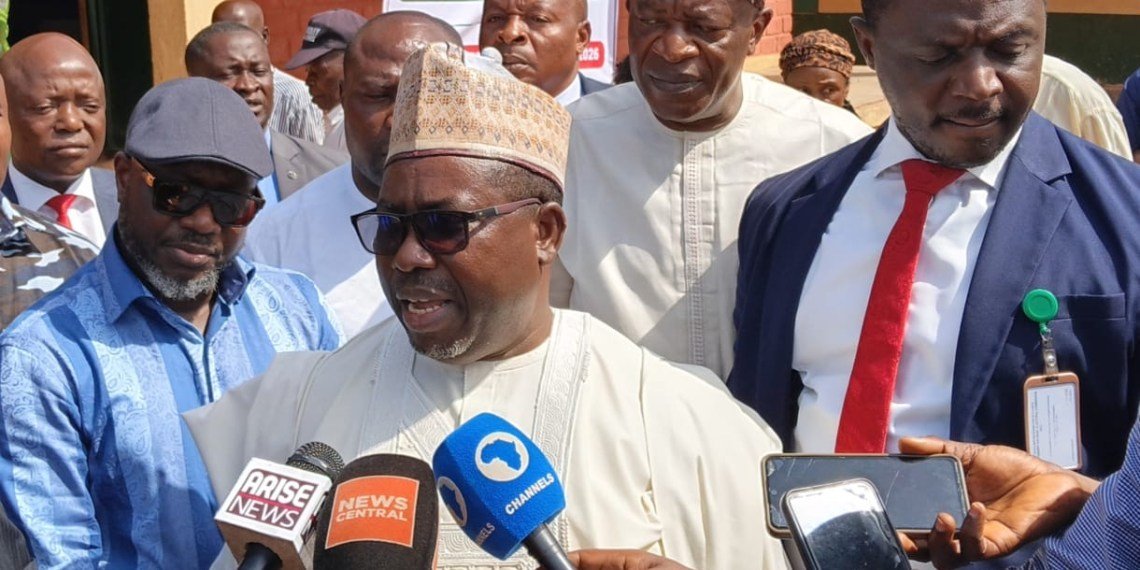
INEC Chairman, Prof. Joash Amupitan, said the improvement addressed one of the major challenges encountered with the accreditation technology during previous elections.
Amupitan disclosed this on Saturday while monitoring the exercise at several polling units in Jos, Plateau State.
The mock exercise was conducted simultaneously in 17,676 polling units across the country to test the functionality of the BVAS, electronic transmission of results and the Commission’s level of preparedness for the 2027 general elections.
He added that the exercise was specifically designed to identify weaknesses in the electoral process and assess areas requiring further improvements.
“The essence of this accreditation is to look out for where there are gaps and assess the challenges,” Amupitan stated.
On preparations for inclusive elections, the INEC chairman said the Commission had made provisions for persons with disabilities through voter disaggregation and the deployment of assistive materials to polling units where they had been identified.
He also disclosed that locations hosting internally displaced persons, IDPs, had been identified, with arrangements being made to provide adequate security and prevent intimidation or harassment of voters.
“For physically challenged persons, we have done disaggregation and provided assistive materials for polling units where we identified them. For IDPs, we have identified places where we have them, and we are going to provide security for those places to ensure that nobody is harassed,” he said.
While acknowledging the low turnout recorded during the mock exercise, Amupitan urged Nigerians to participate actively in the 2027 elections, assuring them that the Commission was committed to delivering credible polls.
“The turnout is a little bit low. During the election, I want Nigerians to come out and vote. I assure you that the election will be free, fair and credible,” he added.
Also speaking, the Plateau State Resident Electoral Commissioner, Prof. Sam Egwu, expressed satisfaction with the commencement of the exercise, saying voting started at 8:30 a.m.
Egwu said the BVAS performed optimally, particularly in capturing voters’ fingerprints, adding that the accreditation process took less than one minute per voter.
He described the performance as encouraging and urged Nigerians to dismiss fears about the transparency of the 2027 elections.
“For those who fear the transparency of the 2027 election, they should move away from that thought. We have developed the necessary data for IDP voting. It is inclusiveness that will provide a litmus test for our democracy,” he said.
The REC maintained that democracy must be participatory and inclusive, stressing that INEC’s responsibility was to create an enabling environment for citizens to exercise their democratic rights.
On security arrangements, the Plateau State Commissioner of Police, CP Sunday Okoebor, assured residents that security agencies were working to prevent electoral violence and protect voters.
He said adequate security would be provided before, during and after the elections to safeguard lives and property.
“We are committed to ensuring a peaceful election, with adequate security in place to prevent violence and protect lives and property before, during and after the exercise,” Okoebor said.