

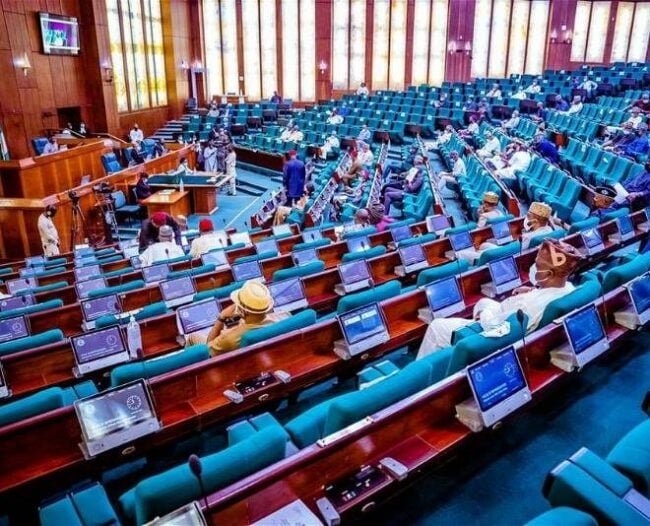
The Accountant-General of the Federation (AGF), Dr. Babatunde Ogunjimi, is expected to appear before the House of Representatives Ad-hoc Committee on Monday as lawmakers intensify investigations into the controversial inclusion of the alleged phantom Presidential Foreign Intervention Promotion Council/Presidential Economic Advisory Council (PFIPC/PEAC) in the 2026 Appropriation Act.
The appearance follows an invitation issued by the Chairman of the Ad-hoc Committee, Hon. Yusuf Gagdi, after testimony by key government officials shifted attention to the Office of the Accountant-General of the Federation (OAGF) and the Head of Civil Service for the Federation, Mrs. Didi Esther Walson-Jack, over the budgetary identity assigned to the controversial council.
Hon. Gagdi had, after Friday’s investigative hearing, announced that the AGF was invited to provide further clarification on issues raised during the inquiry, particularly allegations that the OAGF assigned the administrative budget code that enabled the council to appear within the Federal Government’s budget framework.
The Ad-hoc Committee is seeking to unravel how the council, whose legal status has come under scrutiny, found its way into the 2026 national budget and to determine the roles played by various government institutions in the process.
Appearing before the panel on Friday, Director-General of the Budget Office of the Federation, Dr. Yakubu Tanimu, maintained that the Budget Office neither created nor unilaterally inserted the council into the budget.
According to him, the council entered the 2026 budget through official government instruments whose origins predated the current budget cycle.
Dr. Tanimu traced the institution to the Presidential Economic Advisory Council inaugurated by former President Muhammadu Buhari on October 9, 2019.
He explained that before preparation of the 2026 budget commenced, the Office of the Accountant-General had already assigned the council an administrative budget code, while the Office of the Head of the Civil Service of the Federation had approved its authorised establishment and recruitment waiver.
He also noted that the applicable public service salary structure had already been provided.
Explaining the Budget Office’s role, Dr. Tanimu said: “The Budget Office did not create the Council; it did not assign its code; it did not approve its establishment; it did not grant its recruitment waiver. It received official instruments and did what the law required of it. It measured their fiscal effect.”
He insisted that the Budget Office merely reflected the fiscal implications of approvals received from competent government institutions.
With the Budget Office identifying the OAGF as the institution that assigned the council’s administrative code, lawmakers are expected to seek explanations from the Accountant-General on the legal and administrative basis for creating the budget identity that enabled the council to receive allocations.
ALSO READ: My ex-wife lied about being a virgin before marriage — Actor Jimmy Rolland
The committee is also expected to examine whether due process was followed in assigning the code and whether the action was backed by appropriate executive approvals and statutory authority.
Hon. Gagdi, while acknowledging that the National Assembly eventually passed the appropriation, stressed that the investigation was intended to establish the chain of responsibility and strengthen safeguards against future irregularities.
He disclosed after Friday’s sitting that the committee would also invite chairmen of relevant House Standing Committees responsible for oversight of the Presidency’s budget to explain their roles during the appropriation process.
Other stakeholders invited by the Ad-hoc Committee but yet to appear include the Minister of Finance, Mr. Taiwo Oyedele, and the Minister of Foreign Affairs, Ambassador Bianca Odumegwu-Ojukwu, among others.
WATCH TOP VIDEOS FROM NIGERIAN TRIBUNE TV