

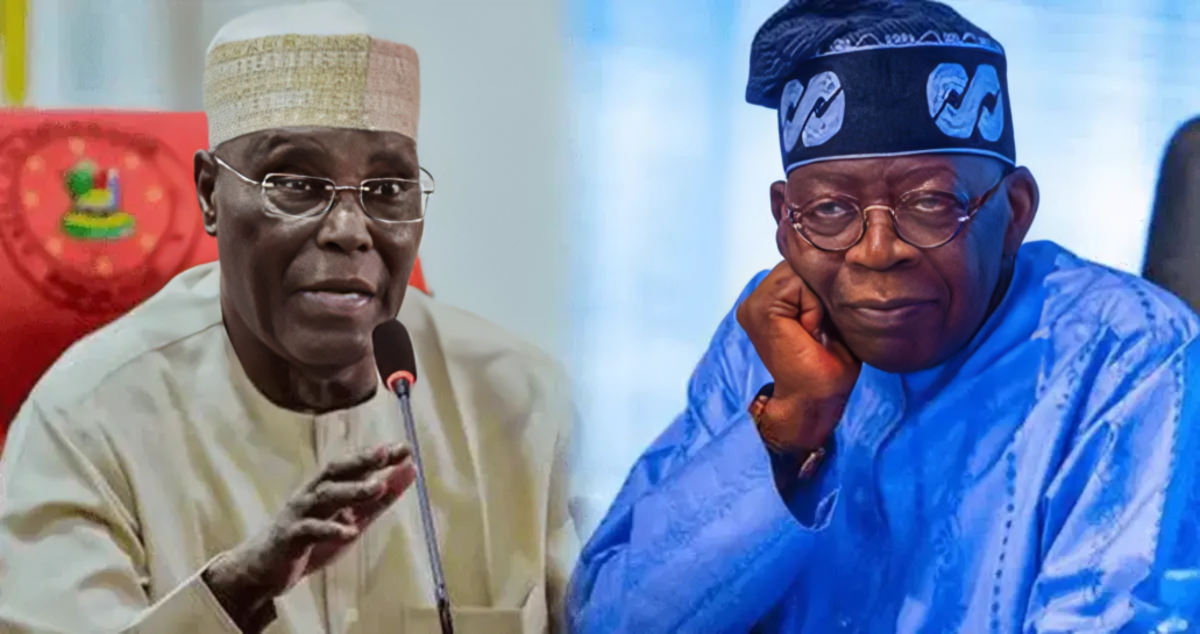
Former Vice President Atiku Abubakar has vowed that “even 100 million Tinubus” cannot stop him from restoring a targeted subsidy to protect Nigerians from the hardship caused by President Bola Ahmed Tinubu’s fuel price policies.
Reacting on Sunday through his Senior Special Assistant on Public Communication, Phrank Shaibu, Atiku accused the Tinubu administration of committing “one of the biggest economic frauds” by claiming to have removed subsidy while still granting tax credits and fiscal incentives to petroleum industry operators.
“Tinubu stood at Eagle Square and declared that subsidy was gone. Petrol prices exploded, transportation costs soared, food prices followed, businesses buckled, and household purchasing power collapsed,” Atiku said.
“But when major oil investors knock on Tinubu’s door, the sermon changes. Suddenly, government intervention is good economics; tax credits are necessary; fiscal concessions are strategic; and private investment must be ‘de-risked.’ Apparently, subsidy is only evil when poor Nigerians benefit from it.”
He cited the administration’s Deep Offshore Oil and Gas Projects Incentives framework, which allows qualifying petroleum developments to receive production tax credits starting at $3 to $4.50 per barrel, with supplementary credits that can take the combined benefit to as much as $11.50 per barrel.
Atiku also pointed to NNPC’s audited accounts, which recorded about ₦4.84 trillion in 2023 and ₦7.13 trillion in 2024 as “energy-security expenses and related shortfalls.”
According to him, NNPC explained that the expense arose from exchange rate differentials on imported PMS after subsidy was declared gone.
“So, where exactly did the subsidy go? If Nigerians were paying market prices because ‘subsidy is gone,’ why was the Federation still carrying trillions of naira in under-recovery and energy-security costs?” he asked.
ALSO READ: I won’t back down on my decision to restore targeted subsidy —Atiku
“If such intervention was lawful and economically necessary when Tinubu authorised it, on what intellectual basis is Mr Tinubu and his spokesmen now abusing Atiku for proposing an intervention that is targeted, capped, budgeted, independently audited and beneficial to Nigerians?”
Atiku described the situation as “selective economics” and “classic economic apartheid,” where poor Nigerians face market forces while big oil investors enjoy government protection.
“This is the Tinubu doctrine: socialise the pain at the bottom and provide incentives at the top,” he said. “You cannot subsidise capital and criminalise relief for citizens. You cannot offer cushions upstairs and call suffering downstairs reform.”
The presidential candidate of the African Democratic Congress (ADC) said the Atiku Economic Recovery Plan (AERP) does not propose a return to the opaque subsidy regime of the past.
“What he proposes is a targeted, capped, transparently budgeted and independently audited intervention with a clearly defined exit mechanism, accompanied by accelerated domestic refining, competition, mass transportation and measures to restore household purchasing power,” Shaibu stated.
“If Tinubu understands the logic of reducing the cost and risk borne by an investor in order to stimulate production, why does he suddenly become economically illiterate when the proposition is to temporarily reduce the crushing burden on Nigerian households?”
Atiku demanded transparency on the beneficiaries of petroleum tax credits and incentives, saying Nigerians deserve to know the value of revenue surrendered and whether local investors have equal access.
“The test of economic reform is not how loudly a President announces that ‘subsidy is gone’; it is whether citizens are better off, businesses are productive, jobs are being created and household incomes can sustain basic living costs,” he added.
“A government cannot preach unrestrained market forces to the poor while practising interventionist economics for his rich foreign friends. That is not economic reform. It is classic economic apartheid.”
WATCH TOP VIDEOS FROM NIGERIAN TRIBUNE TV