

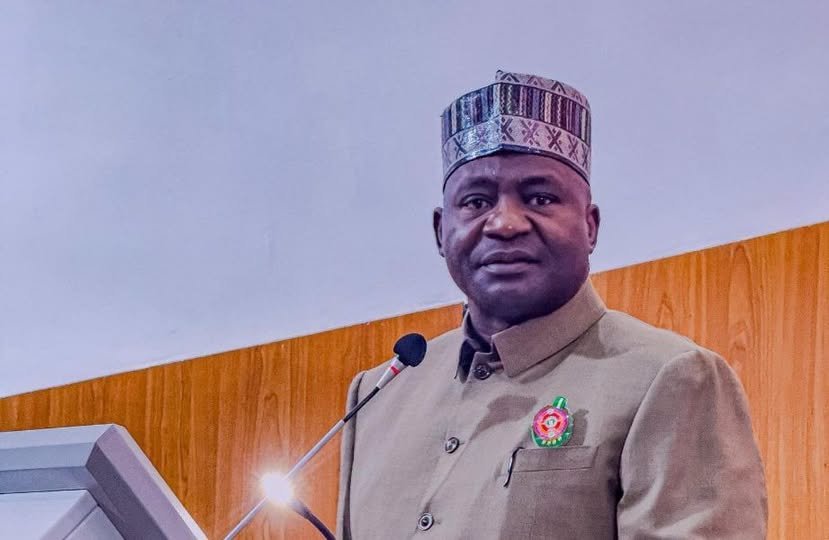
He explained that there was a fundamental difference between opposing someone’s political ideas and questioning their right to govern because of their ethnic, religious or regional background.
“The first is democracy. The second is exclusion masquerading as democracy,” he said.
Touray identified public trust, credible institutions, responsible political leadership, effective conflict prevention, inclusive development and the fight against misinformation as six critical conditions for preserving peace during elections.
He argued that elections alone do not guarantee democracy, insisting that citizens must have confidence in electoral institutions, the judiciary and security agencies to act fairly and independently.
According to him, where public trust is weak, even an election that meets technical standards could trigger political tension and instability.
“Trust cannot be legislated into existence, nor can it be secured through institutional declarations alone. It is earned through consistent conduct, demonstrated impartiality, accountability and responsible leadership,” he said.
He also urged political parties and candidates to pursue electoral grievances through constitutional and legal channels rather than resorting to intimidation, incitement or extra-constitutional actions.
Drawing lessons from political crises in Côte d’Ivoire and Kenya, Touray warned that poorly managed electoral disputes and the mobilisation of ethnic identities could threaten the foundations of a country.
He, however, cited Ghana’s democratic experience and Nigeria’s political development as examples demonstrating that intense political competition can coexist with stability and peaceful transfers of power.
The former ECOWAS Commission president further called for stronger early-warning and conflict-resolution mechanisms, urging traditional rulers, religious leaders, civil society organisations, women and young people to play active roles in preventing electoral violence.
He expressed concern over the growing influence of misinformation and disinformation, particularly manipulated videos, fabricated audio recordings and artificial intelligence-generated images capable of inflaming political tensions.
“Falsehood now travels faster than truth,” he warned, calling on political parties, technology companies, electoral authorities and the media to strengthen measures against the spread of false information without undermining freedom of expression.
Touray also maintained that social cohesion would remain fragile without inclusive economic development, noting that unemployment, inequality and marginalisation could make citizens, particularly young people, vulnerable to political manipulation.
He stressed that young Nigerians should be treated as active participants in national development rather than instruments for electoral mobilisation and violence.
In a pointed reference to Nigeria’s 2015 presidential election, Touray praised former President Goodluck Jonathan for accepting defeat and facilitating a peaceful transfer of power.
He described Jonathan’s decision as an enduring example of democratic statesmanship, particularly as Nigeria prepares for another fiercely contested electoral cycle.
“No political victory is worth the sacrifice of national peace. No electoral defeat should ever be interpreted as the defeat of an ethnic, religious or regional community. And no political ambition, however legitimate, should outweigh the responsibility to preserve the nation,” he said.
Touray concluded that Nigeria had an opportunity to strengthen democratic governance ahead of 2027, noting that the credibility and peaceful conduct of its elections would have implications for democracy across Africa.
He said the ultimate responsibility was not to eliminate political competition but to ensure that disagreements were managed peacefully and democratic institutions remained stronger than individual political ambitions.
“Peace is more valuable than power, institutions are more important than individuals, and the nation must always be preserved,” he stressed.
Meanwhile, the Minister of Defence, General Christopher Musa, rtd., also warned that political rivalry, distrust and social divisions could undermine national security as Nigeria approaches the 2027 elections.
Represented at the conference, Musa said national security could not be sustained through military strength and operational capabilities alone, arguing that public confidence in government institutions and peaceful coexistence were equally essential.
He said political competition must not become a source of insecurity, urging political leaders to reject hate speech, inflammatory statements and divisive narratives capable of exploiting the country’s ethnic, religious and political differences.
“Ultimately, no political ambition is worth the loss of innocent lives, the destruction of property or the destabilisation of our country,” the minister said.
He called on security institutions to maintain professionalism, impartiality and respect for the rule of law, while urging citizens to cooperate with security agencies in protecting lives and property.
Musa added that safeguarding Nigeria’s peace required a collective effort involving government, political leaders, traditional rulers, religious institutions, civil society, the media and young people.
He maintained that although elections would determine who occupies political offices, preserving Nigeria’s unity and stability must remain a shared national responsibility.