

The Federal Government has introduced new accountability and performance frameworks for Nigeria’s diplomatic missions abroad as part of efforts to make the country’s foreign policy more results-driven and responsive to national economic and security priorities.
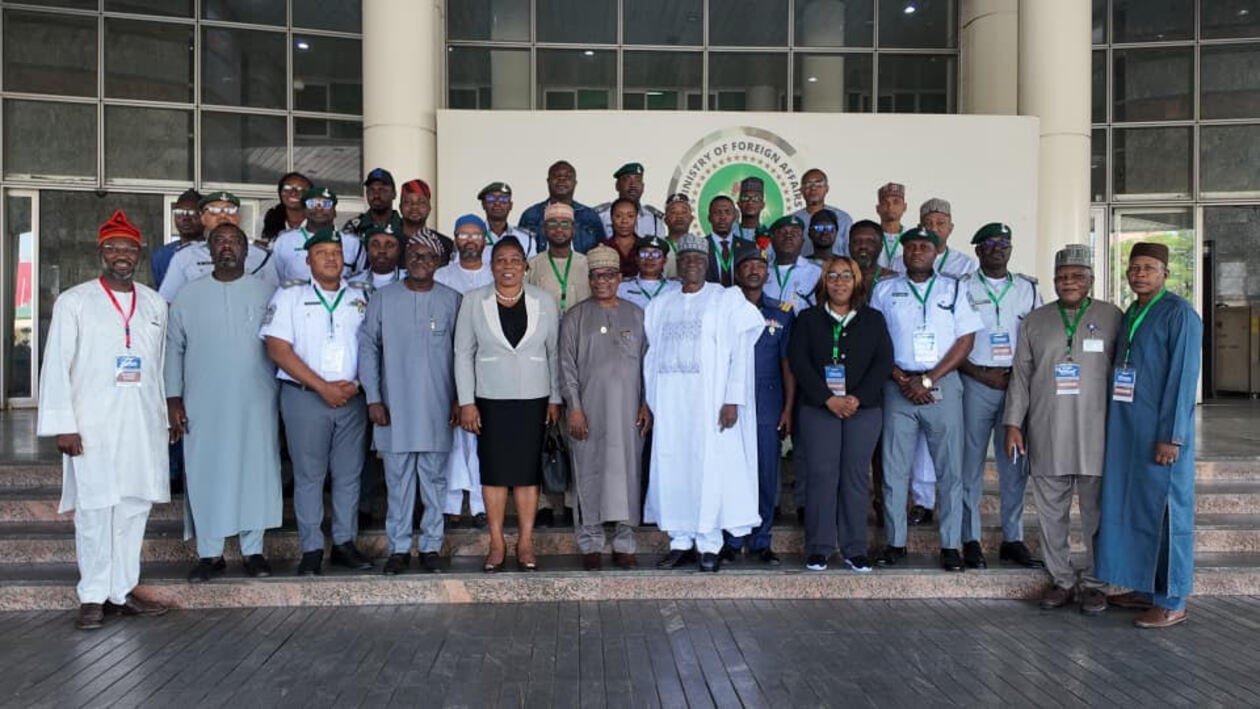
The Minister of State for Foreign Affairs, Ambassador Sola Enikanolaiye, disclosed this while declaring open the sixth edition of the Foreign Policy School (FPS-6), organised by the Nigerian Institute of International Affairs (NIIA) and the Peace-Building Development Consult (PBDC) at the Ministry of Foreign Affairs, Tafawa Balewa House, Abuja.
The statement was signed by Raphael Oni, Special Assistant, Digital Media and Public Diplomacy, Office of the Minister of State for Foreign Affairs.
The three-day programme, which runs from November 16 to 18, has the theme, “Foreign Policy as a Tool for National Security and Economic Growth.”
Enikanolaiye said the reforms were aimed at repositioning Nigeria’s diplomatic missions as economic hubs and trade and technology facilitation centres, while strengthening consular services and ensuring that diplomatic engagements deliver measurable benefits to Nigerians.
He said the administration of President Bola Tinubu was anchoring the country’s foreign policy on a strong domestic foundation through reforms within the Ministry, improved operational systems and a performance-based approach to managing diplomatic missions.
According to him, the administration’s foreign policy is bold, pragmatic and citizen-centred, guided by the reformulated 4Ds of Demography, Development, Diaspora and Democracy, with Nigeria and its citizens at the centre.
He explained that the renewed emphasis on domestic development did not diminish Africa’s importance in Nigeria’s foreign policy but recognised that effective continental engagement must be supported by a vibrant and resilient domestic economy.
The minister recalled that the Ministry adopted the motto, “Nigeria First”, in 2007, saying the present administration was giving practical expression to the principle through ongoing institutional reforms.
He identified three instruments designed to strengthen accountability and improve the performance of Nigeria’s foreign missions: the Stations Charter, the annual performance evaluation of Heads of Mission, known as SCAPER, and the Global Best Practices Project.
He explained that the Stations Charter would assign specific priorities to each diplomatic mission, while SCAPER would provide an annual assessment of the performance of Heads of Mission.
The Global Best Practices Project, he added, would enable diplomatic missions to identify successful practices in their host countries that could be adapted to improve national policies and development outcomes.
Enikanolaiye said the initiatives represented a shift from diplomacy driven by routine activities to one measured by concrete results.
“We are moving beyond the mantra of diplomacy for diplomacy’s sake to a purposeful engagement calibrated to serve our people,” he said.
The minister further said Nigeria would continue to pursue strategic autonomy, economic diplomacy and citizen diplomacy while strengthening partnerships across the Atlantic, the Global South, the United Nations, the African Union and the Commonwealth.
He said the country’s international engagements would remain guided by reciprocity, mutual respect and respect for the sovereignty of other nations.
On regional security, Enikanolaiye identified insecurity in the Sahel, unconstitutional changes of government, the proliferation of small arms and humanitarian crises as major challenges confronting the Economic Community of West African States (ECOWAS).
He said Nigeria remained committed to good neighbourliness, dialogue and mediation, including engagement with member states of the Alliance of Sahel States (AES), to restore constitutional order and rebuild regional trust.
“For Nigeria, it is zero tolerance for unconstitutional change of government; this being key to the defence and protection of our democracy,” he said.
He called for stronger preventive diplomacy, early-warning mechanisms and frank but respectful dialogue among African countries, noting that preventing conflicts was far less costly than managing their consequences.
The minister described the Foreign Policy School as a strategic investment in the intellectual capacity of Nigeria’s diplomatic service, urging participants to see themselves as custodians of the country’s national interest.
He maintained that domestic policies could not achieve their full potential without the simultaneous identification and pursuit of their foreign policy components.
“No domestic policy of government can succeed to its utmost level until and unless its foreign policy components are correctly identified and pursued simultaneously with the domestic agenda,” he said.
In his welcome address, former Chief of Defence Staff, retired General Martin Luther Agwai, said foreign policy was closely linked to national security and must deliver tangible economic results.
He noted that a country’s strength at home remained essential to earning respect and influence internationally.
Enikanolaiye reaffirmed Nigeria’s commitment to a foreign policy that advances the interests of its citizens while contributing to peace, stability and development across West Africa, Africa and the international community.
WATCH TOP VIDEOS FROM NIGERIAN TRIBUNE TV